

Commentary
Cornelius Adebahr
{
  "authors": [
    "Cornelius Adebahr"
  ],
  "type": "legacyinthemedia",
  "centerAffiliationAll": "dc",
  "centers": [
    "Carnegie Endowment for International Peace",
    "Carnegie Europe",
    "Malcolm H. Kerr Carnegie Middle East Center"
  ],
  "collections": [
    "Iranian Proliferation"
  ],
  "englishNewsletterAll": "ctw",
  "nonEnglishNewsletterAll": "",
  "primaryCenter": "Carnegie Europe",
  "programAffiliation": "EP",
  "programs": [
    "Europe"
  ],
  "projects": [],
  "regions": [
    "North America",
    "United States",
    "Iran"
  ],
  "topics": [
    "Political Reform",
    "Security",
    "Foreign Policy",
    "Nuclear Policy"
  ]
}
Source: Getty
Congress’ possible disapproval of the deal will have repercussions beyond Washington that ought to be factored in.
Source: Hill
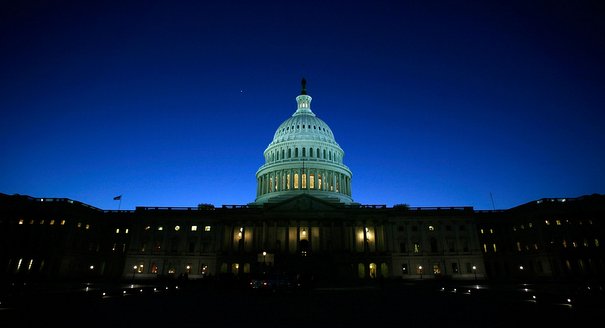
Good politics is not only about one’s principles but also about the consequences of one’s actions. That’s why citizens ought to debate with their representatives the likely effect of a congressional no vote on the Iran deal. No doubt, the Senate and the House have every right to review the deal, based on current U.S. legislation, and to approve of it or not. In exercising this right, however, members of Congress and their constituents need to be fully aware of what this means for America more broadly.
After all, this is not a deal between the United States and Iran only, but one in which the United States is merely a party among seven nations, brokered by the European Union. Therefore, Congress’ possible disapproval of the deal will have repercussions beyond the beltway that ought to be factored in.Here, the language of the bill that has enacted the congressional review currently under way reveals a great misunderstanding on the part of Congress about the nature and effect of sanctions. The Iran Nuclear Agreement Review Act of 2015 states that, “the sanctions regime imposed on Iran by Congress is primarily responsible for bringing Iran to the table to negotiate on its nuclear program.” Based on this understanding, some claim that sanctions would only have to be increased to get a better deal.
This however, represents not even half of the truth. U.S. financial sanctions were complemented by the EU cutting off Iran from the international banking system, SWIFT. Likewise, Europe’s oil embargo developed its full force only with Washington pressuring third countries to reduce their imports of Iranian crude. All this would not have been possible without a framework of UN sanctions that labeled Iran’s nuclear program as a threat to international peace and security. Thus, the full sentence would have to read: “The sanctions regime imposed on Iran by the United States and the European Union in coordination, building on restrictive measures levied by the United Nations and supported by complementary actions from Russia, China, India, Japan, and South Korea has contributed to bringing Iran to the table.”
This reasoning also better informs the answer to the question of what a no vote actually means. Yes, Congress has the right to say the deal is not good enough and it believes there is a viable alternative to it. However, the international community—represented by the five permanent members of the UN Security Council plus Germany and the EU—has just concluded that, in the real world of diplomacy, there is no better solution to be had. So a no vote would be the equivalent of sticking the finger to the world.
In that case, there would be no one there to enforce the existing sanctions regime (currently suspended under the Interim Agreement), let alone implement future sanctions against an Iran that had compromised on its nuclear program. The United States would be alone, possibly with Israel. Not even the Arab Gulf states would be at its side, fretting about their rival’s nuclear activities being under no more restrictions due to a collapse of diplomacy.
Congress wants a say on the Iran deal. Yet this debate must be honest about the consequences of such a vote. With an agreement on the table that has the approval of the executive branch of the U.S. government as well as broad international support, it would appear self-righteous and foolish of Congress to kill it. Instead, America’s representatives -- particularly Delaware Democratic Sen. Chris Coons, who has been thoughtful on this issue, but remains undecided -- should throw their weight behind the rigorous implementation of the deal to ensure that Iran does not get the bomb.

Former Nonresident Fellow, Carnegie Europe
Cornelius Adebahr was a nonresident fellow at Carnegie Europe. His research focuses on foreign and security policy, in particular regarding Iran and the Persian Gulf, on European and transatlantic affairs, and on citizens’ engagement.
Recent Work
Cornelius Adebahr

Cornelius Adebahr, Barbara Mittelhammer
Carnegie does not take institutional positions on public policy issues; the views represented herein are those of the author(s) and do not necessarily reflect the views of Carnegie, its staff, or its trustees.
The full list of humiliations Europe has endured since Donald Trump returned to the White House makes for grim reading. But Washington’s adversarial approach to its allies undermines its own power base.

Rym Momtaz
The U.S.-Iran war has crossed a dangerous threshold: water infrastructure in the Gulf is now a target. Ecological statecraft is no longer peripheral to security, it's part of its foundations.


Olivia Lazard, Ali Bin Shahid
The closure of the Strait of Hormuz has triggered a global energy crisis, but Europe is stuck in reaction mode. Without more strategic foresight, the EU will remain dependent on fossil fuels and will never be truly secure.


Milo McBride, Pauline Gerard
Debate is heating up on how Turkey could be integrated into a common European defense framework. Commercial and industrial deals offer a better chance at alignment than sweeping political efforts.

Marc Pierini
After spending much of 2025 trying to placate Donald Trump, some European leaders are starting to change posture. But is even a hostile Washington still so important to Europe that the U.S. president’s outbursts are worth putting up with?
Rym Momtaz, ed.