

Commentary
The full list of humiliations Europe has endured since Donald Trump returned to the White House makes for grim reading. But Washington’s adversarial approach to its allies undermines its own power base.
Rym Momtaz
{
  "authors": [
    "Nikolay Kozhanov"
  ],
  "type": "legacyinthemedia",
  "centerAffiliationAll": "",
  "centers": [
    "Carnegie Endowment for International Peace",
    "Carnegie Russia Eurasia Center"
  ],
  "collections": [],
  "englishNewsletterAll": "",
  "nonEnglishNewsletterAll": "",
  "primaryCenter": "Carnegie Russia Eurasia Center",
  "programAffiliation": "",
  "programs": [],
  "projects": [],
  "regions": [
    "Syria",
    "Russia"
  ],
  "topics": [
    "Security",
    "Foreign Policy"
  ]
}
Source: Getty
Any attempts to browbeat Moscow into stopping its military activity in Syria, not to mention changing its longstanding stance on the conflict, are a waste of time.
Source: Newsweek
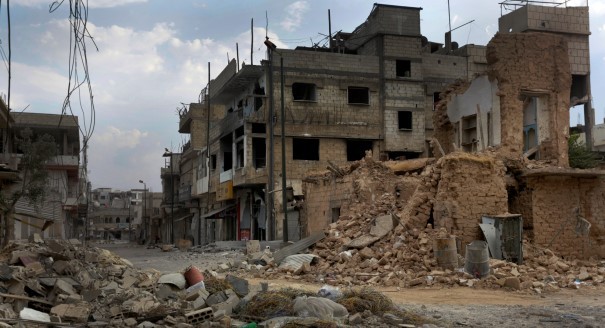
Russia's decision to begin airstrikes in Syria should not come as a surprise. Moscow's preparations for this scenario were first known two months ago in mid-August, when various media sources began reporting about Russian military delegations who were arriving in Syria to assess the capacities of local airfields to host Russian fighter jets. Subsequent information about the reconstruction of Latakia airport and two other airfields in the area controlled by the Assad regime only strengthened conviction that Moscow was preparing for a military operation. Finally, in the second half of September, when the number of Russian fighter jets and military helicopters in Syria exceeded the number of actual Syrian pilots available to use them, the last doubts about Moscow's intentions disappeared. And now it has finally happened.
The decision to begin a military operation in Syria fits logically into the broader Russian strategy of settling the Syrian conflict on Moscow's conditions. Putin continues to insist that any peace settlement in Syria should be based around the existing Syrian state structures and institutions, and some sort of power-sharing between the Damascus regime and the 'healthy' elements of the opposition. Moscow absolutely rejects the removal of President Bashar al-Assad from power as a precondition for the beginning of the national dialogue. To the Russians, Assad is the only person capable of standing up to Islamic State of Iraq and Syria (ISIS) and keeping Syria from total collapse. This vision of the situation drastically differs from that of the West and many Middle Eastern countries, who consider Assad as the source of the Syrian problem rather than part of any solution.Yet the Kremlin is now determined to try to change that via a two-track approach. On the one hand, since spring this year, Russian diplomats have intensified their dialogue with the West and the Middle Eastern countries (initially the Gulf states) to impose Moscow's views on the actual settlement of the conflict. On the other hand, their military support is helping to guarantee that the Syrian regime can hold out long enough for the Kremlin to achieve a desirable breakthrough on the diplomatic track. Under these circumstances, Moscow's military presence in Syria may become important leverage used by the Russians in their game in the Middle East.
First of all, Russia's actual military presence in Syria definitely increases the regime's chances of survival. Even Moscow's military experts acknowledge that it would be naive to think that the Kremlin will not use its air power to help the Syrian army. Needless to say that the Russian definition of terrorists and radicals in Syria is extremely wide and may allow labeling even the Free Syrian Army as a radical group. It is believed that the al-Nusra Front will probably be the first to test the Russian firepower—right now, its fighters supposedly represent the main threat for the Assad regime.
Secondly, any military intervention in Syria becomes extremely challenging for other countries. Previously, Moscow had suspicions that the US-led coalition could be used to overthrow the Assad regime. The deployment of the Russian air force in Syria allays Moscow's concerns. At the same time, by exchanging information and trying to coordinate its military efforts with other countries, Moscow continues promoting its idea of an anti-ISIS coalition that would involve the Syrian regime, and, thus, bring back Assad from international isolation.
Thirdly, the Russians have also strengthened their own diplomatic position by proving that now any decision on Syria cannot be taken without their involvement. It is not a coincidence that, since the beginning of its operation in Syria, the intensity of diplomatic contact between Moscow and the West has increased. Moreover, Russian Foreign Minister Sergei Lavrov seems to be satisfied with the outcome of his recent intensive talks with the US Secretary of State John Kerry.
Yet Russia's move also has a number of serious drawbacks. First of all, even before the beginning of the Russian airstrikes Western leaders such as President Barack Obama and regional players like Turkey and Saudi Arabia were facing an uncomfortable dilemma about whether to indulge Putin's desire to play peacemaker in Syria. After the beginning of the airstrikes the degree of mistrust towards Moscow has substantially risen. As a result, the Russians will definitely have problems with pushing their diplomatic initiatives.
Moscow's move will also aggravate Russian relations with the secular and the more moderate Islamic forces within the Syrian opposition. From now on they will certainly see Moscow as a part of the conflict, fighting on the side of the Assad regime. Consequently, any further attempts by Russia to play the mediator role between Damascus and its opponents will be problematic.
Finally, there is also a question as to what extent Russia will be able to carry the burden of the military operation. Even if it is assumed that Moscow will not dispatch ground forces in Syria, the cost of maintaining a military presence in the country will still be challenging for the Russian economy, especially considering it is already troubled by sanctions, structural problems and high expenditures on Russia's venture in Ukraine. Meanwhile, the anti-ISIS operation may continue for months, if not years.
But so far, Moscow appears to have few doubts that it has chosen the right strategy. In view of this, any attempts to browbeat Moscow into stopping its military activity in Syria, not to mention changing its longstanding stance on the conflict, are a waste of time. The Kremlin has carefully stage-managed this entire effort so that Russia's military presence in Syria has made it a key regional player.
Nikolay Kozhanov
Former nonresident scholar, Foreign and Security Policy Program, Moscow Center
Kozhanov is a former nonresident scholar at the Carnegie Moscow Center and a contributing expert to the Moscow-based Institute of the Middle East.
Carnegie does not take institutional positions on public policy issues; the views represented herein are those of the author(s) and do not necessarily reflect the views of Carnegie, its staff, or its trustees.
The full list of humiliations Europe has endured since Donald Trump returned to the White House makes for grim reading. But Washington’s adversarial approach to its allies undermines its own power base.

Rym Momtaz
The closure of the Strait of Hormuz has triggered a global energy crisis, but Europe is stuck in reaction mode. Without more strategic foresight, the EU will remain dependent on fossil fuels and will never be truly secure.


Milo McBride, Pauline Gerard
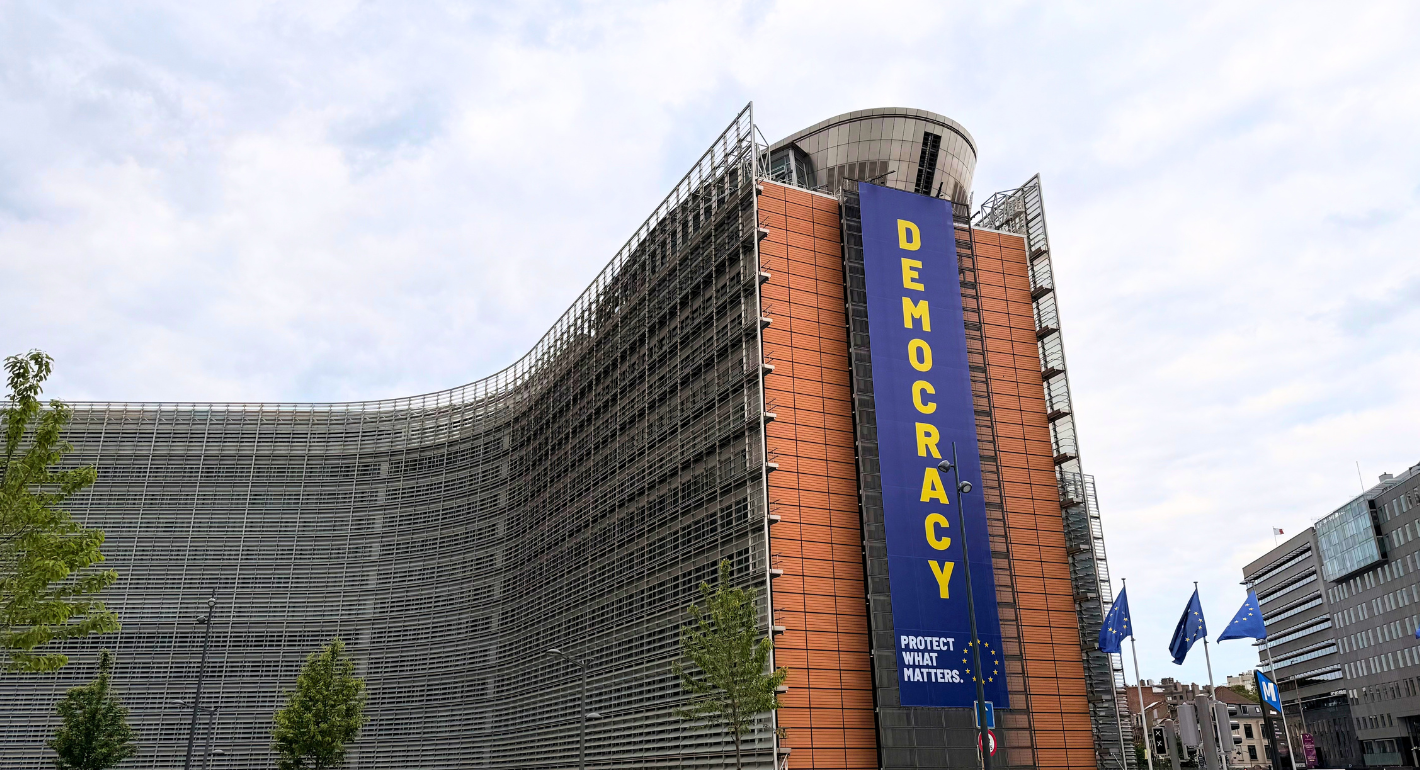
Debate is heating up on how Turkey could be integrated into a common European defense framework. Commercial and industrial deals offer a better chance at alignment than sweeping political efforts.

Marc Pierini
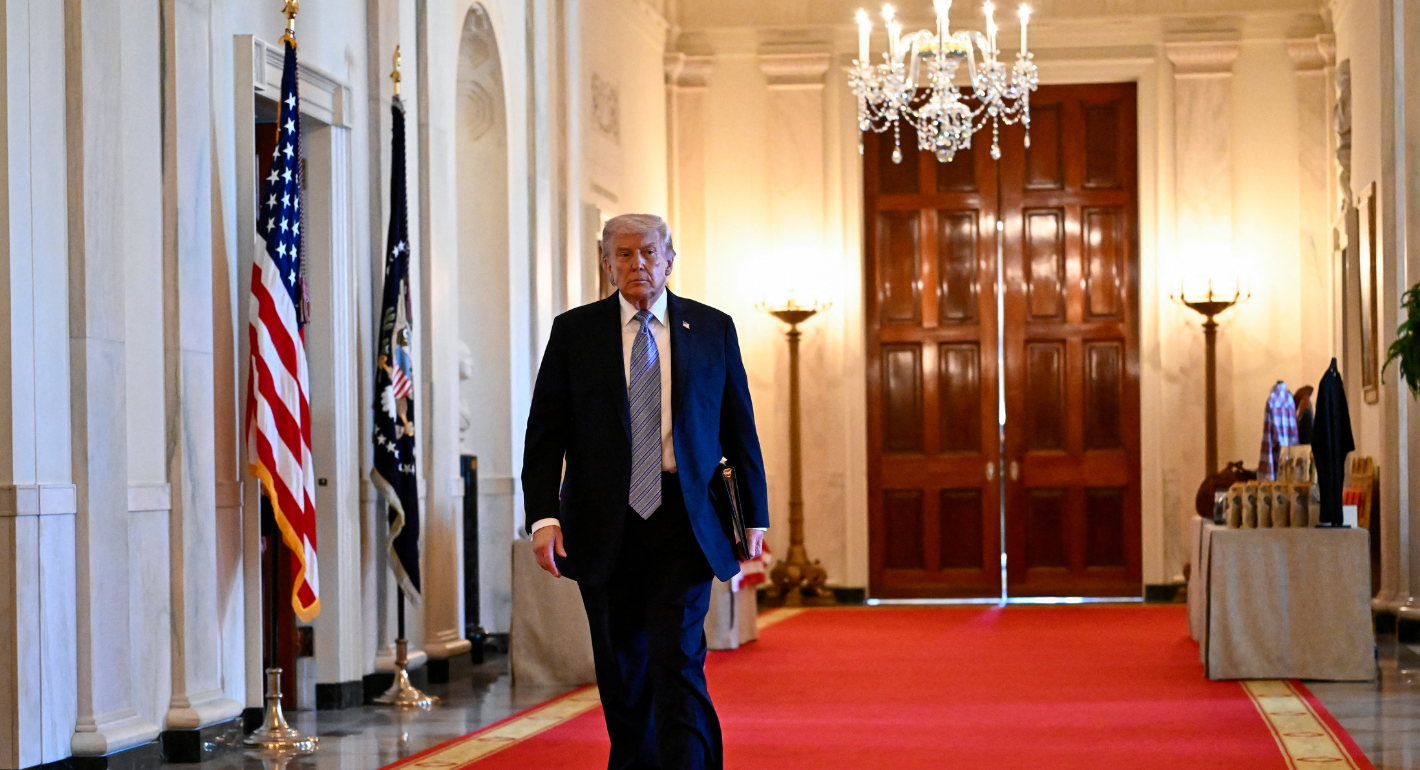
After spending much of 2025 trying to placate Donald Trump, some European leaders are starting to change posture. But is even a hostile Washington still so important to Europe that the U.S. president’s outbursts are worth putting up with?
Rym Momtaz, ed.
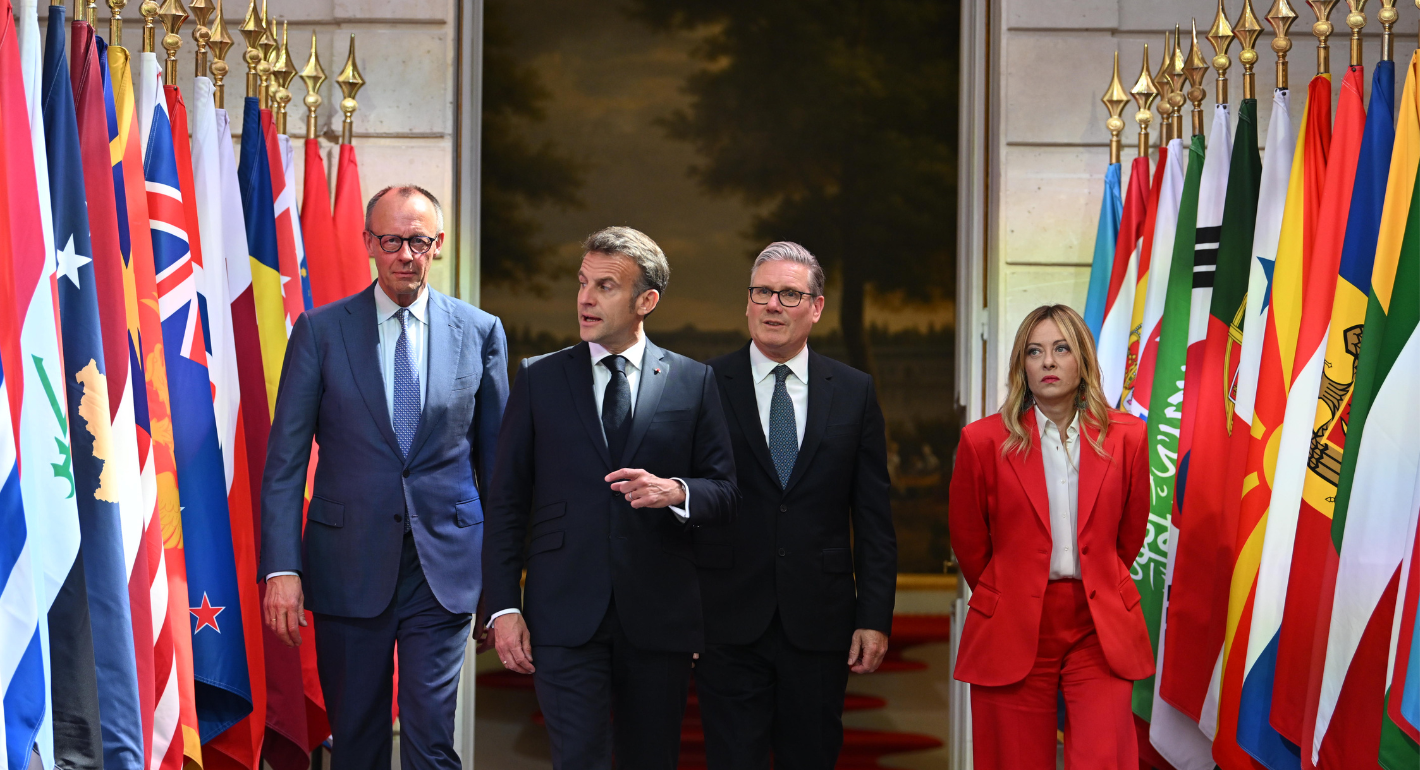
European leaders have now not only lost faith in Donald Trump’s U.S. presidency, but also in America’s hegemony as a whole. But short-term challenges make an immediate divorce unwise.
Rym Momtaz