

Commentary
The EU can impose sanctions but struggles to enforce them without the United States. With Washington increasingly disinterested in backing European interests, the bloc must now fend for itself.
Nicu Popescu, Tiago Antunes
{
  "authors": [
    "David Livingston",
    "Deborah Gordon",
    "Rob Barnett",
    "Brandon Barnes",
    "Cheryl Wilson"
  ],
  "type": "other",
  "centerAffiliationAll": "dc",
  "centers": [
    "Carnegie Endowment for International Peace"
  ],
  "collections": [],
  "englishNewsletterAll": "ctw",
  "nonEnglishNewsletterAll": "",
  "primaryCenter": "Carnegie Endowment for International Peace",
  "programAffiliation": "SCP",
  "programs": [
    "Sustainability, Climate, and Geopolitics"
  ],
  "projects": [],
  "regions": [
    "North America",
    "United States",
    "East Asia",
    "China",
    "Western Europe"
  ],
  "topics": [
    "Climate Change"
  ]
}
Source: Getty
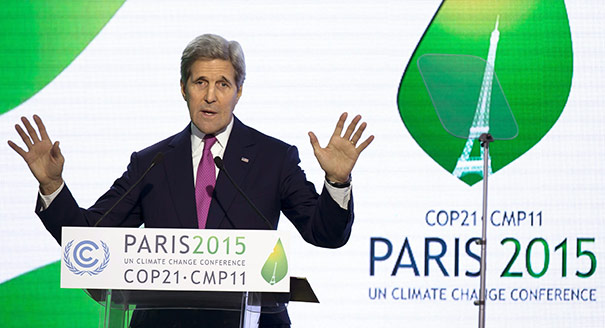
An analysis of the outcomes of the Paris climate talks, as well as the opportunities and challenges ahead for addressing emissions.
Source: Bloomberg Intelligence Webinar
In the run-up to international climate talks being held in Paris, lawmakers from various countries put their chips on the table. Rather than a top down approach, each country offered its unique approach for tackling greenhouse gas emissions. In the United States, for instance, the Clean Power Plan is the cornerstone for cutting emissions from the power sector. And the Chinese government recently announced plans for a cap-and-trade program that will begin in 2017.
After the Paris talks conclude, experts from Bloomberg Intelligence and the Carnegie Endowment came together to discuss:
Former Associate Fellow, Energy and Climate Program
Livingston was an associate fellow in Carnegie’s Energy and Climate Program, where his research focuses on emerging markets, technologies, and risks.

Former Director and Senior Fellow, Energy and Climate Program
Gordon was director of Carnegie’s Energy and Climate Program, where her research focuses on oil and climate change issues in North America and globally.
Rob Barnett
Bloomberg Intelligence
Rob Barnett is a senior energy economist with Bloomberg Government, specializes in energy-sector economics, environmental policy and strategy, and EPA regulations.
Brandon Barnes
Bloomberg Intelligence
Cheryl Wilson
Bloomberg Intelligence
Carnegie does not take institutional positions on public policy issues; the views represented herein are those of the author(s) and do not necessarily reflect the views of Carnegie, its staff, or its trustees.

The EU can impose sanctions but struggles to enforce them without the United States. With Washington increasingly disinterested in backing European interests, the bloc must now fend for itself.


Nicu Popescu, Tiago Antunes

Ahead of a tough winter for Ukraine, Donald Trump’s swing back toward Russia bodes ill. But instead of panicking, Kyiv’s European allies are focusing on action.

Rym Momtaz

While the EU and European governments are embracing the much-lauded middle-power moment, this entails three difficult conundrums.

Richard Youngs

Europe is facing rising populism internally as well as external pressures from Russia, China, Turkey, and the United States.

Dimitar Bechev

A notable degree of participative democracy has firmly arrived in Europe. But to have more far-reaching impact, democratic deliberation needs to move into a radically new phase.
Richard Youngs