

In The Media
David Rothkopf
{
  "authors": [
    "David Rothkopf"
  ],
  "type": "legacyinthemedia",
  "centerAffiliationAll": "",
  "centers": [
    "Carnegie Endowment for International Peace"
  ],
  "collections": [],
  "englishNewsletterAll": "",
  "nonEnglishNewsletterAll": "",
  "primaryCenter": "Carnegie Endowment for International Peace",
  "programAffiliation": "",
  "programs": [],
  "projects": [],
  "regions": [],
  "topics": [
    "Economy",
    "Global Governance",
    "Foreign Policy"
  ]
}
Source: Getty
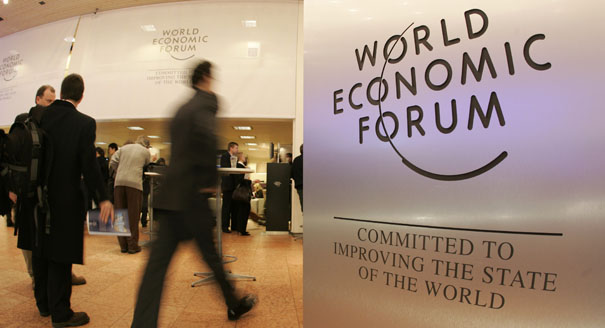
The reality of what transpires each year at Davos is actually not so simple.
Source: Foreign Policy
Davos bashing is easy. Saving the world is hard. The venerable gathering of global elites on that frosty Swiss mountaintop is regularly the target of criticism and speculation about its relevance. But if this past year’s event is any indication, there is also still a greater and higher sense of purpose to the gathering than one finds at many other similar events, and there is much to be learned for the visitor who ventures up the mountain to listen rather than to be heard or seen.
There is no doubt that most of the people who have never been to the World Economic Forum’s annual meeting in the alpine ski resort are happy to accept the idea that the gathering lies somewhere on a spectrum between being an odious, self-congratulatory mogul-palooza and a shadowy gathering to plot a conspiracy to oppress the masses. Many of the people who actually attend are also put off by aspects of the meeting, ranging from the difficulty of getting into formal sessions to the lingering sense that it is at secret, informal ones that the really good stuff is happening.I’ve not only heard the critiques, but I’ve also made them … and, admittedly, continue to make them as I did on our most recent E.R. podcast. It is cold on that mountain. The event has become much more corporatized and formal over the years, making real brainstorming tough to do. And of course, as it has in past years, this year’s Davos was dogged by the fact that the audience suffered from a numbing sameness of its participants. Once again, women, minorities, people from emerging markets, and the young were under-represented, as were artists, scientists, technologists, and religious leaders.
In other words, a meeting with the purported goal of changing the world was missing the people most essential to that discussion. Politicians and business leaders flatter themselves to think that it is they alone who “lead,” but far more often innovation comes from elsewhere. To really make change in the world, you have to touch hearts and alter or shift paradigms, and that is the work of the creativity community, whether they work on a stage, in a studio, or in a laboratory.
Some of the speeches are tired. Some of the speakers are the usual suspects. The sidewalks aren’t shoveled, and every year a handful of innocent global titans flop down on the ice and break something. Even the celebrity sightings are getting a bit boring. (This year, Leonardo DiCaprio was even out-glammed by Canada’s prime minister, if you can imagine such a thing. Which was not a bad thing at all since that prime minister, Justin Trudeau, brought a fresh energy to the event, as well as the image to go with it.)
But the reality that has to be acknowledged is that there is another side to this story. Davos has been going on for almost half a century. Since professor Klaus Schwab established it, the forum has grown into the most prominent global conference of any kind, anywhere. Each year, people write stories proclaiming its imminent demise. And each year a couple of thousand corporate leaders pay tens of thousands of dollars each for themselves and their staff members to attend because whatever the flaws of the meeting, it is still the place they can get the most done in the shortest period of time. And frankly, if they are not there, they are likely to miss their best chance at getting a concentrated glimpse of the world in the year ahead they are going to get anywhere.
Because — and for my money, much more importantly — Davos is in its own extremely earnest, rather dry way, actually serious about its mission of making the world a better place. Davos, more than any other similar gathering, shifted the debate of world leaders toward taking climate issues more seriously. It has focused attention on regions in crisis, the need for better infrastructure, and on emerging issues that are worthy of debate — like this year’s discussion on the “fourth industrial revolution.” In my few days there, I sat with world leaders who took a break from their usual intellectual fare as they discussed issues of faith, archaeological evidence as to why civilizations fail, the big questions associated with intelligence in the cyber-age (I actually moderated that discussion), and the future of the Americas.
I was also fascinated to watch discussions about ongoing turmoil in the Middle East become seemingly overshadowed, in terms of generating foreboding among the delegates, by the prospect of a Donald Trump presidency. It was interesting to hear once again predictions of global downturn play in a kind of counterpoint to individual CEOs of very big companies saying, “It’s going to be a bad year for the world but not for us.” It was enlightening to hear why China does not worry so many despite its downturn; why Iran is so appealing to so many European companies; why Brazil is the universally acknowledged big emerging-market basket case to watch for the year ahead; and to see the mixed reactions to the consequences of low-priced oil and a downturn in the commodity supercycle.
That’s valuable for delegates. And the combination of valuable content plus legitimate good intentions goes a long way toward offsetting the obvious problems associated with the meeting. Should there be more women in Davos (see my columns from the last two years)? Of course. It is inexcusable that there is not real gender parity there, and if they gave me two days with their invitation lists, I could fix it for them as could anyone with access to Google and a calculator. Do they have a problem because of the under-representation of Asians, Africans, and Latin Americans? Yes. And if they don’t fix it, the second half-century of Davos will not look much like the first in terms of relevance. Would they do better to get more millennials, artists, activists, and scientists from outside the mainstream? They must if they are to avoid intellectual flatness and miss the big opportunities for social, economic, and political change they are seeking to address.
But this meeting is the target of criticism for a reason. It is the granddaddy of the world’s big high-level conferences, and it has an important role to play in the world. People watch it closely; it attracts the skeptical views it draws precisely because it actually makes a difference, whether it is regarding how a leader or policy initiative is viewed by markets or how a particular threat (from climate to regional unrest) might be assessed or addressed. What is more, if it were to change, it could actually make an even bigger difference. No other single event is in position to do as much were it to evolve to be more of a 21st-century global summit. And that is the Davos story you won’t be reading this year. Because you typically only get two extremes: ass-kissing paeans to the superrich or written Molotov cocktails.
But the reality of what transpires each year high on the mountain is actually not so simple. There’s life and value in this old meeting, if only its curators would take the time to give it one of those rejuvenating sheep-placenta injections that Swiss spas are so famous for.

Former Visiting Scholar
David Rothkopf was a visiting scholar at the Carnegie Endowment as well as the former CEO and editor in chief of the FP Group.
Recent Work
David Rothkopf
David Rothkopf
Carnegie does not take institutional positions on public policy issues; the views represented herein are those of the author(s) and do not necessarily reflect the views of Carnegie, its staff, or its trustees.

Canadian Prime Minister Mark Carney has twice inspired praise for standing up to U.S. President Donald Trump: at the 2026 World Economic Forum in Davos and on Canada-U.S. trade negotiations. Is Carney showing a third way better than the EU has in dealing with the Trump administration?

Rym Momtaz, ed.

The EU’s responses to two recent incidents expose the gulf between European perceptions and capabilities. Unless the union can bridge that gap, it will never become a real geostrategic power.
Rym Momtaz

European states control several Overseas Countries and Territories around the world that carry strategic, economic, and environmental weight. As great powers challenge the rules-based order, defending them is a geopolitical imperative for Europe.

Marc Pierini

As we close out another season of Strategic Europe, it is worth taking stock of the deep shifts underway.
Rym Momtaz
The EU had to compromise to adopt a twenty-first sanctions package against Russia, exposing growing cracks in the union’s resolve. Is this latest, weaker round worth it to keep pressure on Moscow?
Rym Momtaz, ed.