

Article
C. Raja Mohan, Darshana M. Baruah
{
  "authors": [
    "C. Raja Mohan"
  ],
  "type": "legacyinthemedia",
  "centerAffiliationAll": "dc",
  "centers": [
    "Carnegie Endowment for International Peace",
    "Carnegie India"
  ],
  "collections": [],
  "englishNewsletterAll": "ctw",
  "nonEnglishNewsletterAll": "",
  "primaryCenter": "Carnegie India",
  "programAffiliation": "SAP",
  "programs": [
    "South Asia"
  ],
  "projects": [],
  "regions": [
    "South Asia",
    "India",
    "Pakistan"
  ],
  "topics": [
    "Security",
    "Foreign Policy"
  ]
}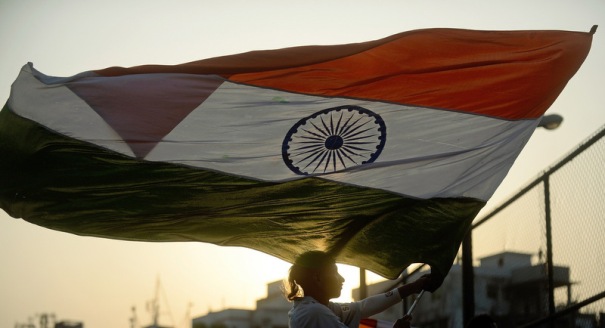
Source: Getty
The idea of subcontinental unity has endured but its definition continues to be problematic.
Source: Indian Express
Some ideas come with heavy political baggage. Others come with unacceptable authorship. “Akhand Bharat” seems doubly handicapped. It’s associated with the RSS and generates fears of Hindutva hegemony across the subcontinent.
But the essence of the idea — the unity of the subcontinent — is likely to endure. The problem is with different conceptions of that unity.
The disagreements are also about the nature of the relationships between different political entities of the region. There’s also much quibbling over names. The BJP and RSS don’t like the word “India”, which they think is an invention of outsiders. Hence the insistence on “Bharat”.On the flip side, many in Pakistan and elsewhere in the region accuse Jawaharlal Nehru of wrongfully appropriating the historic name of “India” when the subcontinent was partitioned.
New Delhi’s smaller neighbours complain that they have to cope with the tension between celebrating the shared “Indic civilisation” and the need to assert their separate identities vis-a-vis the largest territorial unit in the subcontinent that goes by the name of India.
The term of “Indian subcontinent”, unsurprisingly, is unacceptable, for it creates the same problem as “India”. The “subcontinent” (the preferred term for this column) draws fewer objections, but has strong competition from “South Asia”, which has gained much currency since the mid-1960s. Some want to put some passion into the integration project by fusing the two words into “Southasia”.
Whatever you may call the region, the idea of a “united subcontinent” refuses to go away. Days after Ram Madhav stepped on the “Akhand Bharat” landmine, two political leaders, Sharad Yadav and Ram Vilas Paswan, reminded the nation of the enduring idea of a “confederation” among India, Pakistan and Bangladesh.
Yadav and Paswan are the political legatees of the socialist leader Ram Manohar Lohia, who had opposed the partition of the subcontinent. “Confederation” is a far more subversive concept than the idea of cultural unity that Ram Madhav was espousing. Confederation, after all, involves some shedding of political sovereignty.
But the call for a confederation invokes fewer protests because of its presumed emphasis on voluntary and non-hegemonic association.
The concept of the “strategic unity” of the subcontinent is very much part of Nehruvian foreign policy. The idea that the security of the subcontinent was indivisible animated the first prime minister’s approach to neighbours — whether it was Nehru’s opposition to Pakistan’s Cold War alliances or the preservation of treaty-based special relationships with Nepal and Bhutan.
Sceptics would say the rhetoric about “Akhand Bharat”, or a “confederation” among India, Pakistan and Bangladesh, is just that. The subcontinent’s separate political identities have certainly congealed since the middle of the last century. The sovereignty of even the smallest of states in the region — Bhutan and Maldives — is now well-established.
Realists also point to the fact that smaller neighbours continue to mobilise outside powers to balance Delhi and India’s growing difficulties in preserving its much vaunted primacy in the region.
Would it be right, then, to conclude that the current state system in the subcontinent is cast in stone? Not so fast; there are many forces reshaping the subcontinent’s economic and political architecture.
One is regionalism. When Dhaka proposed the creation of a regional forum for South Asia in the late 1970s, both Delhi and Islamabad were wary. While India is now more supportive of regionalism under the banner of Saarc, Pakistan remains hesitant to embrace it, fearing as it does Delhi’s hegemony.
Three decades after the formation of the Saarc, there is much support for the idea of restoring the “historical unity of our common living space” as the journal Himal Southasian, founded in Kathmandu by Kanak Mani Dixit, affirms. Dixit and other regionalists lament the fact that the subcontinent is the least integrated region of the world. They are not, of course, seeking to undo the state system in the subcontinent but to promote greater cooperation through regional, sub-regional and transregional mechanisms.
The pressures to re-imagine the current order in the region are reinforced by the logic of globalisation. Beginning with Sri Lanka in the late 1970s, most countries in the region have shed inward oriented economic policies and are seeking to integrate with the global economy. But can you connect with the world while avoiding economic integration with your neighbours?
Meanwhile, the juggernaut of “red capitalism” in China is chipping away at the many barriers within the subcontinent and between it and the world. Through its many Silk Road initiatives — including the China-Pakistan Economic Corridor across the Karakoram and the Kunming-Kolkata corridor across the eastern Himalayas — Beijing is trying to physically reconnect the region that deliberately divided itself.
Economic factors are indeed driving the subcontinent towards greater unity.
But political reconciliation among warring groups within and across the region’s territorial boundaries remains hard as ever. The subcontinent’s story in the coming years could well be about irresistible economic forces meeting an immovable political object. The problem with “Akhand Bharat” is only one part of that story.
Former Nonresident Senior Fellow, Carnegie India
A leading analyst of India’s foreign policy, Mohan is also an expert on South Asian security, great-power relations in Asia, and arms control.
Recent Work

C. Raja Mohan, Darshana M. Baruah


Alexander Gabuev, Paul Haenle, C. Raja Mohan, …
Carnegie does not take institutional positions on public policy issues; the views represented herein are those of the author(s) and do not necessarily reflect the views of Carnegie, its staff, or its trustees.

Are Germany’s economic, industrial, and political struggles becoming a liability for the EU’s ability to rise to the geopolitical moment?

Rym Momtaz, ed.

European Commission President Ursula von der Leyen is about to give her annual address on the state of the EU. Here’s what she won’t—but should—say.
Rym Momtaz

The aftermath of the Ceuta crisis shows Europe has drawn the wrong lessons. Rather than doubling down on failed migration policies, the EU needs to address the underlying roots of such episodes.

Richard Youngs

Canadian Prime Minister Mark Carney has twice inspired praise for standing up to U.S. President Donald Trump: at the 2026 World Economic Forum in Davos and on Canada-U.S. trade negotiations. Is Carney showing a third way better than the EU has in dealing with the Trump administration?
Rym Momtaz, ed.

The EU’s responses to two recent incidents expose the gulf between European perceptions and capabilities. Unless the union can bridge that gap, it will never become a real geostrategic power.
Rym Momtaz