

Commentary
Alexander Baunov
{
  "authors": [
    "Alexander Baunov"
  ],
  "type": "legacyinthemedia",
  "centerAffiliationAll": "",
  "centers": [
    "Carnegie Endowment for International Peace",
    "Carnegie Russia Eurasia Center"
  ],
  "collections": [],
  "englishNewsletterAll": "",
  "nonEnglishNewsletterAll": "",
  "primaryCenter": "Carnegie Endowment for International Peace",
  "programAffiliation": "",
  "programs": [],
  "projects": [],
  "regions": [
    "Russia"
  ],
  "topics": [
    "Political Reform"
  ]
}
Source: Getty
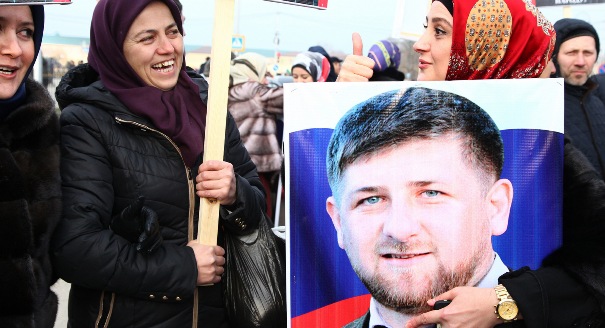
Ramzan Kadyrov is setting himself up to be an alternative to Putin, an improved version of the original. But the original rarely forgives the man who dares to copy him.
Source: Foreign Affairs
Ramzan Kadyrov, Russia's most controversial and outspoken politician, could no longer be quiet. In a series of statements just days into the New Year, Kadyrov and members of his inner circle viciously denounced members of Russia’s pro-Western opposition. In language reminiscent of the Stalin era—they called their adversaries “lackeys,” “traitors,” and “enemies of the people”—they said things that even Russian President Vladimir Putin has been reluctant to mention out loud. For doing so, Kadyrov won applause around the country.
Kadyrov is an outsized personality and has courted controversy since he became leader of Russia’s Chechen Republic in 2007 at the age of 30, succeeding his assassinated father. He is famous for his lavish lifestyle, his menagerie of tigers and ostriches, and his boastful and violent threats against his enemies, who range from human rights activists to Islamist rebels to the editors of Charlie Hebdo magazine.
Kadyrov’s years of running Chechnya as a personal fiefdom have depended on his close relationship with Putin. As long as Kadyrov was the main guarantor of peace in Chechnya, Putin would let him be. But the balance in the relationship between Moscow and Grozny, the capital city in which Kadyrov is ensconced, has changed. Busy tightening their control over every aspect of Russian life, Moscow’s elite have been increasingly looking to subordinate Chechnya to Putin and, especially, to Russia’s bureaucratic and administrative apparatus. For too long, the argument goes, Kadyrov has been allowed to run things his own way. Their desire to rein him in reached new heights last year, after Kadyrov and the people around him were blamed for the murder of Boris Nemtsov, the liberal grandee. As the gory details were released, Moscow worried that the Chechen leader was out of control.Russian President Vladimir Putin meets with Chechen leader Ramzan Kadyrov at the Kremlin in Moscow, Russia, December 10, 2015.
A decade or so ago, the goal of making Chechnya a region like all others in Russia would have seemed insane. Routine administration was simply impossible in a region devastated by two wars and a prolonged period of anarchy, during which a large proportion of the male population had taken up arms against federal Russian armed forces. But the republic has changed immensely in the last decade. Its citizens started enjoying peace and consumerism. And they know that Kadyrov is more beholden to the Russian state. They are less afraid, and less tempted to disappear into the hills and join the jihadists of the radical Islamist Caucasus Emirate, or its new rival in the region, the Islamic State (ISIS). In short, a decade of peace has reduced Kadyrov's status at home and reduced him to the level of the heads of Russia’s other regions.
And that brings us back to Kadyrov’s loud demarche in the silence of Russia’s long winter holidays. His value in the Russian system has declined, and he is looking for ways to make up for his loss in power as a regional politician by asserting himself as a figure on the national stage. To that end, his denunciations of “Western sympathizers” were heard with enthusiasm by Russians who believe that enemies—both Western liberals and Islamist radicals—are trying to destroy Russia, and want to see Moscow take decisive action.
In the battle against Islamists, Kadyrov insists, Chechnya is key. The region, as he told the newspaper Izvestia, has been “stained by a bloody war.” It deserves special care and attention—and perhaps even some thanks for helping repel ISIS invaders who are knocking at Russia’s gates. Meanwhile, in the battle against Western liberals, Kadyrov, a real patriot, is not afraid to speak the truth.
With his remarks, the Chechen leader got the result he wanted: condemnation from the usual suspects, including an opposition deputy in Krasnoyarsk, journalists, and human rights defenders—in short, those of whom the public and the Putin regime is already suspicious. And so, at a moment when the Russian governmental system is near a breaking point, unpleasant conversations about the leader of Chechnya can be postponed....
This article was originally published in Foreign Affairs.

Senior Fellow, Editor-in-Chief, Carnegie Russia Eurasia Center
Baunov is a senior fellow and editor-in-chief at the Carnegie Russia Eurasia Center.
Recent Work
Alexander Baunov
Alexander Baunov
Carnegie does not take institutional positions on public policy issues; the views represented herein are those of the author(s) and do not necessarily reflect the views of Carnegie, its staff, or its trustees.

European Commission President Ursula von der Leyen is about to give her annual address on the state of the EU. Here’s what she won’t—but should—say.

Rym Momtaz

The EU’s responses to two recent incidents expose the gulf between European perceptions and capabilities. Unless the union can bridge that gap, it will never become a real geostrategic power.
Rym Momtaz

European states control several Overseas Countries and Territories around the world that carry strategic, economic, and environmental weight. As great powers challenge the rules-based order, defending them is a geopolitical imperative for Europe.

Marc Pierini

In supporting Europe’s far-right, MAGA and Russia both want the same thing: a weaker EU. Europe must defend itself without abandoning the openness these forces exploit.

Armida van Rij

As we close out another season of Strategic Europe, it is worth taking stock of the deep shifts underway.
Rym Momtaz