

Q&A
Dara Massicot, Aaron David Miller, Andrew S. Weiss
{
  "authors": [
    "Andrew S. Weiss"
  ],
  "type": "legacyinthemedia",
  "centerAffiliationAll": "dc",
  "centers": [
    "Carnegie Endowment for International Peace"
  ],
  "collections": [],
  "englishNewsletterAll": "ctw",
  "nonEnglishNewsletterAll": "",
  "primaryCenter": "Carnegie Endowment for International Peace",
  "programAffiliation": "russia",
  "programs": [
    "Russia and Eurasia"
  ],
  "projects": [],
  "regions": [
    "Middle East",
    "Türkiye",
    "Central Asia",
    "Russia"
  ],
  "topics": [
    "Security",
    "Foreign Policy"
  ]
}
Source: Getty
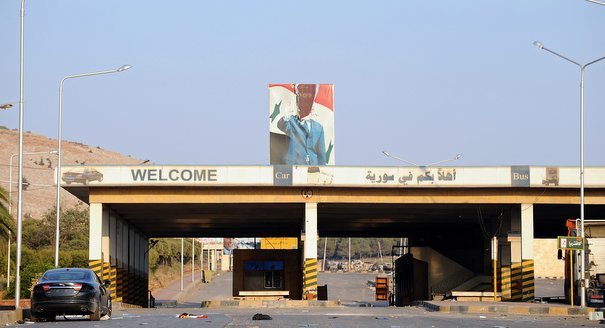
Turkish authorities say the three bombers in the Istanbul attack were Russian, Kyrgyz, and Uzbek, drawing renewed attention to the problem of Islamic radicalization in the former Soviet Union.
Source: NPR’s All Things Considered
ROBERT SIEGEL, HOST:
As we've heard, Turkish authorities have identified the three bombers in the Istanbul attack by nationality. One was Russian, one Kyrgyz, one Uzbek. Kyrgyzstan and Uzbekistan are former republics of the Soviet Union.
To learn more about what the bombers' origin say about the Islamic State these days, we turn now to Andrew Weiss who specializes in Russia and Eurasia at the Carnegie Endowment for International Peace and who joins us via Skype. Welcome to the program.
ANDREW WEISS: Great to be here.
SIEGEL: Are you surprised that this team evidently came from places that used to be in the former Soviet Union?
WEISS: Not entirely. Part of the attraction of ISIL seems to be its ideology, and so we've seen radicals from all around the world descend on Syria to fight and to be part of the jihad. There are a significant number of fighters from Russia and other parts of the former Soviet Union. The numbers are not exact, but it's probably in the low thousands.
SIEGEL: If ISIS is the draw - is the pull, what's the push out of Uzbekistan or Kyrgyzstan these days?
WEISS: The radical movements - the most visible radical movements in that part of the world actually were pushed out about 15 years ago, and they've been largely headquartered in Afghanistan and now in Pakistan since then. Some of them have made jihad and have moved to the Middle East and have been based in Syria or in Turkey.
SIEGEL: This is from a Reuters' story about Uzbekistan. It says Uzbekistan has banned beards, outlawed Islamic dress, shut restaurants that refused to sell alcohol and warned teahouses not to celebrate the nightly end of the Ramadan fast with Iftar meals. It sounds like a very anti-religious, anti-Islamic regime in Uzbekistan.
WEISS: Absolutely. It's a very authoritarian government and by basically cracking down on people they see as pious Muslims and basically conflating being a pious Muslim with being an Islamic radical, the government probably has a much harder time identifying who it really should be worried about.
We should bear in mind that much of the flow of foreign fighters from the former Soviet Union in Dutch Syria is actually gone from Russia to Syria. So what you would most likely see is people tend to be radicalized inside Russia where they're working as migrant workers, and then they somehow find their way to Syria as foreign fighters.
SIEGEL: How easy is it for militants to travel from those countries to Islamic state strongholds in Syria? I mean, is it - did you get stopped at border crossings along the way?
WEISS: Well, until very recently, until the famous shoot down of the Russian military jet last fall, there was actually visa-free travel between Russia and Turkey. So the amount of Russians who transited back and forth to Turkey was in the hundreds of thousands, if not millions, every year. So that - the transit routes, though, for Islamic fighters are believed to largely go through the South Caucasus and then over land into Turkey.
SIEGEL: Turkey and Russia have just made overtures to strengthen what had been tense relations. Do you think there'll be tighter cooperation now between the two on counterterrorism?
WEISS: That reconciliation is really only a day or two old. President Putin spoke to President Erdogan just yesterday to bury the hatchet over the shoot down incident last fall. But basically the world's cooperation with Russia on counterterrorism has always been something that looks more attractive in theory than in reality.
The Russian approach to counterterrorism has largely focused on basically treating all young men who are socioeconomically dispossessed or who may be religious Muslims as potential terrorist suspects. They've taken a kind of blunt force approach to the problem, which is very different than the way most western governments target terrorist groups.
SIEGEL: It sounds, though, from what you're describing that whatever you want to attribute the ability of these bombers to carry off the Istanbul airport attack - if indeed they did - it wasn't lack of a hard line against the movements that they belong to.
WEISS: No, but the borders are porous, and we're living in a world where determined transnational terrorist organizations are able to operate. And they're able to maneuver fighters and goods and financial support to places where we're vulnerable. That's just the reality.
SIEGEL: Andrew Weiss, thanks for talking with us today.
WEISS: Great to be here.
SIEGEL: Andrew Weiss is vice president for studies at the Carnegie Endowment for International Peace.
This interview originally aired on NPR's All Things Considered.
James Family Chair, Vice President for Studies
Andrew S. Weiss is the James Family Chair and vice president for studies at the Carnegie Endowment for International Peace, where he oversees research on Russia, Ukraine, and Eurasia. His graphic novel biography of Vladimir Putin, Accidental Czar: the Life and Lies of Vladimir Putin, was published by First Second/Macmillan in 2022.
Recent Work

Dara Massicot, Aaron David Miller, Andrew S. Weiss

Frances Z. Brown, Nate Reynolds, Priyal Singh, …
Carnegie does not take institutional positions on public policy issues; the views represented herein are those of the author(s) and do not necessarily reflect the views of Carnegie, its staff, or its trustees.

Are Germany’s economic, industrial, and political struggles becoming a liability for the EU’s ability to rise to the geopolitical moment?

Rym Momtaz, ed.

European Commission President Ursula von der Leyen is about to give her annual address on the state of the EU. Here’s what she won’t—but should—say.
Rym Momtaz

The aftermath of the Ceuta crisis shows Europe has drawn the wrong lessons. Rather than doubling down on failed migration policies, the EU needs to address the underlying roots of such episodes.

Richard Youngs

Canadian Prime Minister Mark Carney has twice inspired praise for standing up to U.S. President Donald Trump: at the 2026 World Economic Forum in Davos and on Canada-U.S. trade negotiations. Is Carney showing a third way better than the EU has in dealing with the Trump administration?
Rym Momtaz, ed.

The EU’s responses to two recent incidents expose the gulf between European perceptions and capabilities. Unless the union can bridge that gap, it will never become a real geostrategic power.
Rym Momtaz