

Paper
- +4
George Perkovich, Ariel (Eli) Levite, Lyu Jinghua, …
{
  "authors": [
    "Li Bin"
  ],
  "type": "legacyinthemedia",
  "centerAffiliationAll": "",
  "centers": [
    "Carnegie Endowment for International Peace",
    "Carnegie China"
  ],
  "collections": [],
  "englishNewsletterAll": "",
  "nonEnglishNewsletterAll": "",
  "primaryCenter": "Carnegie China",
  "programAffiliation": "",
  "programs": [],
  "projects": [],
  "regions": [
    "East Asia",
    "South Korea",
    "China"
  ],
  "topics": [
    "Security",
    "Arms Control",
    "Foreign Policy"
  ]
}
Source: Getty
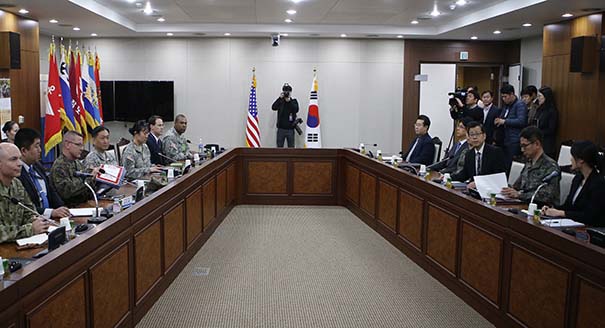
The Republic of Korea’s decision to deploy the THAAD missile system has caused a strong reaction from China. Further dialogue is needed to strengthen ties between the two countries.
Source: Kyunghyang Daily
The decision to deploy a Theater High Altitude Area Defense (THAAD) system in the Republic of Korea (ROK) two weeks ago by the ROK and the United States caused strong diplomatic reactions from China. Further negative interactions between the ROK and China may develop if the two countries cannot find a solution.
Both the ROK and China exercised great self-constraint over their missiles and missile defense activities before the THAAD decision. Until recently, the ROK was unwilling to accept suggestions from the United States about deploying a THAAD missile defense system. Its concern was that a THAAD system in the ROK may be worrisome to China. China usually chooses to launch its missile flight tests from East to West because missile flight tests toward the East may be perceived as a threat in the ROK. The careful self-restraint by the two countries stabilized their bilateral relations and encouraged quick growth of economic trade and cultural exchanges between the ROK and China over the last few decades. The decision to deploy THAAD disturbed the stable relation between the ROK and China.
Although the ROK and U.S. governments declare that the THAAD system is not aimed at China, the radar of the system—a TPY-2 —would be powerful enough to track some Chinese missile warheads in flight. China has to worry that the THAAD radar in the ROK would undermine China’s nuclear deterrence by collecting important data on Chinese nuclear warheads that the United States could not acquire from other sources.
A radar’s detection range depends on how it operates, such as the power of its electromagnetic beam and its dwell time on a target. In one specific working mode, a radar’s detection range depends mainly on the electromagnetic visibility, or radar-cross-section of the target. If a target has a small radar-cross-section, the radar receives very little electromagnetic energy reflected from the target and therefore can only see the target at a short range.
A missile warhead is usually in the shape of a cone and has a very smooth surface on the nose and sides of the cone, which reduces the radar-cross-section of the front of the missile. Some unavoidable uneven surfaces have to be left on the back of the warhead, meaning the back of a warhead usually has a much larger radar-cross-section than the front. If a radar looks at the front of an electromagnetically-stealth warhead, there is little electromagnetic reflection coming from the nose and sides of the cone. However, if a radar looks at the back of the same warhead, the electromagnetic reflection could be much larger. So the radar may have a much larger detection range when it looks at the back of a warhead than when it looks at the front of the warhead.
The THAAD radar to be deployed in the ROK would be in a very special position where it could view the back of the Chinese warheads flying over the northeast part of China when it is deployed to watch missiles from North Korea. Some people claim that the northeast part of China is at the margin of THAAD’s maximum detection range, so China should not worry. However, the calculation behind this claim uses the small radar-cross-section of the front of the warhead and underestimates THAAD’s detection range. Actually, when THAAD has a view of the back of Chinese warheads, it has a large enough range to detect Chinese warheads in two situations.
In the first situation, China launches a missile flight test from the northeast part of China toward the West. China needs such missile tests to develop missile defense countermeasures. The missile releases a warhead and some decoys after its boost phase. The radar signatures of the front of the warhead and decoys are usually designed to be indistinguishable or randomly different, so they can fool a missile defense radar in front of them. The radar signatures of the back of the warhead and decoys may have some systematic differences when they are released from the missile. THAAD could be used to spy on Chinese missile flight tests to understand the characteristics of the warheads and decoys released by Chinese missiles.
In the second situation, a Chinese intercontinental ballistic missile is launched from central China for nuclear retaliation against the United States. THAAD could track the missile and warhead at a very early stage and transfer its trajectory data to the U.S. national missile defense system. This would allow the U.S. missile defense interceptors to have more time and more attempts to intercept the Chinese warhead. THAAD may also identify the real Chinese warhead from decoys by comparing the radar signatures from the back of the warhead. This mission is much more difficult for a radar in front of the Chinese warheads.
THAAD, if deployed in the ROK, would undermine China’s nuclear deterrent capability due to its special geographical position, its high power, and its capability of measuring centimeters. China would have to respond. One thing China may have to do is change the direction of its missile flight tests to hide the back of its warhead from THAAD. If China decides to do so, the target points of China’s missile flight tests would likely be in the East China Sea. This would in turn create threat perceptions in the ROK.
The situation is exactly a security dilemma between the ROK and China. Neither the ROK nor China intends to pose security threats against the other side. The THAAD decision has triggered negative interactions that are not in the interests of either side. Some cooperative solutions are important for the two countries to mitigate the security dilemma. One approach would be for the ROK not to deploy the THAAD TPY-2 radar. Instead, it could deploy its Green Pine radar or another radar with similar capabilities to guide the THAAD interceptors. The THAAD TPY-2 radar does not provide more capability to protect the ROK from the North Korean missile threat relative to a Green Pine-level radar since the TPY-2 radar’s detection range goes too far beyond North Korean territory.
The Chinese concern is mostly with the THAAD radar system. If the ROK decides to deploy a Green Pine radar instead of the TPY-2 radar, it would not degrade the ROK’s capability against the North Korean missile threat. At the same time, it would significantly relieve Chinese worries about the THAAD deployment and fix the bilateral ROK-China relationship.
Replacing THAAD is one approach to mitigate the security dilemma between the ROK and China. People in both countries should have more dialogue to explore constructive solutions to the problems facing them.
A version of this article was originally published by Kyunghyang Daily.
Former Senior Fellow, Nuclear Policy Program and Asia Program
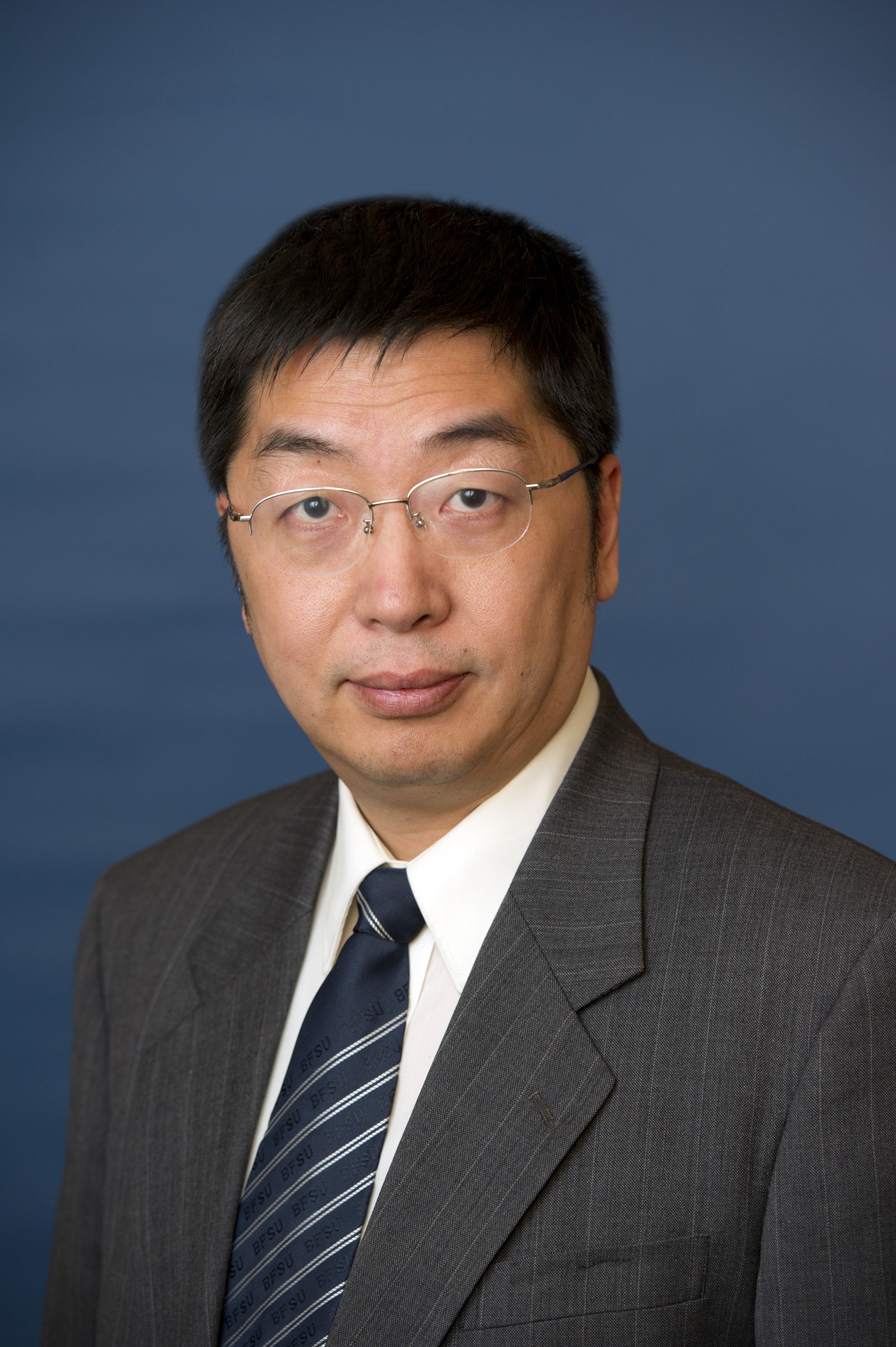
Li was a senior fellow working jointly in the Nuclear Policy Program and Asia Program at the Carnegie Endowment for International Peace.
Recent Work


George Perkovich, Ariel (Eli) Levite, Lyu Jinghua, …


James M. Acton, Tong Zhao, Li Bin
Carnegie does not take institutional positions on public policy issues; the views represented herein are those of the author(s) and do not necessarily reflect the views of Carnegie, its staff, or its trustees.

Ahead of a tough winter for Ukraine, Donald Trump’s swing back toward Russia bodes ill. But instead of panicking, Kyiv’s European allies are focusing on action.

Rym Momtaz

Funding Ukraine remains a priority for European leaders. As Russia’s war of aggression heads into another winter, two feasible options to mobilize support for Kyiv should be fast-tracked.


Vladyslav Rashkovan, Gregory P. Wilson

While the EU and European governments are embracing the much-lauded middle-power moment, this entails three difficult conundrums.

Richard Youngs

Europe is facing rising populism internally as well as external pressures from Russia, China, Turkey, and the United States.

Dimitar Bechev

Much has been said of the changes Brussels is trying to make to the EU enlargement process. Here’s why gradual integration might—or might not—be the answer.
Dimitar Bechev