

Commentary
Judy Dempsey
{
  "authors": [
    "Judy Dempsey"
  ],
  "type": "legacyinthemedia",
  "centerAffiliationAll": "dc",
  "centers": [
    "Carnegie Endowment for International Peace",
    "Carnegie Europe"
  ],
  "collections": [],
  "englishNewsletterAll": "ctw",
  "nonEnglishNewsletterAll": "",
  "primaryCenter": "Carnegie Europe",
  "programAffiliation": "EP",
  "programs": [
    "Europe"
  ],
  "projects": [],
  "regions": [
    "Europe",
    "Western Europe",
    "Iran"
  ],
  "topics": [
    "Foreign Policy",
    "EU"
  ]
}
Source: Getty
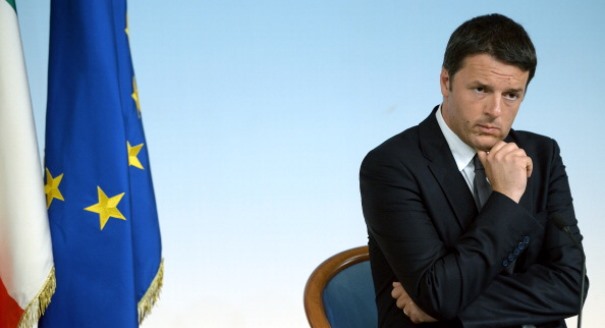
The defeat for Italian Prime Minister Matteo Renzi in the December 4 constitutional referendum spells bad news for European foreign policy and the transatlantic relationship.
Europe is now being pulled by two irreconcilable political ideologies after Austrian voters in Sunday’s presidential election threw their support behind a liberal, pro-European Union candidate, whereas in Italy, the reform-minded prime minister, Matteo Renzi, was roundly defeated by anti-establishment and anti-E.U. movements.
One ideology, shown by the Austrian result, is wedded to the idea of an open Europe and a strong E.U. based on tolerance and solidarity. The other, as many Italians showed, is inward-looking, anti-immigrant, anti-E.U., anti-globalization. It is convinced that the nation-state can go its own way.
Whichever movement prevails, it will have profound implications for the future of Europe’s relations with Russia, Europe’s security and defense ambitions, and the transatlantic relationship which has been called into question by U.S. President-elect Donald Trump.
Moreover, the results in Austria and Italy show how supporters of both movements will make a big push to influence the outcome of the presidential elections in France, which will take place in the spring of 2017, and the German federal elections, which are scheduled for next fall. The results of both will determine if, or how, the E.U. will continue to survive.
“These two elections are very important,” Lorenzo Kihlgren Grandi, a lecturer at Sciences Po in Paris, told me. “Pro-E.U. movements have to find ways to fight for the idea of Europe, for its diversity, for what it stands for,” he said.
Britain’s decision to leave the E.U. and Trump’s election as the next U.S. president have given Euro-skeptic parties a boost. But not everything is going their way.
Pro-European supporters can take heart from the Austrian result. Alexander Van der Bellen, a Green politician who ran as an independent, managed to defeat his far-right wing opponent Norbert Hofer in a rerun. That Hofer had at times threatened to pull the country out of the E.U. swung voters around to Van der Bellen.
“It showed you can win elections in Europe with pro-European views,” Tessa Szyszkowitz, the Britain correspondent for Profil, the Austrian news magazine, told me.
But not in Italy.
Prime Minister Renzi’s attempts to introduce far-reaching constitutional reforms aimed at streamlining the government, which would have given it more powers to modernize the country’s flagging economy, were roundly defeated. On Sunday, Renzi announced he would resign from office.
Renzi’s defeat cannot be underestimated. This is bad news for Europe.
The anti-establishment Five Star Movement, led by Beppe Grillo, and the anti-immigrant Northern League that is deeply anti-E.U. — even wanting to take the country out of the bloc — are both waiting in the wings.
Italy, unlike Austria, is one of the founding members of the European Union. It supported the establishment of the euro currency. It used to be a passionate defender of more European integration. It used to be one of the bedrocks of the E.U.
But over the years, its economy and politics has been plagued by inefficiency that has fueled unemployment, a gargantuan bureaucracy, the mafia and a media recently controlled by the former prime minister Silvio Berlusconi. Even so, Italy was always regarded by Berlin and Paris as a crucial member of the E.U. Its future membership may now be in doubt.
“The danger for Italy now is that a string of unpredictable outcomes — ranging from a difficult-to-control euro decline to a run on troubled Italian banks and a further loss of credibility of the European Central Bank — could ensue,” argued David Marsh, managing director of the Official Monetary and Financial Institutions Forum.
“With the main opposition parties that backed the No vote all declaring their wish to leave the euro, and anti-establishment groupings gaining round in other important member countries including France, European fragmentation is plainly accelerating,” Marsh added in an overnight analysis of the Italian result.
The Italian result could have major foreign policy implications.
It will make Europe less united and less prepared to deal with the incoming Trump administration. Trump’s pro-Russian, anti-globalization views combined with a more inward-looking United States chimes well with anti-E.U. and populist movements across Europe.
That is good news for Russian President Vladimir Putin. The last thing he wants is a strong Europe. That is why the French and German elections are so important to him and the E.U.
Angela Merkel, the German chancellor who announced that she would seek a fourth term, said it would be one of the most difficult campaigns she has fought. Russian interference could play a role in that.
Germany’s domestic intelligence agency has accused Russia of being behind a series of cyberattacks on German state computer systems in 2015. In May 2016, hackers also targeted Merkel’s Christian Democratic Union party.
Bruno Kahl, Germany’s foreign intelligence chief, warned that Russia could seek to disrupt next year’s German elections with cyberattacks. He said the agency was aware of cyberattacks with no other purpose than “causing political uncertainty.”
“Europe is in the focus of this attempted disruption, and Germany in particular,” he told Sueddeutsche Zeitung.
Merkel is still Europe’s undisputed leader. She has insisted that the E.U. keeps sanctions on Russia and defends NATO. She has kept Europe together.
Merkel will certainly need strong support from France; thus, much depends on the outcome of its presidential election. Should Marine Le Pen, leader of the far-right National Front, win, she would likely do what the British did in June: call a referendum to decide the country’s future in the E.U. If the Italian result hit at the core of the E.U.’s founding members, a French victory for Le Pen could be the bloc’s undoing.
This article was originally published by the Washington Post.

Nonresident Senior Fellow, Carnegie Europe
Judy Dempsey is a nonresident senior fellow at Carnegie Europe
Recent Work
Judy Dempsey
Judy Dempsey
Carnegie does not take institutional positions on public policy issues; the views represented herein are those of the author(s) and do not necessarily reflect the views of Carnegie, its staff, or its trustees.

The European Commissioner for Trade is headed to China. But after President Xi’s bridge-building visit to Washington, can a more isolated EU overcome Beijing’s stranglehold on critical raw materials? Who will blink first?

Rym Momtaz, ed.

European NATO countries are wrestling with the possibility of U.S. disengagement from the alliance. With the continent’s security increasingly uncertain, governments must restore the credibility of their collective defense.



Hans-Dieter Lucas, Adam Thomson, Pierre Vimont

The domestic impacts of how long it is taking to end the war in Ukraine have pushed the French electorate to the political extremes and compromised the country’s diplomatic capacity.
Rym Momtaz

Before the next wave of EU enlargement takes place, the union needs to grapple with thorny questions of how power is distributed among its members.


Emil Sondaj Hansen, Ditte Brasso Sørensen

The new U.S.–Denmark–Greenland agreement will help Washington exert political, economic, and financial dominance under the guise of security. Yet, it acknowledged Copenhagen’s and Nuuk’s sovereignty on the island.

Marc Pierini