

Paper
Constantino Xavier
{
  "authors": [
    "Constantino Xavier"
  ],
  "type": "legacyinthemedia",
  "centerAffiliationAll": "",
  "centers": [
    "Carnegie Endowment for International Peace",
    "Carnegie India"
  ],
  "collections": [],
  "englishNewsletterAll": "",
  "nonEnglishNewsletterAll": "",
  "primaryCenter": "Carnegie India",
  "programAffiliation": "",
  "programs": [],
  "projects": [],
  "regions": [
    "South Asia",
    "India"
  ],
  "topics": [
    "Foreign Policy",
    "Security"
  ]
}
Source: Getty
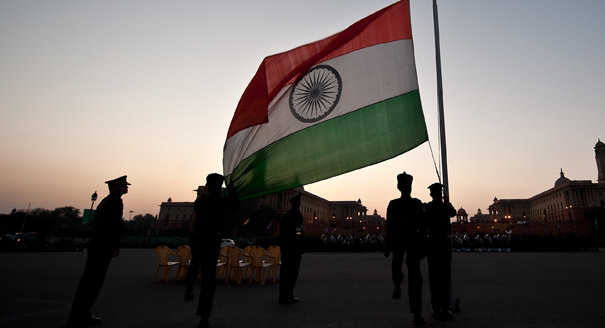
India has extensive experience in conducting evacuation operations, but to secure the lives and assets of Indians abroad, the government must avoid an ad hoc approach and seek to institutionalize best practices, bolster diplomatic and military capabilities, and improve coordination.
Source: Hindu
On January 26, 1986, as New Delhi celebrated its Republic Day, South Yemen was being engulfed in a civil war that threatened the lives of thousands of foreigners living there. While Britain, France and the Soviet Union coordinated to jointly evacuate their nationals, the 850 Indians in the country were forced to wait for several more days until New Delhi finally managed to convince a merchant ship to pick them up.
Fast forward almost 30 years, to April 2015, when Yemen was on fire once again. This time, however, the Indian government successfully conducted Operation Raahat to evacuate almost 5,000 Indians and nearly 1,000 citizens from 41 other countries. Besides Air India aircraft, the Indian Navy deployed vessels, and the Indian Air Force C-17 Globemasters for strategic airlift. Such unprecedented efforts and resources reflect New Delhi’s new drive to protect the lives and assets of its citizens abroad in times of crisis.
The increasing size and complexity of the diaspora requires the government to expand capacity and improve procedures. More than 11 million Indians now reside abroad and 20 million travel internationally every year. As political instability rattles the West Asian region, which hosts more than seven million Indians, the government can no longer rely on heroic efforts by individual officials or quick-fix solutions.
First, the government will need to build on its rich experience in conducting more than 30 evacuation operations since the 1950s. Studying India’s history, best practices and lessons learned will help institutionalise them and avoid the need to reinvent the wheel every time a crisis erupts. By supporting policy-oriented research at universities and think tanks to document the memory of senior officials, the government would also facilitate the transmission of their expertise to younger officials.
Second, the government must avoid the jugaad approach. Every evacuation case is unique, given the specific nature and location of the crisis, but this should not preclude an analytical attempt to formulate a blueprint that lists core tasks for all operations. An inter-ministerial committee should prepare a manual with guidelines that establish a clear chain of command and division of competencies; identify regional support bases, assembly points and routes for evacuation; develop country-specific warden systems to communicate with expatriates; and establish evacuation priority and embarkation criteria.
Third, India’s diplomatic cadre must be given specific training to operate in hostile environments. As a senior government official told me, when it comes to operating in complex theatres, “practice and preparedness make perfection”.
To achieve this, the government could instruct the police or army to train Indian Foreign Service probationers to operate in war zones; conduct frequent evacuation simulations and emergency drills; and create rapid reaction teams of Indian security personnel to be deployed to protect diplomatic staff and installations abroad.
Fourth, the success of future operations will also rely on New Delhi’s willingness to work together with friendly governments. India will have to invest in cooperative frameworks that facilitate coordination among countries that have large expatriate populations in West Asia, in particular Nepal, Bangladesh and Sri Lanka, and among leading powers with evacuation capacity in the Indian Ocean region.
Fifth, the government will have to assign a greater role to its armed forces, in particular by strengthening the Navy and Air Force’s capacity to operate in tandem with civilian authorities. It should, for example, direct the military to develop a non-combatant evacuation (NEO) doctrine, designate the Integrated Defence Staff as the nodal organisation to improve inter-services and civil-military coordination, direct the services to conduct more multilateral NEO exercises, and adapt military modernisation plans to increase capacity for out-of-area deployment and evacuation.
Sixth, to minimise redundancies, the government must institutionalise a permanent inter-ministerial coordinating mechanism for emergency evacuations, incentivise inter-agency cross-posting of officials dealing with diaspora affairs, and encourage State governments to create regional contingency plans.
Seventh, to avoid cost inflation and delays, the government must establish a permanent civil reserve air fleet that pools aircraft from all Indian airlines based on pre-established requisition and reimbursement procedures.
Eighth, the government will have to invest in new technologies to better monitor the diaspora’s profile and mobility. This can be achieved by encouraging more diplomatic missions to provide online consular registration forms, developing an online registration system for overseas travellers, utilising social media, and by making the Aadhaar card compulsory to facilitate biometric identity verification and reduce identity fraud during evacuation.
Finally, the government must expand efforts to manage public opinion and be able to conduct a quiet diplomacy that is crucial to safely extricate Overseas Indians from conflict zones. To reduce domestic pressures, it should embed media representatives more frequently in such missions, reassure the diaspora by ensuring that high-level political representatives are personally engaged, and avoid raising expectations by clearly distinguishing Indian citizens from people of Indian origin.
Former Fellow, Carnegie India
Constantino Xavier was a fellow at Carnegie India, based in New Delhi. His research focus is on India’s foreign policy, with emphasis on relations with its neighboring countries and South Asian regional security.
Recent Work
Constantino Xavier
Constantino Xavier
Carnegie does not take institutional positions on public policy issues; the views represented herein are those of the author(s) and do not necessarily reflect the views of Carnegie, its staff, or its trustees.

Ahead of a tough winter for Ukraine, Donald Trump’s swing back toward Russia bodes ill. But instead of panicking, Kyiv’s European allies are focusing on action.

Rym Momtaz

Funding Ukraine remains a priority for European leaders. As Russia’s war of aggression heads into another winter, two feasible options to mobilize support for Kyiv should be fast-tracked.


Vladyslav Rashkovan, Gregory P. Wilson

While the EU and European governments are embracing the much-lauded middle-power moment, this entails three difficult conundrums.

Richard Youngs

Europe is facing rising populism internally as well as external pressures from Russia, China, Turkey, and the United States.

Dimitar Bechev

Much has been said of the changes Brussels is trying to make to the EU enlargement process. Here’s why gradual integration might—or might not—be the answer.
Dimitar Bechev