

In The Media
Jessica Tuchman Mathews
{
  "authors": [
    "Jessica Tuchman Mathews"
  ],
  "type": "other",
  "centerAffiliationAll": "",
  "centers": [
    "Carnegie Endowment for International Peace",
    "Carnegie China"
  ],
  "collections": [
    "China’s Foreign Relations"
  ],
  "englishNewsletterAll": "",
  "nonEnglishNewsletterAll": "",
  "primaryCenter": "Carnegie Endowment for International Peace",
  "programAffiliation": "",
  "programs": [],
  "projects": [],
  "regions": [
    "East Asia",
    "China"
  ],
  "topics": [
    "Economy",
    "Foreign Policy"
  ]
}
Source: Getty
Without doubt, Asia’s economic ascent has been extraordinary, but Westernization—the spread of the West’s influence and values—has rested on much more than its wealth and the military power derived from it.
Source: New York Review of Books
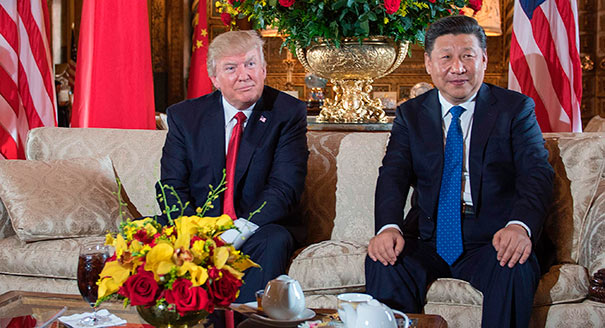
Gideon Rachman’s Easternization, his new survey of a transformed Asia, admirably does what so little writing on foreign affairs attempts. It treats with equal facility economics, geopolitics, security, enough history for needed background, official thinking, and public attitudes. Rachman, chief foreign affairs columnist for the Financial Times, has an eye for the telling statistic and for the memorable detail that makes it stick. He packs an enormous amount of information into a short book and opens windows of understanding for nonexperts onto this immensely important three fifths of humanity. And while not directly concerned with the new American administration, the story he tells shows well why Donald Trump’s foreign policies could end so badly for the United States and for the world.
But Rachman does not, in the end, make a convincing case for the book’s thesis—embodied in its one-word title. The central issue, he writes, is “how the rise in Asian economic power is changing world politics.” His momentous answer is that “the West’s centuries-long domination of world affairs,” stretching back to 1500, “is now coming to a close.” Without doubt, Asia’s economic ascent has been extraordinary, but Westernization—the spread of the West’s influence and values—has rested on much more than its wealth and the military power derived from it. Those other elements—including open governments, readiness to build institutions, and contributions to others’ security and growth—are weak or absent in Asia today. Easternization is neither here nor coming soon....
This article will be published in the New York Review of Books May 11 edition.

Distinguished Fellow
Mathews is a distinguished fellow at the Carnegie Endowment for International Peace. She served as Carnegie’s president for 18 years.
Recent Work
Jessica Tuchman Mathews
Jessica Tuchman Mathews
Carnegie does not take institutional positions on public policy issues; the views represented herein are those of the author(s) and do not necessarily reflect the views of Carnegie, its staff, or its trustees.

The EU can impose sanctions but struggles to enforce them without the United States. With Washington increasingly disinterested in backing European interests, the bloc must now fend for itself.


Nicu Popescu, Tiago Antunes

Russia is testing the waters of NATO’s mutual defense clause. What do strikes in Romanian territorial waters mean for the alliance’s posture toward Moscow?

Dimitar Bechev

With its public finances in shambles, the far right polling at 35 percent ahead of the 2027 presidential election, and a growing protest movement, is France’s crisis a threat to the EU’s geopolitical awakening?

Rym Momtaz, ed.

Ahead of a tough winter for Ukraine, Donald Trump’s swing back toward Russia bodes ill. But instead of panicking, Kyiv’s European allies are focusing on action.
Rym Momtaz

Funding Ukraine remains a priority for European leaders. As Russia’s war of aggression heads into another winter, two feasible options to mobilize support for Kyiv should be fast-tracked.


Vladyslav Rashkovan, Gregory P. Wilson