

Commentary
While the EU and European governments are embracing the much-lauded middle-power moment, this entails three difficult conundrums.
Richard Youngs
{
  "authors": [
    "Deborah Gordon",
    "Sarah M. Jordaan"
  ],
  "type": "legacyinthemedia",
  "centerAffiliationAll": "dc",
  "centers": [
    "Carnegie Endowment for International Peace"
  ],
  "collections": [],
  "englishNewsletterAll": "ctw",
  "nonEnglishNewsletterAll": "",
  "primaryCenter": "Carnegie Endowment for International Peace",
  "programAffiliation": "SCP",
  "programs": [
    "Sustainability, Climate, and Geopolitics"
  ],
  "projects": [
    "Carnegie Oil Initiative"
  ],
  "regions": [
    "North America",
    "United States"
  ],
  "topics": [
    "Climate Change"
  ]
}
Source: Getty
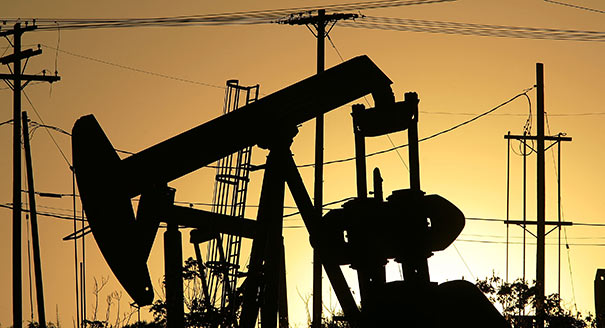
More power to the states to price carbon can support emissions reduction from human activities that accelerate climate change.
Source: Medium
The United States is entering a new era of climate policy with a vastly different administration. While climate policy was consistently on the national agenda under President Obama — with actions ranging from investments in clean energy innovation to the development of the Clean Power Plan — any form of federal carbon pricing now seems like an idea fading into a distant past, given President Trump’s focus on reducing taxes. But that does not mean that climate policy cannot and will not be implemented; it just may be shaped under a different governance structure — one that is already emerging in a number of countries, including the United States.
That different governance structure is federalism — whereby states share power with the federal government. Federalism can create challenges to international climate goals, but it can also spur innovation.
If President Trump chooses to withdraw from the Paris agreement, the lack of national oversight in managing greenhouse gas emissions may result in emissions growth at the state-level across the country. There are several economic factors that may counteract such a trajectory regardless of President Trump’s beliefs about climate, namely low prices of natural gas and increasingly competitive renewable technologies. There are no guarantees that commitments will be reached, however, without policy measures applied by the federal government. No guarantees, that is, unless the states decide to take action regardless of federal policy.
In the absence of federal leadership, subnational governments can take the helm in advancing climate policy in the regions within their respective jurisdictions. The United States has already experienced state-leadership reducing greenhouse gas emissions. California — a state the size of many nations — has enacted the boldest set of subnational comprehensive climate policies. Colorado has initiated the most advanced set of regulations for methane emissions reduction, including federal initiatives. Even Texas has a thriving wind industry that has surpassed renewable portfolio requirements fifteen years ahead of schedule despite its fossil fuel promoting reputation.
Sub-national governmental action in America and beyond — states, provinces, and territories — can have a significant impact and, with concerted global effort to align new cohorts, this action can result in real change.
Sidestepping politics is key. Carbon pricing has already been implemented under conservative subnational governments. And polls indicate that the majority of both Republicans and Democrats alike want action on climate change.
On conservative support for carbon pricing, the Canadian province of Alberta first legislated climate policy in 2007 under conservative leadership. When enacted, the Specified Gas Emitters Regulation established a carbon pricing system that reinvested its revenue in clean energy innovation through an independent body then called the Climate Change Emissions Management Corporation, now Emissions Reduction Alberta. The emissions intensity of oil sands operations continued to decrease and revenue went into clean energy across energy technologies, though with a heavy emphasis on fossil fuels due to the provinces natural resource endowment. While Albertans still primarily voted conservative in the 2015 federal election, new climate leadership the prior year placed a 100 megatonne cap on oil sands operations.
Polls that indicate that Republican voters are also increasingly supportive of limiting greenhouse gas emissions as tracked in this recent Pew poll. And former California governor Arnold Schwarzenegger is pressing Republicans to “stop treating climate change like a political issue.” These examples show why it is not inconceivable that a new model of Republican climate policy will emerge at the state-level, with daring politicians at the forefront of environmental action.
The onus is not only on conservative jurisdictions. The most aggressive action has been taken by left-leaning cohorts and jurisdictions. The Regional Greenhouse Gas Initiative (called RGGI) — a cooperative effort among Connecticut, Delaware, Maine, Maryland, Massachusetts, New Hampshire, New York, Rhode Island, and Vermont — is the United States’ first mandatory market-based emissions reduction program that caps CO2 emissions from the power sector. Cap and trade systems are now being implemented together by sub-national Canadian provinces and American states. Ontario is joining Quebec and California in leading such an initiative. And British Columbia spearheaded an effective revenue-neutral carbon tax, which has also successfully reduced provincial emissions.
More power to the states to price carbon can support emissions reduction from human activities that accelerate climate change. As climate policy advances in states and sub-national governments, national leaders who support climate mitigation efforts could be emboldened to act at the federal-level. The move toward state leadership in addressing climate change couldn’t be more timely — and pressing.

Former Director and Senior Fellow, Energy and Climate Program
Gordon was director of Carnegie’s Energy and Climate Program, where her research focuses on oil and climate change issues in North America and globally.
Sarah M. Jordaan
Sarah M. Jordaan is an assistant professor of energy, resources, and environment at the School of Advanced International Studies.
Carnegie does not take institutional positions on public policy issues; the views represented herein are those of the author(s) and do not necessarily reflect the views of Carnegie, its staff, or its trustees.

While the EU and European governments are embracing the much-lauded middle-power moment, this entails three difficult conundrums.

Richard Youngs

Europe is facing rising populism internally as well as external pressures from Russia, China, Turkey, and the United States.

Dimitar Bechev

European NATO countries are wrestling with the possibility of U.S. disengagement from the alliance. With the continent’s security increasingly uncertain, governments must restore the credibility of their collective defense.



Hans-Dieter Lucas, Adam Thomson, Pierre Vimont

The new U.S.–Denmark–Greenland agreement will help Washington exert political, economic, and financial dominance under the guise of security. Yet, it acknowledged Copenhagen’s and Nuuk’s sovereignty on the island.

Marc Pierini

European Commission President Ursula von der Leyen is about to give her annual address on the state of the EU. Here’s what she won’t—but should—say.

Rym Momtaz