

Article
C. Raja Mohan, Darshana M. Baruah
{
  "authors": [
    "C. Raja Mohan"
  ],
  "type": "legacyinthemedia",
  "centerAffiliationAll": "dc",
  "centers": [
    "Carnegie Endowment for International Peace",
    "Carnegie India"
  ],
  "collections": [],
  "englishNewsletterAll": "ctw",
  "nonEnglishNewsletterAll": "",
  "primaryCenter": "Carnegie India",
  "programAffiliation": "SAP",
  "programs": [
    "South Asia"
  ],
  "projects": [],
  "regions": [
    "Asia",
    "South Asia",
    "India",
    "East Asia",
    "Japan",
    "China"
  ],
  "topics": [
    "Foreign Policy"
  ]
}
Source: Getty
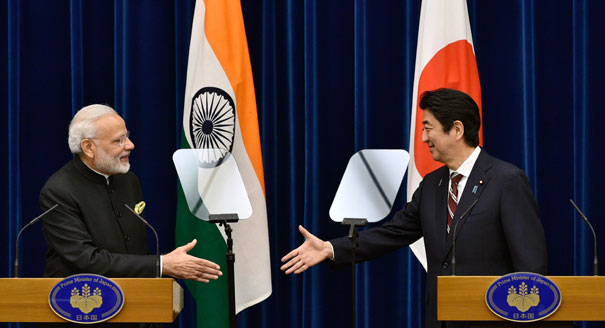
Relations between India and Japan have transformed over the past few years, in part due the rapid rise of China and growing uncertainty over the future U.S. role in Asia.
Source: Indian Express
That Japan was the only nation to extend public support to India during the Doklam confrontation with China is symbolic of the extraordinary transformation of relations between the two Asian powers over the last few years. Two decades ago, in the aftermath of India’s nuclear tests, Tokyo was at the forefront of the international condemnation and the imposition of collective economic measures against Delhi.
Today it is quite tempting to suggest that Japan has come closest to being India’s natural ally in Asia. Purists will certainly question the idea of an “alliance” between India and Japan. India’s international identity, after all, has long been articulated in terms of “non-alignment”. Japan, in contrast, swears by its lone alliance with the United States.
The emerging Asian dynamic, however, suggests that Delhi and Tokyo must necessarily draw closer. Whether the relationship between Delhi and Tokyo will eventually approximate to an alliance is likely to be determined less by tradition and more by the current convulsions in their shared Asian and Indo-Pacific geography.
Two factors are threatening to unravel the post-war order in Asia. One is the rapid rise of China and the other is the growing uncertainty over America’s future role in Asia. Nearly 40 years of accelerated economic growth has helped China inch closer to the aggregate GDP of the United States. Purposeful military modernisation over the last few decades has given Beijing levers to contest US military dominance over Asia.
As China closes the gap with the US, the imbalance between Beijing and its Asian neighbours has grown massively. Rising China has dethroned Japan as the number one economic power in Asia. It has also shattered the broad parity with India that existed until the 1980s. China’s GDP is now five times larger than that of India. Beijing outspends Delhi and Tokyo on defence by more than four times.
According to the London-based International Institute of Strategic Studies, China’s defence budget ($216 billion) is more than twice that of India ($56 billion) and Japan ($46 billion) put together. As they wake up to strategic diminution vis-a-vis China, India and Japan are also buffeted by the unprecedented political turbulence in the United States. President Donald Trump is challenging the two foundations of America’s post-war primacy in Asia — the willingness to act as the market for Asian goods and bearing the main burden of defending its allies in the region, including Japan.
There is undoubtedly much resistance from the establishment in Washington to Trump’s heresies on free trade and Eurasian alliances. But the tussle in Washington has begun to induce both Delhi and Tokyo not to take America’s political trajectory in Asia for granted. As they cope with China’s assertiveness, India and Japan also worry about the consequences of a potential American retrenchment or a deliberate decision in Washington to cede more space to Beijing in Asia.
While they hope for an enduring American role in stabilising Asia, Delhi and Tokyo also need to insure against wild oscillations in US policy. One way of doing that is to move towards a genuine alliance between India and Japan. America may have no objections to such an alliance. It has, in fact, actively encouraged closer cooperation between Delhi and Tokyo.
A potential alliance between India and Japan can neither replace the American might nor contain China. As Beijing’s neighbours, Delhi and Tokyo have a big stake in a cooperative relationship with Beijing and at the same time a strong incentive to temper some of China’s unilateralism through a regional balance of power system.
While the objective case for an alliance is evident, can Delhi and Tokyo overcome their strategic inertia and take the necessary subjective decisions? To be sure, Delhi and Tokyo have come a long way since the tensions over India’s nuclear tests in the late 1990s. But there is much distance to go before they can showcase at least an alliance-like relationship.
Successive prime ministers in Delhi and Tokyo contributed to this transformation. Prime Minister Shinzo Abe, who is in Ahmedabad this week for the annual summit with the Indian PM, deserves special credit. During his brief first tenure as PM during 2006-07, Abe outlined the broad framework for a strong strategic partnership with India.
Luckily for India, Abe has had a rare second shot at leading Japan since late 2012. He achieved the near impossible by getting the Japanese bureaucratic establishment to negotiate a civil nuclear cooperation agreement with India and the political class to approve it. The conventional wisdom until recently was that Japan’s “nuclear allergy” will never allow Tokyo cooperate with India on atomic energy. On his part, Prime Minister Narendra Modi had put Japan at the very top of his foreign policy agenda. Like Abe, Modi continuously nudged the Indian establishment to think more strategically about cooperation with Japan — from high speed railway development to the modernisation of transport infrastructure in the Northeast.
Under Abe and Modi, Tokyo and Delhi have expanded their maritime security cooperation, agreed to work together in promoting connectivity and infrastructure in third countries in India’s neighbourhood. They are pooling their resources — financial and human — to develop the Asia-Africa Growth Corridor.
While all this is impressive, sceptics will argue that without a significant defence relationship, the talk of an alliance between India and Japan remains meaningless. Although military exchanges between Delhi and Tokyo have expanded over the last few years, the two sides are far from a credible defence partnership that can shape the regional security architecture in the coming decades.
That negotiations on India’s purchase of Japanese amphibious aircraft, US-2i, have been stuck for years underlines part of the problem. The time is now for Modi and Abe to demonstrate that they can overcome the bureaucratic inertia that limits the defence possibilities between India and Japan. Modi and Abe have certainly raised the expectations for a potential alliance between Delhi and Tokyo. But they can’t afford to fall short on implementation amidst the current geopolitical churn in Asia.
This article was originally published in the Indian Express.
Former Nonresident Senior Fellow, Carnegie India
A leading analyst of India’s foreign policy, Mohan is also an expert on South Asian security, great-power relations in Asia, and arms control.
Recent Work

C. Raja Mohan, Darshana M. Baruah


Alexander Gabuev, Paul Haenle, C. Raja Mohan, …
Carnegie does not take institutional positions on public policy issues; the views represented herein are those of the author(s) and do not necessarily reflect the views of Carnegie, its staff, or its trustees.

Trump is distracted and Ukraine wants Europe to step up. The continent’s leaders must find their voice and assert it in talks with Russia.

Alissa de Carbonnel

Mounting economic strain and battlefield losses will not necessarily make the Kremlin less dangerous. They could instead push Moscow toward a more aggressive hybrid campaign designed to test NATO’s Eastern flank, exploit allied hesitation, and fracture European resolve.

Maksym Beznosiuk

Over the past ten years, NATO has held almost as many summits as it did during the entirety of the Cold War. Are they still useful, or is it time to stop holding annual meetings?

Rym Momtaz, ed.
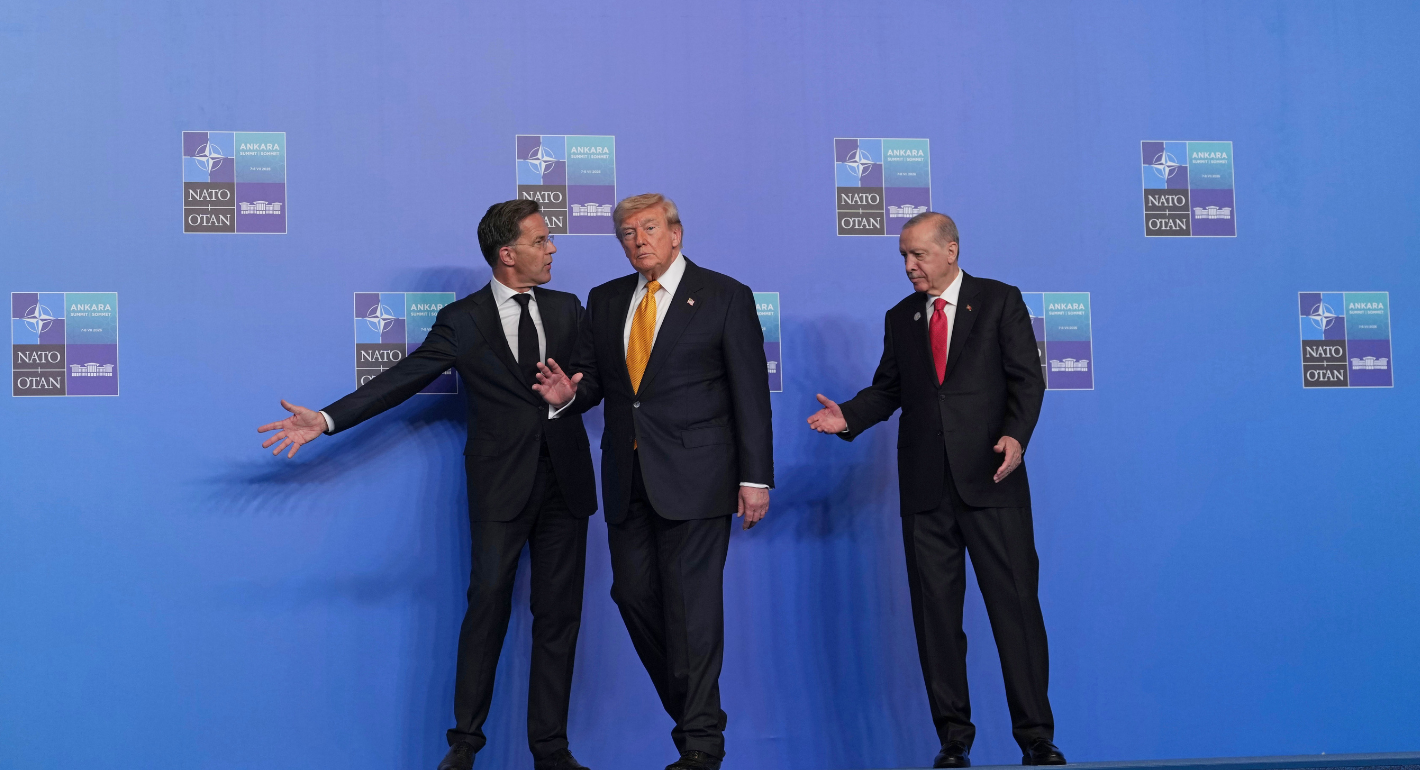
Nearly a year and a half after Europeans leaned into sucking up to Trump, the strategy has produced some benefits when it comes to Ukraine.
Rym Momtaz
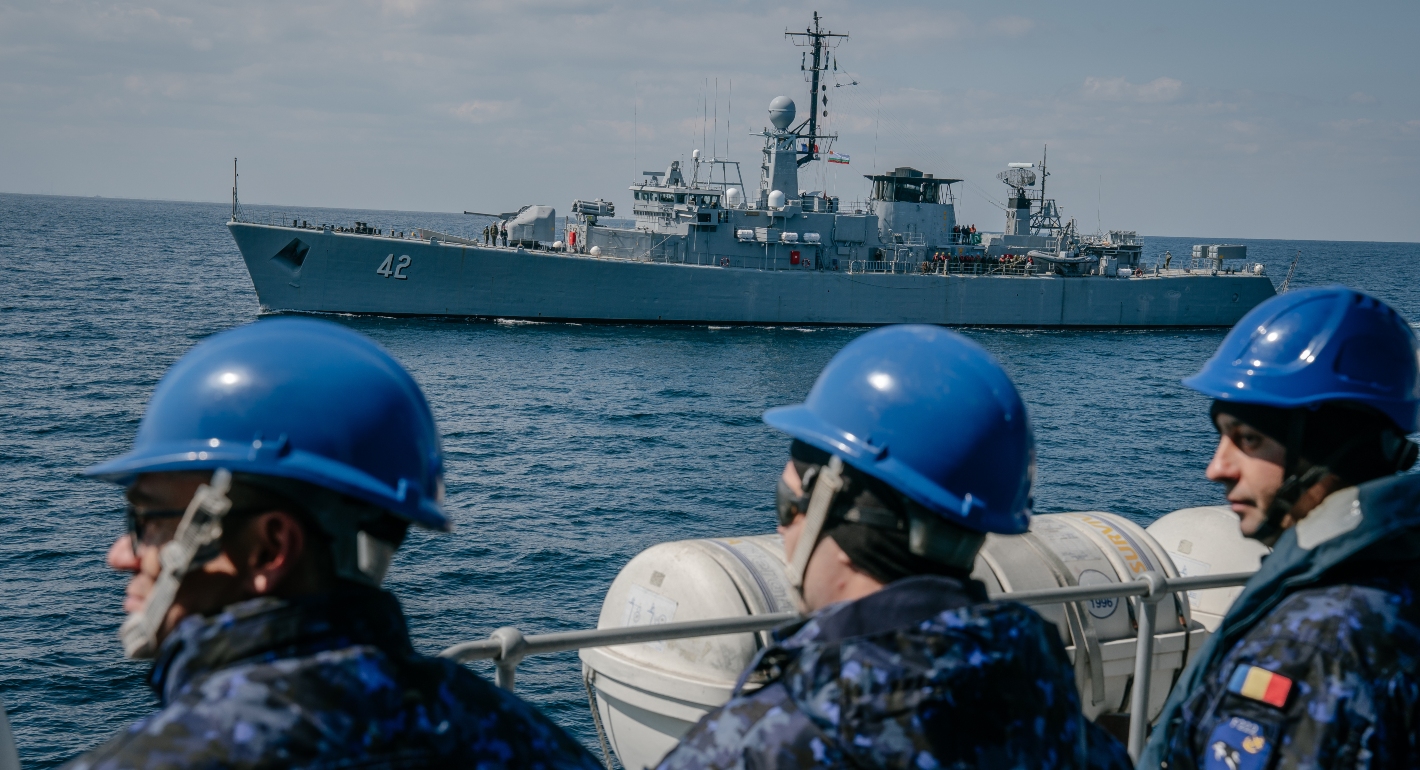
As Russia's war on Ukraine drags on, NATO is expanding its footprint in the Black Sea. Turkey, Romania, and Bulgaria are upgrading their fleets and deepening trilateral cooperation.

Dimitar Bechev