

Commentary
Yukon Huang, Isaac B. Kardon, Matt Sheehan
{
  "authors": [
    "Yukon Huang"
  ],
  "type": "other",
  "centerAffiliationAll": "dc",
  "centers": [
    "Carnegie Endowment for International Peace",
    "Carnegie China"
  ],
  "collections": [],
  "englishNewsletterAll": "asia",
  "nonEnglishNewsletterAll": "",
  "primaryCenter": "Carnegie Endowment for International Peace",
  "programAffiliation": "AP",
  "programs": [
    "Asia"
  ],
  "projects": [],
  "regions": [
    "North America",
    "United States",
    "East Asia",
    "China"
  ],
  "topics": [
    "Economy",
    "Trade",
    "Foreign Policy"
  ]
}
Source: Getty
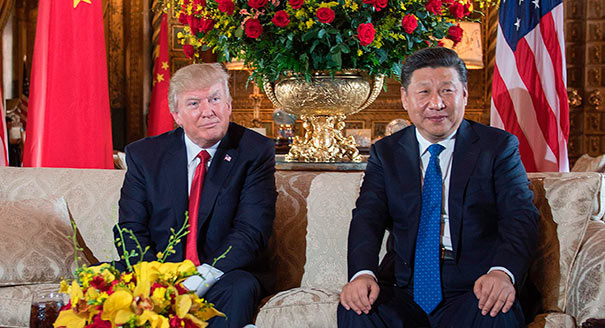
The potential for the United States and China to have conflict over trade and foreign investment is now greater, not because of differences in political systems and cultural norms, but because of commonalities in Trump’s and Xi’s personal aspirations.
Source: Washington Journal of Modern China
The agreement reached during President Xi’s April 2017 meeting with President Trump at Mar-a-Lago on a 100 day plan to ease trade tensions did not have a long shelf life. For several months, the agreement appeared to have defused any intentions to consider more contentious protectionist measures. Accusations regarding currency manipulations also evaporated, as did concerns about cyber-security violations for economic gain. From China’s perspective, President Trump’s assurance that the U.S. would not play the Taiwan card removed the most contentious of concerns from the agenda. All this seemed to suggest economic issues would not become intertwined with security and political concerns. Yet, over the summer, signs that this would not necessarily be the case become apparent and this was confirmed by the lack of significant progress in the July U.S.-China Comprehensive Economic Dialogue (CED).
The likelihood that trade and foreign investment factors will continue to be a source of tension is discussed in my recently published book: Cracking the China Conundrum―Why Conventional Economic Wisdom Is Wrong (Oxford University Press, July 2017). These tensions stem in part from basic misunderstandings of the nature of the trade and investment relations between the U.S. and China that has contributed to an unnecessarily antagonistic relationship. These negative and highly emotional perceptions are nurtured by insecurities in the mindsets of both nations and reflect the mistrust between their respective civilian and military leaders. Contrasting political systems and cultural norms of society have always made it difficult for these two nations to work together. But ironically, with President Trump’s election and President Xi’s consolidation of authority, the potential for conflict is now greater not because of these differences but because of commonalities in their personal aspirations....
The article was originally published in Washington Journal of Modern China.

Senior Fellow, Asia Program
Huang is a senior fellow in the Carnegie Asia Program where his research focuses on China’s economy and its regional and global impact.
Recent Work

Yukon Huang, Isaac B. Kardon, Matt Sheehan
Yukon Huang, Genevieve Slosberg
Carnegie does not take institutional positions on public policy issues; the views represented herein are those of the author(s) and do not necessarily reflect the views of Carnegie, its staff, or its trustees.
Following Ursula von der Leyen’s gaffe equating Turkey to Russia and China, relations with Ankara risk deteriorating even further. Without better, more consistent diplomatic messaging, how can the EU pretend to be a geopolitical power?

Sinan Ülgen
Closer EU-UK ties could help address urgent European concerns. But is the EU ready for rapprochement with the United Kingdom?

Rym Momtaz, ed.
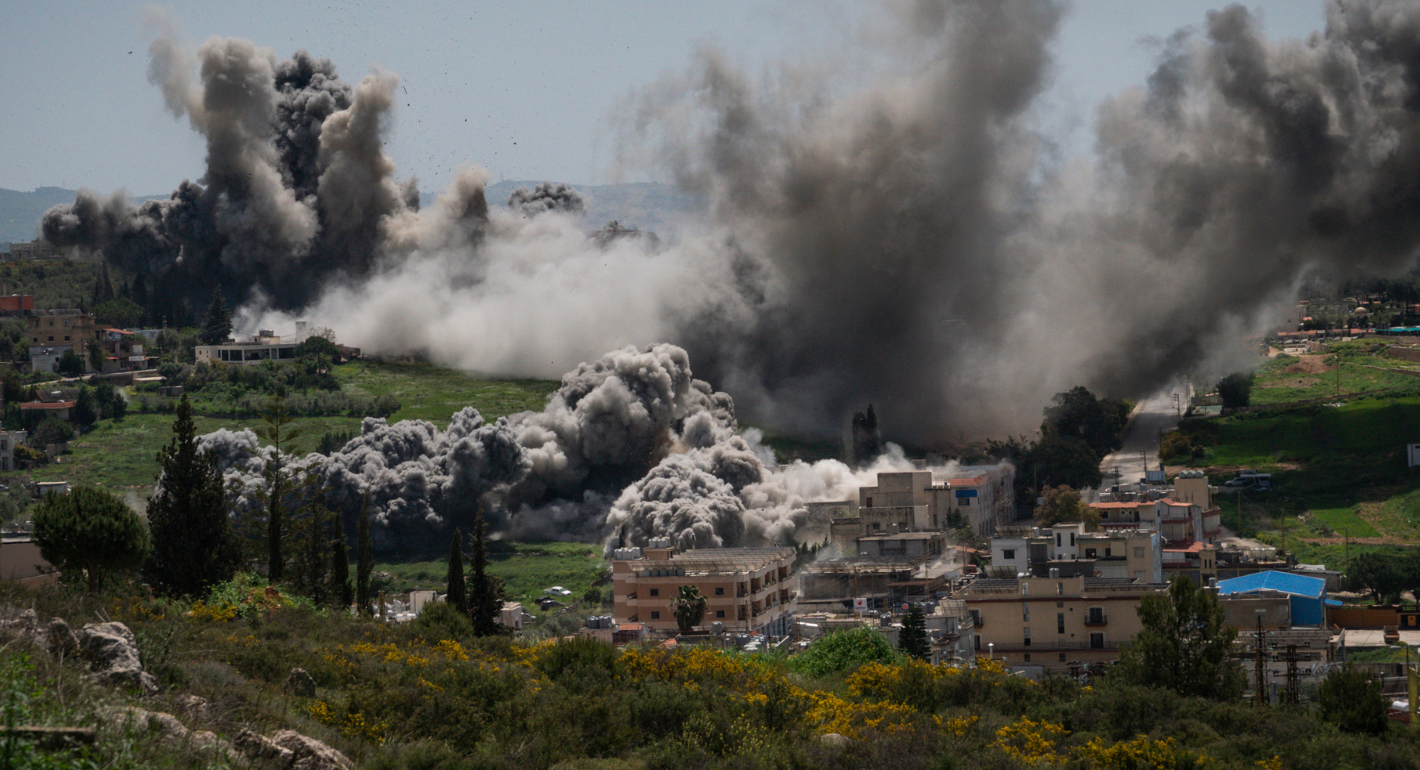
Europe has been standing by while its Southern neighborhood is being redrawn by force. To establish a path to peace between Israel and Lebanon, it’s time for Europeans to get involved with hard power.
Rym Momtaz

In Ukraine, Gaza, and Iran, AI warfare has come to dominate, with barely any oversight or accountability. Europe must lead the charge on the responsible use of new military technologies.

Raluca Csernatoni

Montenegro and Albania are frontrunners for EU enlargement in the Western Balkans, but they can’t just sit back and wait. To meet their 2030 accession ambitions, they must make a strong positive case.


Dimitar Bechev, Iliriana Gjoni