

Commentary
Dmitri Trenin
{
  "authors": [
    "Dmitri Trenin"
  ],
  "type": "legacyinthemedia",
  "centerAffiliationAll": "",
  "centers": [
    "Carnegie Endowment for International Peace",
    "Malcolm H. Kerr Carnegie Middle East Center",
    "Carnegie Russia Eurasia Center"
  ],
  "collections": [],
  "englishNewsletterAll": "",
  "nonEnglishNewsletterAll": "",
  "primaryCenter": "Carnegie Russia Eurasia Center",
  "programAffiliation": "",
  "programs": [],
  "projects": [],
  "regions": [
    "Levant",
    "North America",
    "United States",
    "Middle East",
    "Syria",
    "Russia"
  ],
  "topics": [
    "Political Reform",
    "Foreign Policy"
  ]
}
Source: Getty
Policymakers need to learn from their military subordinates: They should keep their heads cool and think of the consequences of their actions, both intended and unintended.
Source: Foreign Policy
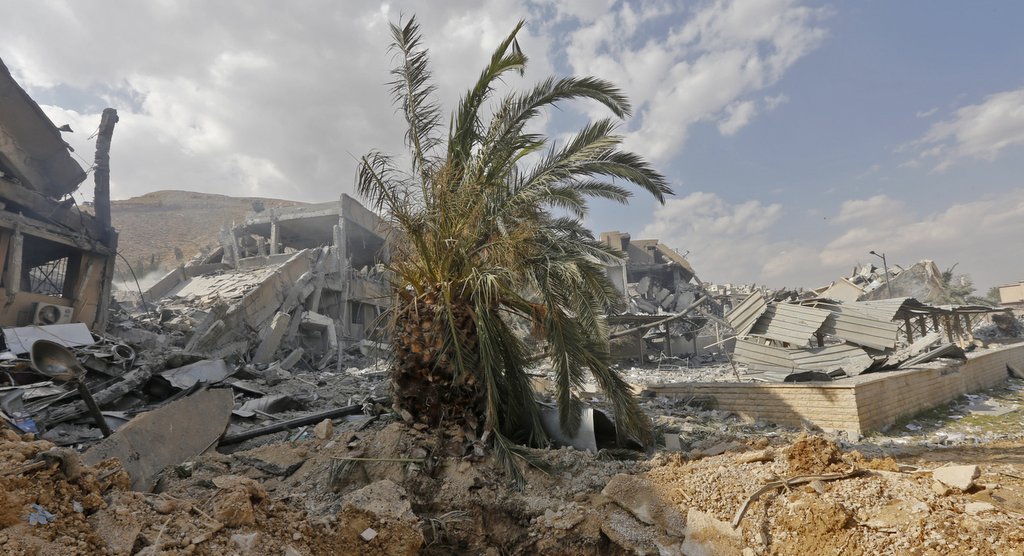
António Guterres, the secretary-general of the United Nations, recently said the Cold War was back with a vengeance but also with a difference. This is correct but belatedly so. The new confrontation between Russia and the United States started already in 2014 and has been intensifying ever since, culminating in Friday evening’s U.S.-led strikes on Syria, which the Trump administration blamed on the Syrian government and its Russian allies and vowed to sustain indefinitely, if it deemed necessary. Russian President Vladimir Putin responded, in turn, that the attacks were an “act of aggression” that would “have a destructive effect on the entire system of international relations.”
The new confrontation between Russia and the United States has thus reached its first “missile crisis” moment. The way it is handled — whether it produces a direct military collision between the armed forces of the United States and Russia — will matter gravely for the entire world.
The original Cold War was very different from today’s confrontation between Washington and Moscow. There is no longer symmetry, balance, or respect between the parties. There is also no heightened fear of a nuclear Armageddon, which has the paradoxical effect of making it far easier to slide beyond the point of no return.
Taking on Russia, for many in the West, has become a continuation of the war on terror, with Putin cast in the role of Saddam Hussein. Thus, unlike the Soviet Union, Russia is dealt with as a rogue state. In this very unequal contest, the United States has essentially excluded the possibility of a strategic compromise with its unworthy adversary: For U.S. leaders, to compromise with Russia means to compromise oneself. This raises the stakes for the Kremlin to the absolute maximum.
Professional military and national security officials in the United States probably realize the dangers of the situation far better than politicians and public opinion leaders. In Syria, deconfliction between U.S. and Russian military forces has worked rather successfully. The chief of the Russian General Staff has had regular contacts, including face-to-face meetings, with the chairman of the U.S. Joint Chiefs of Staff, the secretary of defense, and is about to meet with NATO’s supreme allied commander in Europe. At the beginning of the year, the heads of Russia’s principal intelligence agencies — the Federal Security Service, the Foreign Intelligence Service, and the Main Intelligence Directorate — made an unprecedented joint visit to the United States.
In the atmosphere of rampant hysteria and bluster, these channels of communication look much more solid than the famous back channel in Washington between Robert Kennedy and a Russian intelligence operative that served to relay messages between John F. Kennedy and Nikita Khrushchev. Yet, unlike in the original Cold War, which was mostly a war by proxy, the new confrontation is a more direct engagement. In the fields of information, economics and finance, politics, and the cyberdomain, the U.S.-Russian fight is already direct. In the military sphere, Russia and the United States are for the first time since World War II fighting in the same country, but now their goals and strategies are vastly different, if not opposed to each other. The military leaders on both sides can do much to avoid incidents, but making policy is above their pay grade.
What has just played out is the least bad scenario: a series of U.S. and allied strikes that are largely symbolic, targeting some Syrian military facilities but sparing the main command and control centers and avoiding any potential Russian targets — not just Russian bases or forces but the Russian personnel and civilians who are widely spread throughout the Syrian military and government infrastructure. Such an attack would send the Russian-Western relationship to a new low point and lead to even more recrimination, sanctions, and countersanctions, but it would not endanger peace.
The worst scenario, by contrast, would do precisely that. Many people may have missed the warning by Gen. Valery Gerasimov, the chief of the Russian General Staff, who, a few weeks before the alleged chemical attack in Douma, painted exactly the scenario of a staged chemical attack in the then-rebel-held enclave, which in his scenario would have served as a pretext for massive U.S. strikes against the Syrian leadership in Damascus. Should Russians be targeted in such an attack, Gerasimov said, the Russian military in the region would respond by intercepting the incoming missiles and firing at the platforms from which they were launched.
Some commentators have since dismissed these warnings as bluff. They point to Russia’s clear inferiority in advanced conventional weapons in comparison with the United States. Should the Russians try to implement what Gerasimov has outlined, the argument goes, their entire military contingent in Syria would be wiped out in minutes, and Moscow would have to accept a humiliating defeat, which might as well be the end of its ill-conceived challenge to America’s dominant might. Perhaps. But there is a chance that the regional conflict may not stop there and instead escalate to a wholly different level.
Even if the current standoff in Syria does not lead to the worst-case scenario becoming a reality, the U.S.-Russian situation will remain not only dire but essentially hopeless for the indefinite future. America’s approach toward Russia will likely consist of a methodical mounting of pressure on it in multiple domains — in anticipation that, at some point, the pressure will become unbearable for Moscow. The Kremlin, for its part, is adamant that it will not surrender, knowing that the adversary will be merciless even after its victory.
The outcome, for now, is wide open. What’s clear is that periodic tests of will and resolve will continue to lead to international crises, whether in Syria, Ukraine, or elsewhere. Policymakers need to learn from their military subordinates: They should keep their heads cool and think of the consequences of their actions, both intended and unintended. Allowing the new U.S.-Russian global confrontation to run its course is much preferable to a sudden head-on crash.
Former Director, Carnegie Moscow Center
Trenin was director of the Carnegie Moscow Center from 2008 to early 2022.
Recent Work
Dmitri Trenin
Dmitri Trenin
Carnegie does not take institutional positions on public policy issues; the views represented herein are those of the author(s) and do not necessarily reflect the views of Carnegie, its staff, or its trustees.
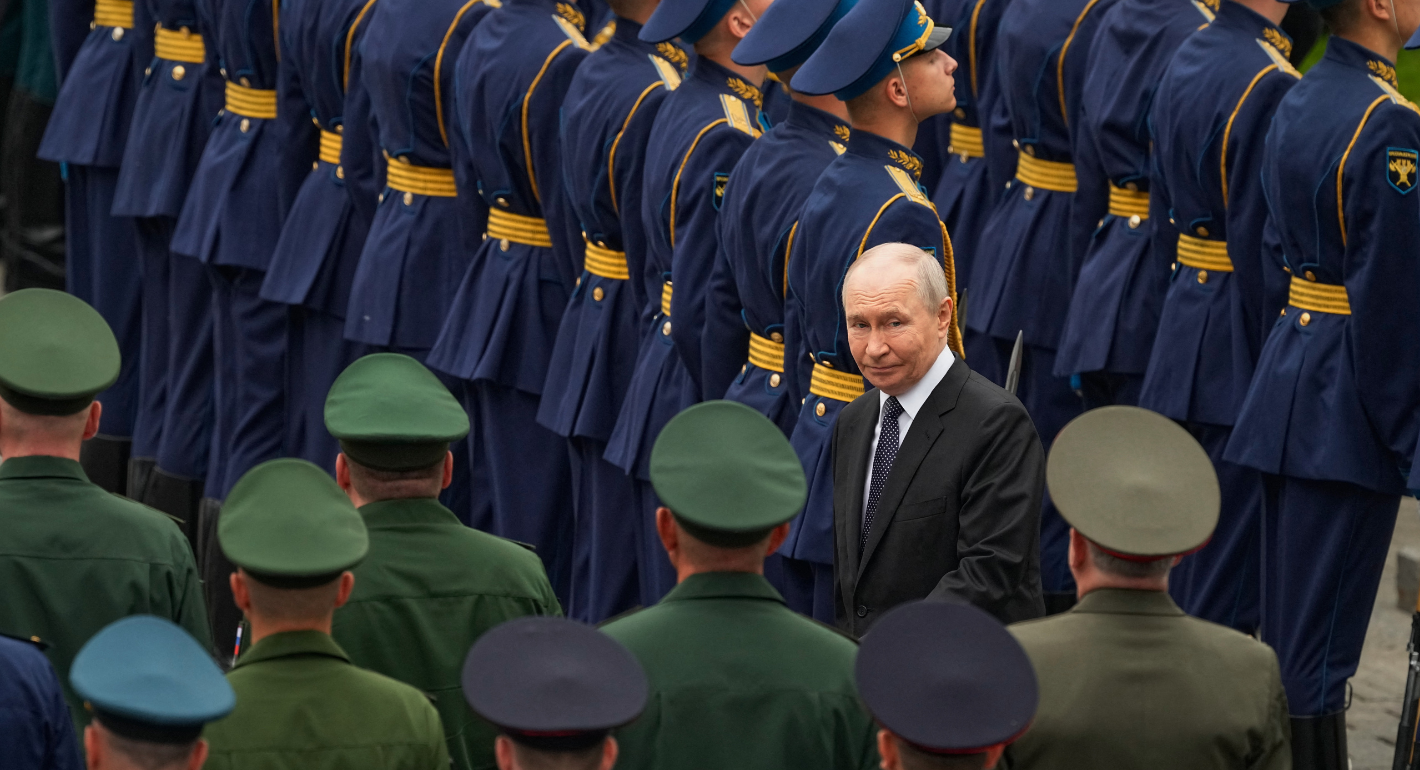
While Russia is not ready to sue for peace on Europe’s terms, it could still either seek a ceasefire in Ukraine or try escalation. Brussels needs to prepare for both and prioritize that preparation over normative discussions.
Kadri Liik

Autonomous AI agents are increasingly prevalent in cyberspace. The EU needs a real-time monitoring strategy, to invest in AI defenses, and to reduce its strategic dependence on U.S. frontier models.


Raluca Csernatoni, Patryk Pawlak
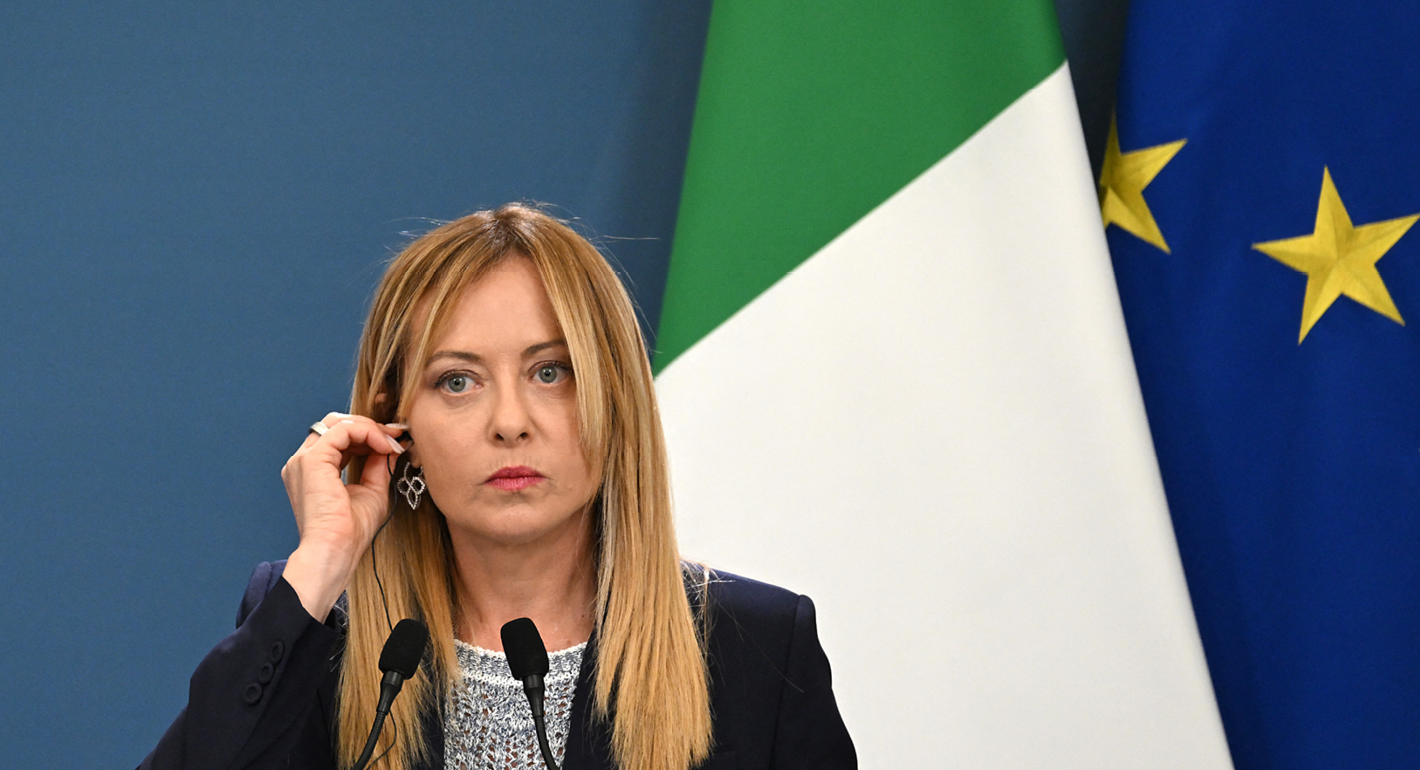
When Giorgia Meloni very publicly rebuked Donald Trump’s disparaging remarks about her, it surprised many who saw her as a European extension of Trumpism. Is the spat a sign of trouble in the radical right’s transatlantic axis?

Rym Momtaz, ed.
For ninety years, Turkey has been positioned as the principal gatekeeper of Black Sea security. As a result, European and NATO efforts to support Ukraine will require closer engagement with Ankara.

Thomas de Waal

Western Europe’s dual-use infrastructure melted down during its latest heat wave. If a predicted hot weather event can take the continent by surprise, what chance does it have to withstand unexpected geopolitical crises?
Rym Momtaz