

Commentary
Stefano Marcuzzi
{
  "authors": [
    "Stefano Marcuzzi"
  ],
  "type": "other",
  "centerAffiliationAll": "dc",
  "centers": [
    "Carnegie Endowment for International Peace",
    "Carnegie Europe"
  ],
  "collections": [
    "Transatlantic Cooperation",
    "Europe’s Southern Neighborhood"
  ],
  "englishNewsletterAll": "ctw",
  "nonEnglishNewsletterAll": "",
  "primaryCenter": "Carnegie Europe",
  "programAffiliation": "EP",
  "programs": [
    "Europe"
  ],
  "projects": [],
  "regions": [
    "Europe",
    "North America",
    "United States",
    "Western Europe",
    "Iran"
  ],
  "topics": [
    "EU",
    "Security",
    "Migration"
  ]
}
Source: Getty
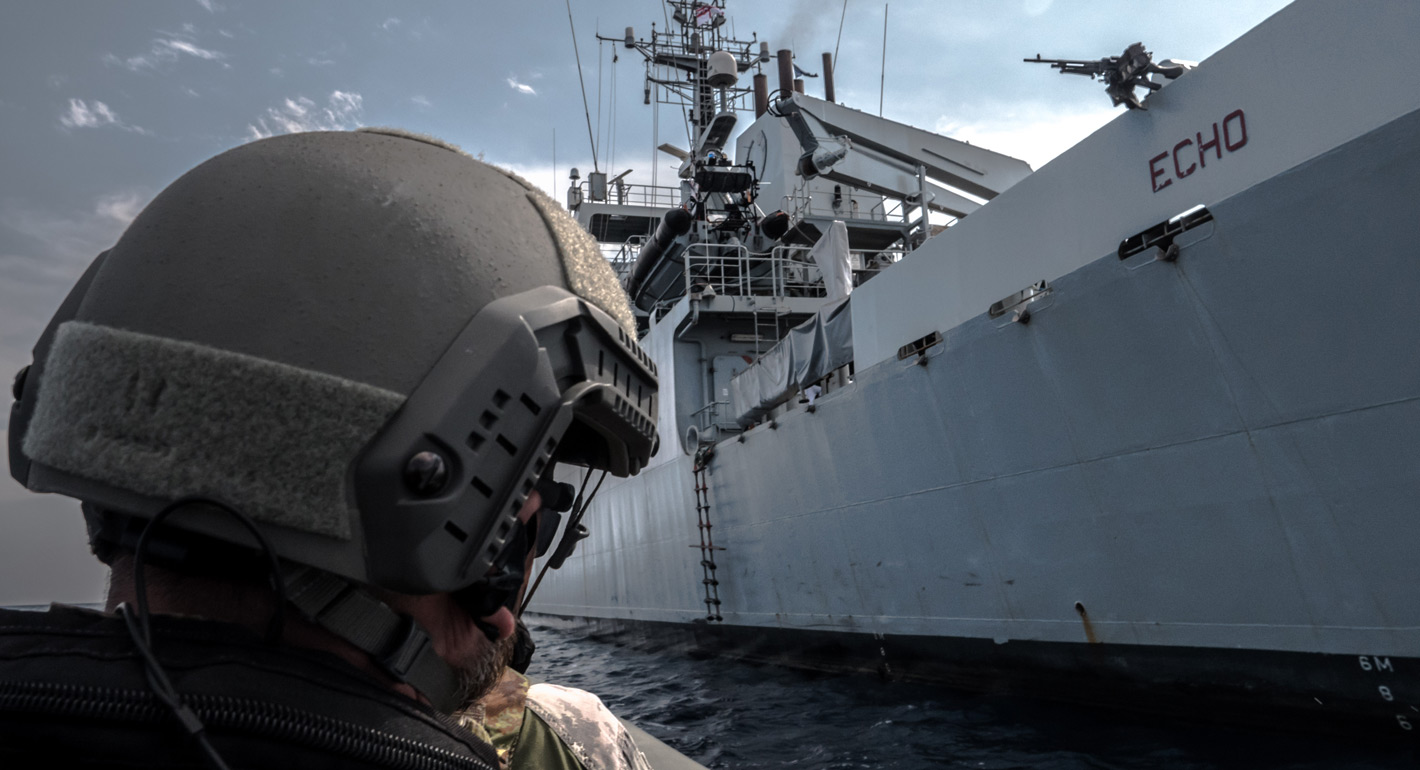
EU-NATO maritime cooperation in the Mediterranean has by and large been successful at the tactical level. However, operational achievements did not produce strategic effects.
Source: NATO Defense College
EU-NATO maritime cooperation is essential to a coordinated response to a variety of Mediterranean issues, including terrorist threats, the protracted conflicts in the Middle East and North Africa (MENA), and the refugee emergency. The EU’s Operation EUNAVFOR Med Sophia is deployed in the Southern-Central Mediterranean, whilst NATO’s Operation Sea Guardian operates in the whole Mediterranean basin. NATO also launched a new activity in the Aegean in 2016. Although each operation has its own mandate, their coordination was defined as crucial in the 2016 Joint Declaration on EU-NATO cooperation.
At a tactical level, these operations have by and large been successful in enhancing situational awareness in the Mediterranean; monitoring migration networks; constraining the activity of human and arms smugglers on the high seas; and to a degree in providing assistance to migrants. However, they also face strategic challenges, including the failure to dismantle the smugglers’ networks, their relatively low deterrent effect, and a limited degree of inter-institutional cooperation.
This article was originally appeared in the NATO Defense College Policy Brief series.
Photo: Jake Tupman; NATO via Flickr
Former Visiting researcher, Carnegie Europe
Marcuzzi was a visiting researcher at Carnegie Europe, where he focused on EU-NATO cooperation, in particular on the Mediterranean and Libya.
Recent Work
Stefano Marcuzzi
Carnegie does not take institutional positions on public policy issues; the views represented herein are those of the author(s) and do not necessarily reflect the views of Carnegie, its staff, or its trustees.

The EU can impose sanctions but struggles to enforce them without the United States. With Washington increasingly disinterested in backing European interests, the bloc must now fend for itself.


Nicu Popescu, Tiago Antunes

Russia is testing the waters of NATO’s mutual defense clause. What do strikes in Romanian territorial waters mean for the alliance’s posture toward Moscow?

Dimitar Bechev

With its public finances in shambles, the far right polling at 35 percent ahead of the 2027 presidential election, and a growing protest movement, is France’s crisis a threat to the EU’s geopolitical awakening?

Rym Momtaz, ed.

Ahead of a tough winter for Ukraine, Donald Trump’s swing back toward Russia bodes ill. But instead of panicking, Kyiv’s European allies are focusing on action.
Rym Momtaz

Funding Ukraine remains a priority for European leaders. As Russia’s war of aggression heads into another winter, two feasible options to mobilize support for Kyiv should be fast-tracked.


Vladyslav Rashkovan, Gregory P. Wilson