

Commentary
Are Germany’s economic, industrial, and political struggles becoming a liability for the EU’s ability to rise to the geopolitical moment?
Rym Momtaz, ed.
{
  "authors": [
    "Ulrich Kühn",
    "Pavel Zolotarev",
    "William Tobey"
  ],
  "type": "other",
  "centerAffiliationAll": "dc",
  "centers": [
    "Carnegie Endowment for International Peace"
  ],
  "collections": [
    "U.S. Nuclear Policy"
  ],
  "englishNewsletterAll": "ctw",
  "nonEnglishNewsletterAll": "",
  "primaryCenter": "Carnegie Endowment for International Peace",
  "programAffiliation": "NPP",
  "programs": [
    "Nuclear Policy"
  ],
  "projects": [],
  "regions": [
    "North America",
    "United States",
    "Russia",
    "Eastern Europe",
    "Western Europe"
  ],
  "topics": [
    "Security",
    "Military",
    "Nuclear Policy",
    "Arms Control"
  ]
}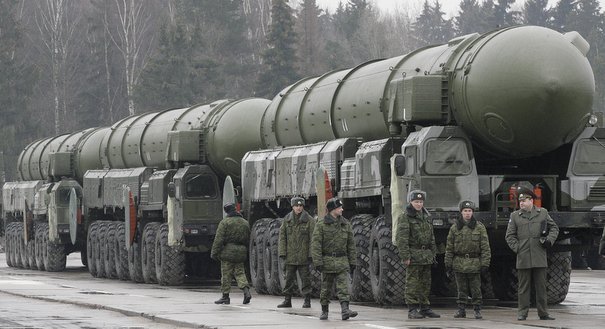
Source: Getty
The U.S. withdrawal from the INF Treaty poses significant implications for the future of European security, risking dangerous arms racing behavior among U.S., European, and Russian militaries.
Source: Russia Matters
The Intermediate-Range Nuclear Forces, or INF, Treaty, signed by U.S. President Ronald Reagan and Soviet Communist Party General Secretary Mikhail Gorbachev in 1987, was a profound achievement. It was the first bilateral nuclear arms control treaty to ban an entire class of weapons. It contained verification innovations such as continuous perimeter-portal monitoring.1 The diplomatic and technical experience gained from the treaty made possible the first Strategic Arms Reduction Treaty (START I) and the Treaty on Conventional Armed Forces in Europe, or CFE. Most importantly, the INF Treaty reversed dangerous military trends in Europe that had left both sides less secure than they had been before such systems were deployed.
Now the treaty—formally called the Treaty Between the United States of America and the Union of Soviet Socialist Republics on the Elimination of Their Intermediate-Range and Shorter-Range Missiles—faces an existential threat posed by compliance issues that have prompted a U.S. decision to withdraw from it unless its concerns are allayed. Arms-control-treaty compliance problems are intrinsically important because they can corrode both trust and strategic stability. Moreover, if the INF Treaty falls apart, it will have a profound impact on the U.S.-Russian strategic relationship, with implications for all of Europe and likely beyond. It will affect how both sides analyze decisions on extending the New START Treaty, which is due to expire in 2021. It will likely foreclose for the foreseeable future any possibility that another nuclear arms control treaty could be ratified by the U.S. Senate. It will likely prompt deployment of new military systems, and consequent responses. It will spark controversy both in the U.S. Congress and between the United States and its allies. Finally, it would constitute decisive evidence that the United States and Russia have returned to a nuclear competition that was in abeyance for over two decades.
Thus, the fate of the INF Treaty is of surpassing importance in Europe, Russia and the United States. The stakes for the parties to the treaty are obvious. Europe too would be affected as dissolution of the treaty could lead to a new arms race with intermediate-range missiles targeting the entire continent. Below, three authors representing each of these perspectives consider the likely future of the treaty, how it might be saved and what its demise might mean. The specific questions we set out to try to answer when this issue brief was conceived late last fall are:
A. What last-minute efforts are possible to save the INF Treaty?
B. If the INF Treaty cannot be saved, what does that mean for your country/region in the coming years?
C. Could there be some sort of INF follow-on? What could a future arms control framework look like?

Former Nonresident Scholar, Nuclear Policy Program
Ulrich Kühn was a nonresident scholar at the Carnegie Endowment for International Peace, and the head of the arms control and emerging technologies program at the Institute for Peace Research and Security Policy at the University of Hamburg.
Pavel Zolotarev
William Tobey
Carnegie does not take institutional positions on public policy issues; the views represented herein are those of the author(s) and do not necessarily reflect the views of Carnegie, its staff, or its trustees.

Are Germany’s economic, industrial, and political struggles becoming a liability for the EU’s ability to rise to the geopolitical moment?

Rym Momtaz, ed.

European Commission President Ursula von der Leyen is about to give her annual address on the state of the EU. Here’s what she won’t—but should—say.
Rym Momtaz

Radical-right parties are expected to do well in upcoming elections in four of the EU's biggest member states. If successful, they could prevent the union from addressing key challenges ahead.

Stefan Lehne

Canadian Prime Minister Mark Carney has twice inspired praise for standing up to U.S. President Donald Trump: at the 2026 World Economic Forum in Davos and on Canada-U.S. trade negotiations. Is Carney showing a third way better than the EU has in dealing with the Trump administration?
Rym Momtaz, ed.

The EU’s responses to two recent incidents expose the gulf between European perceptions and capabilities. Unless the union can bridge that gap, it will never become a real geostrategic power.
Rym Momtaz