

Research
- +10
Rosa Balfour, Frances Z. Brown, Yasmine Farouk, …
{
  "authors": [
    "Moisés Naím"
  ],
  "type": "legacyinthemedia",
  "centerAffiliationAll": "",
  "centers": [
    "Carnegie Endowment for International Peace"
  ],
  "collections": [],
  "englishNewsletterAll": "",
  "nonEnglishNewsletterAll": "",
  "primaryCenter": "Carnegie Endowment for International Peace",
  "programAffiliation": "",
  "programs": [],
  "projects": [],
  "regions": [
    "North America",
    "United States",
    "Russia",
    "Western Europe"
  ],
  "topics": [
    "Political Reform",
    "Foreign Policy",
    "Global Governance",
    "Technology"
  ]
}
Source: Getty
There is a connection between the broad decline of trust and the growing faith in internet messages that confirm our biases, and this has become a global trend.
Source: El País
One interesting modern phenomenon is the collapse in trust. According to the polls, people don’t trust the government, politicians, journalists and scientists, let alone bankers and business executives. Not even the Vatican has escaped this crisis of confidence.
In the United States, for example, public confidence in the government is at its lowest point since opinion polls first included questions related to trust. Today, 82% of Americans do not trust their government to do the right thing. This has become a global trend: distrust and skepticism are the norm.
The paradox of trust exists everywhere, but in no arena does it have consequences as far reaching as in politics.
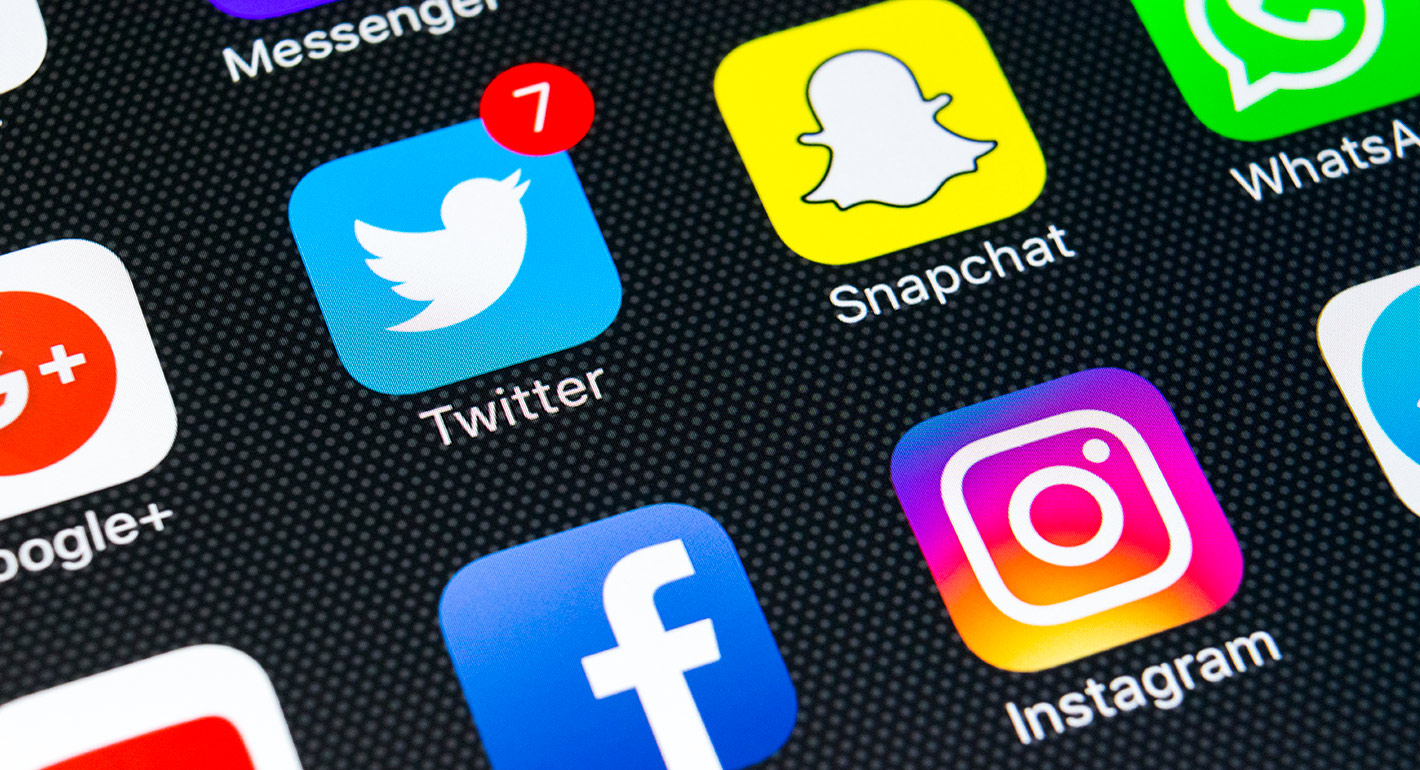
There is a great paradox at work here. At the same time that our confidence in the government has fallen abysmally low, our faith in messages that reach us through the internet is at a new high. This is the paradox of trust. We do not believe in the government or the experts, but we trust anonymous messages on Facebook, Twitter and WhatsApp.
Who hasn’t gotten an email forward or a post from family or friends that later turned out to be false? All it takes to trick us is to reinforce our ideals and beliefs. When a message does that, we automatically drop the skepticism that we use to shield ourselves from the lies and manipulations so common on the internet. If the message is aligned with our prejudices, we forward it to our “digital tribe” – the people we know who think like us – without a second thought.
There is a connection between the broad decline of trust and the growing faith in internet messages that confirm our biases. With regard to governments, we want them to be subject to scrutiny and criticism and we should celebrate the fact that the internet facilitates this. All governments have flaws and are deserving of criticism. But we must be careful when the criticism of government is based on falsehoods, because this weakens democracy, polarizes society, and nourishes anti-politics, specifically the feeling that nothing works anyway, so why not engage in reckless political experiments such as giving power to demagogues and populists?
A telling example of the paradox of trust is the anti-vaccine movement. Its adherents maintain that vaccines against measles, mumps, and rubella, for example, are dangerous and may be associated with autism, so they refuse to vaccinate their children.
The most powerful antidote is to have engaged and well-informed citizens who refuse to allow themselves be blinded by political passions
However, the scientific evidence on this subject is overwhelming: there is no link between vaccines and autism. And not vaccinating children is dangerous for them and for the children and adults with whom they interact. Unfortunately, scientific research can’t make a dent in the beliefs of those who are convinced that vaccines are harmful. For them, the recommendations of specialized public institutions are not credible, while the lies about vaccines circulating on the internet are treated as immutable truths. Worse, anti-vaccine advocates have powerful allies. Both Donald Trump and the current Italian government have questioned the need to vaccinate children.
Heaping scorn on and demonizing the experts is part of the populists’ playbook. After all, the experts are, by definition, an elite and therefore not “the people” that populists claim to champion. Their questioning of scientific knowledge often has the support of “skeptics” who always seem to crawl out of the woodwork at just the right time. They are the kinds of scientists who, for decades, placed the link between tobacco and cancer in doubt, or those who doubt that global warming and climate change are real. Or the “experts” who question the theory of evolution. Or those who believe that vaccines produce autism. Skeptics are almost always a small minority who take pride in questioning the “group-think” shared by the vast majority of scientists. Inevitably, some skeptics turn out just to be frauds paid to sow doubt.
At the same time that our confidence in the government falls abysmally low, our faith in messages that reach us through the internet is at a new high
The paradox of trust exists everywhere, but in no arena does it have consequences as far reaching as in politics. Political propaganda has always existed and the use of advertising in elections is a long-established practice. But the paradox of trust has supercharged both forms of manipulation to new levels. It is clear, for example, that the strategy of the Russian government is not to invade other countries with tanks and airplanes, but with stealthy attacks and seductive lies that sow fear, uncertainty and doubt.
What to do? Surely technologies will appear that will facilitate the detection of these digital poisons, as well as laws and regulations that reduce the impunity of the cyber attackers and the companies that give them the platforms from which they launch their attacks. But the most powerful antidote is to have engaged and well-informed citizens who refuse to allow themselves be blinded by political passions.

Distinguished Fellow
Moisés Naím is a distinguished fellow at the Carnegie Endowment for International Peace, a best-selling author, and an internationally syndicated columnist.
Recent Work



Rosa Balfour, Frances Z. Brown, Yasmine Farouk, …
Moisés Naím
Carnegie does not take institutional positions on public policy issues; the views represented herein are those of the author(s) and do not necessarily reflect the views of Carnegie, its staff, or its trustees.

The EU can impose sanctions but struggles to enforce them without the United States. With Washington increasingly disinterested in backing European interests, the bloc must now fend for itself.


Nicu Popescu, Tiago Antunes

Russia is testing the waters of NATO’s mutual defense clause. What do strikes in Romanian territorial waters mean for the alliance’s posture toward Moscow?

Dimitar Bechev

With its public finances in shambles, the far right polling at 35 percent ahead of the 2027 presidential election, and a growing protest movement, is France’s crisis a threat to the EU’s geopolitical awakening?

Rym Momtaz, ed.

Ahead of a tough winter for Ukraine, Donald Trump’s swing back toward Russia bodes ill. But instead of panicking, Kyiv’s European allies are focusing on action.
Rym Momtaz

Funding Ukraine remains a priority for European leaders. As Russia’s war of aggression heads into another winter, two feasible options to mobilize support for Kyiv should be fast-tracked.


Vladyslav Rashkovan, Gregory P. Wilson