

Article
C. Raja Mohan, Darshana M. Baruah
{
  "authors": [
    "C. Raja Mohan"
  ],
  "type": "legacyinthemedia",
  "centerAffiliationAll": "",
  "centers": [
    "Carnegie Endowment for International Peace",
    "Carnegie India"
  ],
  "collections": [],
  "englishNewsletterAll": "",
  "nonEnglishNewsletterAll": "",
  "primaryCenter": "Carnegie India",
  "programAffiliation": "",
  "programs": [],
  "projects": [
    "Technology and Society"
  ],
  "regions": [
    "India"
  ],
  "topics": [
    "Domestic Politics"
  ]
}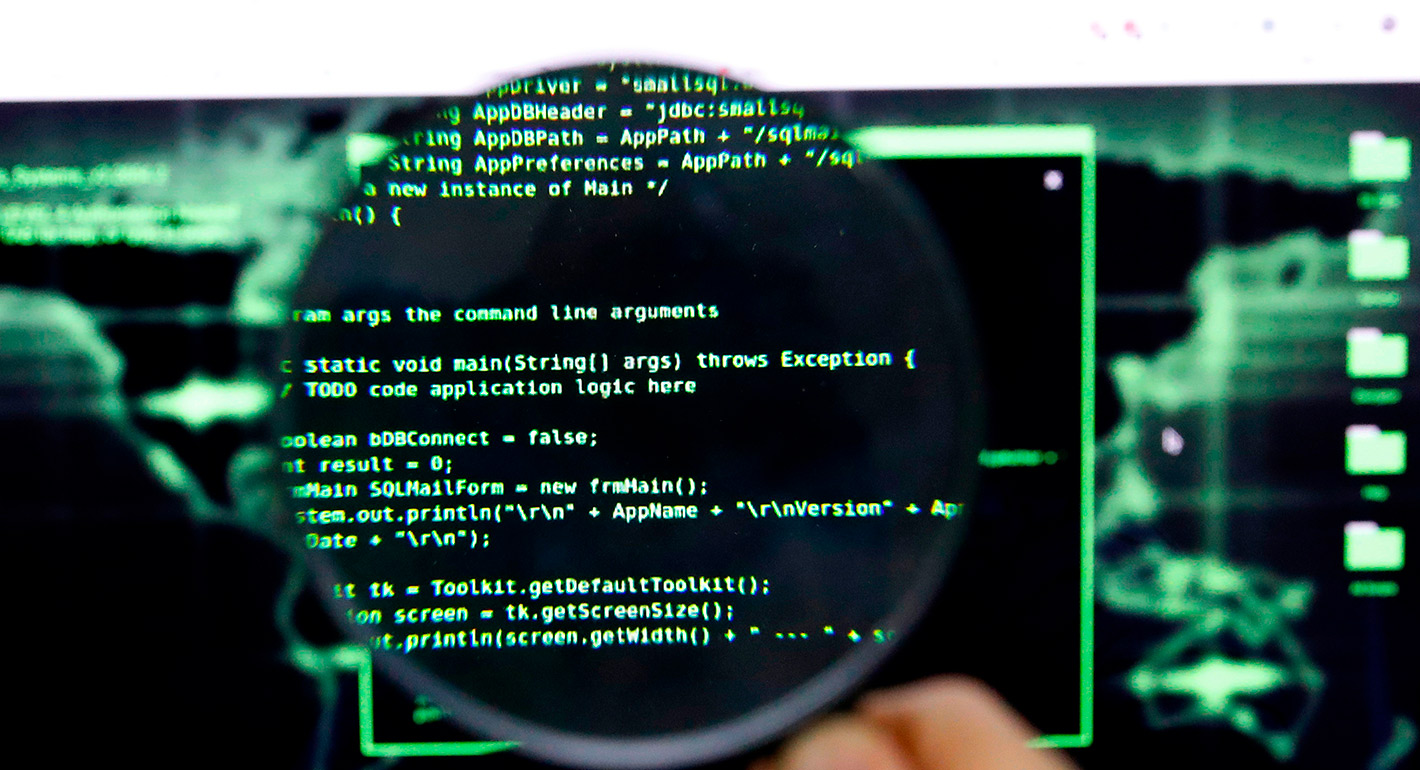
Source: Getty
The national security establishment must extend full support to the Election Commission in fending off many likely threats to the integrity of the elections and help raise the awareness of the political class on the new dangers of the digital age.
Source: Indian Express
It is widely accepted that the current general elections would be India’s first polls to be shaped by the social media. As rival parties weaponise new digital tools in a rather charged political moment, the question of preserving the integrity of India’s elections has come right to the top.
Foreign manipulation of elections is a major problem around the world. In the last few years there have been charges of external intervention in elections in countries as different as the US, Cambodia, Madagascar and Taiwan. Consider, for example, Indonesia, one of the world’s largest democracies. About 190 million people are set to elect the president, national parliament, provincial assemblies and local councils — all at one go — on April 17.
Last week, Arief Budiman, the chairman of Indonesia’s general election commission, told the press that hackers from Russia and China were trying to attack the voter data base and that these attacks were taking place not just every day, “but by the hour”. It was unclear whether the motive was to disrupt the elections or to help one of the candidates win, Budiman said.
“Voter behaviour can be changed by de-legitimising the election commission,” Budiman pointed out. He was careful to not attribute the attacks to state authorities in Russia and China. But political campaigners in the closely fought presidential race between incumbent Joko Widodo and his only opponent, Prabowo Subianto, have not been that careful. Last month, Widodo reacted strongly against charges that he was a “foreign stooge”. He hit back by accusing his rival of resorting to “Russian propaganda” of “defamation, lies and hoaxes”. A picture of Prabowo shaking hands with a Russian Embassy official went viral along with allegations that he had hired a Russian consultant. Moscow was of course quick to deny intervention in the Indonesian elections.
There was a time when the Indian political classes routinely accused the “foreign hand” for many unexpected developments, electoral or otherwise. Most of the time, the “foreign hand” was a code for the US and its Central Intelligence Agency. As the Congress, under Indira Gandhi, drifted close to the Soviet Union after 1969, the non-left opposition parties would often charge the KGB of meddling in the elections in favour of the Congress.
To be sure, interfering in the internal politics of other societies — through overt and covert means — is as old as statecraft. Before the age of mass politics, it was about influencing royal succession, ensuring friendly sovereigns in one’s neighbourhood, suborning key members of a foreign court, including ministers and military leaders. As mass politics began to change governance in the 20th century, the Cold War dramatically elevated the great power stakes in the outcomes from domestic political contestation in other countries. According to one study, America and Russia intervened in at least one in nine elections around the world between 1946 and 2000.
As the global war for political influence raged during the Cold War, the CIA was accused of helping the Congress Party to push back against the Communists in Kerala and West Bengal. Russia and China, in turn, have been charged with supporting the Indian communists.
As India steadily became less vulnerable to outside political interferences, the tendency to blame the “foreign hand” began to recede. The fragmentation of Indian politics and the rise of regional formations since the end of the 1980s made it hard for any outsider to understand, let alone shape, electoral results. The end of the Cold War and the relative harmony among major powers meant there was less pressure on the great powers to intervene in India.
Over the last decade or so, things have begun to change. The contestation between great powers has returned, slowly but certainly. As the cyber domain emerged as a new theatre for political rivalry, charges have flown thick and fast about foreign intervention in the domestic politics of other countries. The US remains the most important case.
Donald Trump’s surprising victory in the 2016 presidential elections has been followed by allegations of Russian intervention to manipulate the social media during the campaign. While official US investigations into the Russian role continue, there is no doubt that someone had hacked into the Democratic Party headquarters and leaked the emails of the party into the public domain. Nor is there any question that platforms like Facebook were deliberately used to spread disinformation during the elections.
This is not a problem that is limited to one country. The unprecedented speed of online communication, the relative ease of spreading misinformation, the growing sophistication of fake news, the extraterritoriality of the web, the increasing impact of the digital influence operations by individuals, professional cyber consultants, criminal mafias, and above all governments, has helped constitute a new global cyber landscape that few could have imagined a decade ago.
Even as the older and technologically advanced democracies struggle to cope with the challenge of foreign manipulation of electoral processes, the Indian political class has not devoted enough attention to the issues involved. The problem needs to be addressed at least at three levels.
One is for parties and political leaders to pay greater attention to cyber security of their campaigns and social media accounts. Hacking and leaking of personal and sensitive information could have an explosive effect on the 2019 elections. Two, the BJP and the Congress need a small, quiet and credible mechanism for mutual communication to contain the damage from hostile attempts to undermine Indian elections. This will not be easy amidst the current political bitterness. But the two parties must find the will to protect the legitimacy of the 2019 elections.
Finally, the national security establishment must extend full support to the Election Commission in fending off many likely threats to the integrity of the elections and help raise the awareness of the political class on the new dangers of the digital age.
This article was originally published in the Indian Express.
Former Nonresident Senior Fellow, Carnegie India
A leading analyst of India’s foreign policy, Mohan is also an expert on South Asian security, great-power relations in Asia, and arms control.
Recent Work

C. Raja Mohan, Darshana M. Baruah


Alexander Gabuev, Paul Haenle, C. Raja Mohan, …
Carnegie does not take institutional positions on public policy issues; the views represented herein are those of the author(s) and do not necessarily reflect the views of Carnegie, its staff, or its trustees.

As the EU confronts profound challenges, several leaders have called for fundamental reform to the union’s model—but only modest, superficial changes have resulted. What if Europe really could be reimagined from zero today: What should such a redesigned European order look like?

Richard Youngs, ed.
The National Rally’s electoral strength, coupled with its internal fragility at a crucial political juncture, contributes to foreign policy vagueness.

Catherine Fieschi

Hungarians head to the polls on April 12 for an election of national and European consequence. Three different outcomes are on the cards, each with their own implications for the EU.

Zsuzsanna Szelényi

The far right failed to win big in France’s municipal elections. But that’s not good news for the country’s left wing, which remained disunited while the broader right consolidated its momentum ahead of the 2027 presidential race.
Catherine Fieschi
European democracy support strategy in 2025 prioritized protecting democratic norms within Europe. This signals the start of a structural recalibration of the EU’s approach to democracy support.


Richard Youngs, ed., Elena Viudes Egea, Zselyke Csaky, …