

Commentary
Gwendolyn Sasse
{
  "authors": [
    "Gwendolyn Sasse"
  ],
  "type": "legacyinthemedia",
  "centerAffiliationAll": "dc",
  "centers": [
    "Carnegie Endowment for International Peace",
    "Carnegie Europe"
  ],
  "collections": [
    "Europe’s Eastern Neighborhood"
  ],
  "englishNewsletterAll": "ctw",
  "nonEnglishNewsletterAll": "",
  "primaryCenter": "Carnegie Europe",
  "programAffiliation": "EP",
  "programs": [
    "Europe"
  ],
  "projects": [],
  "regions": [
    "Europe",
    "Eastern Europe",
    "Caucasus",
    "Iran"
  ],
  "topics": [
    "Foreign Policy"
  ]
}
Source: Getty
On the tenth anniversary of the Eastern Partnership, dilemmas inherent in the policy design still remain unchanged.
Source: New Eastern Europe
Ten years after the launch of the Eastern Partnership (EaP) two basic dilemmas inherent in the policy design remain unchanged: first, the six countries within the EaP framework (Armenia, Azerbaijan, Belarus, Georgia, Moldova, Ukraine) differ significantly in their domestic political trajectories and, by extension, in their ideas about their relationship with the European Union.
Secondly, the EU’s scope for affecting policy changes in the six countries is limited given that a concrete EU membership perspective is not on offer. Though modelled on the EU accession process in its overarching principles, the monitoring process and the disbursement of assistance, the EaP, can at best offer “conditionality-lite” to entice policy change if it corresponds with the political will of the elites in the EaP countries.
The EaP states now fall into three main categories. Three states (Georgia, Moldova and Ukraine) have signed Association Agreements, Deep and Comprehensive Free Trade Agreements (DCFTAs) and agreements on visa liberalisation, allow visa-free travel to the EU. Then there is the Armenia model – encapsulated by the Comprehensive and Advanced Partnership Agreement of 2017, a novel type of weaker integration with the EU that reflects the reality of Armenia’s close relations with Russia, including participation in the Eurasian Economic Union. The focus here is on a less detailed agenda for fostering institutional capacity, economic development, energy efficiency and societal participation. Arguably, Belarus could one day follow this model. For the moment, the sanctions regime against President Alyaksandr Lukashenka and other elite members remains in place, so that current engagement with Belarus is limited to the multilateral dimension, in particular the dialogue with civil society organisations. Thus, Belarus effectively belongs to the third category of EaP states alongside Azerbaijan, a country that is only interested in economic co-operation with the EU. Negotiations on a new EU-Azerbaijan agreement have been ongoing since 2017. Thus, despite its shared overarching umbrella, the policy design has become more differentiated in line with the domestic political priorities of the countries concerned.It has also become apparent that association with the EU, even though it might proceed very slowly, is not a linear process. There can also be backsliding within the group of EaP countries that have the most institutionalised relations with the EU. Moldova is a case in point where the domestic political consensus behind the implementation of the Association Agreements and DCFTA has become uncertain. By contrast, Armenia might revisit its current model as part of its recent domestic reform momentum. In such circumstances, the EaP has to remain flexible and ready to respond to the domestic developments in the countries to either reinforce conditionality, pause the implementation of the Association Agreement or DCFTA, or redefine existing frameworks of engagement.
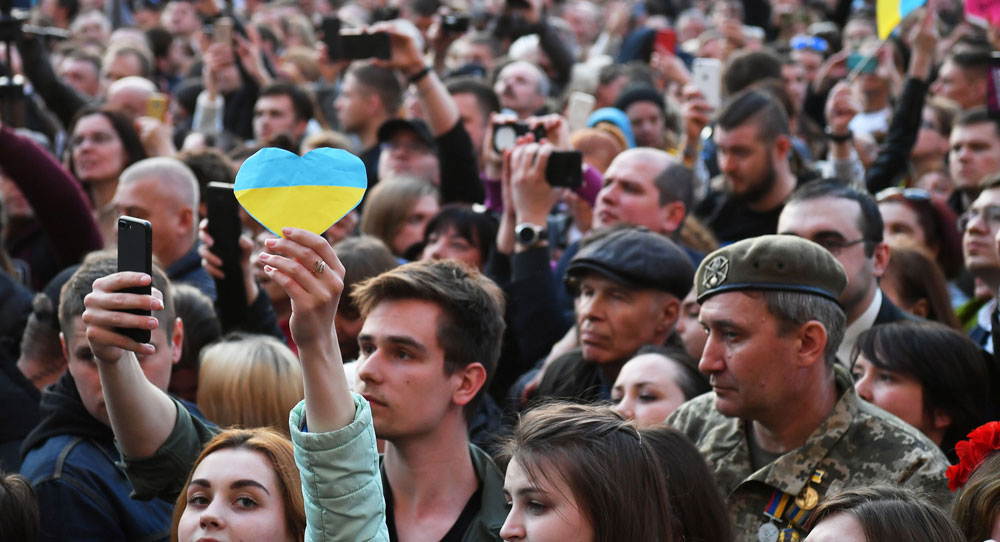
The Eastern Partnership and the implementation of its agreements should not be treated as a technical matter. These processes are part of a wider political context that needs to be acknowledged in order to become better at positioning the EaP within it. The expectations, hopes and fears related to EaP are part and parcel of this reality. One extreme experience in this regard was the EuroMaidan in Ukraine in 2013-14. The trigger – though not the cause – of mass mobilisation was the decision by then President Viktor Yanukovych’s refusal to sign the Association Agreement with the EU. The EuroMaidan took on a dynamic of its own and, in turn, provided a trigger for Russian intervention in Ukraine through the annexation of Crimea in 2014 and military support of separatists in Donbas. The latter turned into a war that has cost nearly 13,000 lives, led to 1.8 million internally displaced people and made another one million people flee to Russia.
The tenth anniversary of the Eastern Partnership has not inspired much appetite in the EU and individual member states to seriously consider the needs of the EaP countries and adjust the policy. The general consensus is that it has worked quite well. Indeed, the EaP has delivered many of its procedural objectives, at least with regard to the AAs and DCFTAs. But even here the population at large has not felt the benefits of the EaP enough. Some changes might simply not be associated with the EU in people’s minds as the causal chain is too long, but other intended effects have not (yet) trickled down. For example, small and medium-sized enterprises have yet to profit from the new trade rules.
For at least three of the participating states – Ukraine, Georgia and Moldova – the perspective of EU membership remains an important one. The EU is wary of issuing explicit promises, and is preoccupied with its own internal issues at the moment. But at least a clear high-level reiteration of the basic principle that every European country has the right under EU law to apply for membership and that the implementation of the EaP prepares for this step is desirable. Yet, avoiding the membership issue prevents the necessary discussions about the future objectives of the Eastern Partnership.
This article was originally published by New Eastern Europe.

Nonresident Senior Fellow, Carnegie Europe
Gwendolyn Sasse is a nonresident senior fellow at Carnegie Europe. Her research focuses on Eastern Europe, with a particular focus on Ukrainian politics and society, EU enlargement, and comparative democratization.
Recent Work
Gwendolyn Sasse
Gwendolyn Sasse
Carnegie does not take institutional positions on public policy issues; the views represented herein are those of the author(s) and do not necessarily reflect the views of Carnegie, its staff, or its trustees.

The EU can impose sanctions but struggles to enforce them without the United States. With Washington increasingly disinterested in backing European interests, the bloc must now fend for itself.


Nicu Popescu, Tiago Antunes

Russia is testing the waters of NATO’s mutual defense clause. What do strikes in Romanian territorial waters mean for the alliance’s posture toward Moscow?

Dimitar Bechev

With its public finances in shambles, the far right polling at 35 percent ahead of the 2027 presidential election, and a growing protest movement, is France’s crisis a threat to the EU’s geopolitical awakening?

Rym Momtaz, ed.

Ahead of a tough winter for Ukraine, Donald Trump’s swing back toward Russia bodes ill. But instead of panicking, Kyiv’s European allies are focusing on action.
Rym Momtaz

Funding Ukraine remains a priority for European leaders. As Russia’s war of aggression heads into another winter, two feasible options to mobilize support for Kyiv should be fast-tracked.


Vladyslav Rashkovan, Gregory P. Wilson