

Paper
Douglas H. Paal
{
  "authors": [
    "Douglas H. Paal"
  ],
  "type": "legacyinthemedia",
  "centerAffiliationAll": "dc",
  "centers": [
    "Carnegie Endowment for International Peace"
  ],
  "collections": [],
  "englishNewsletterAll": "asia",
  "nonEnglishNewsletterAll": "",
  "primaryCenter": "Carnegie Endowment for International Peace",
  "programAffiliation": "AP",
  "programs": [
    "Asia"
  ],
  "projects": [],
  "regions": [
    "North America",
    "United States",
    "East Asia",
    "China"
  ],
  "topics": [
    "Economy",
    "Trade",
    "Security",
    "Foreign Policy"
  ]
}
Source: Getty
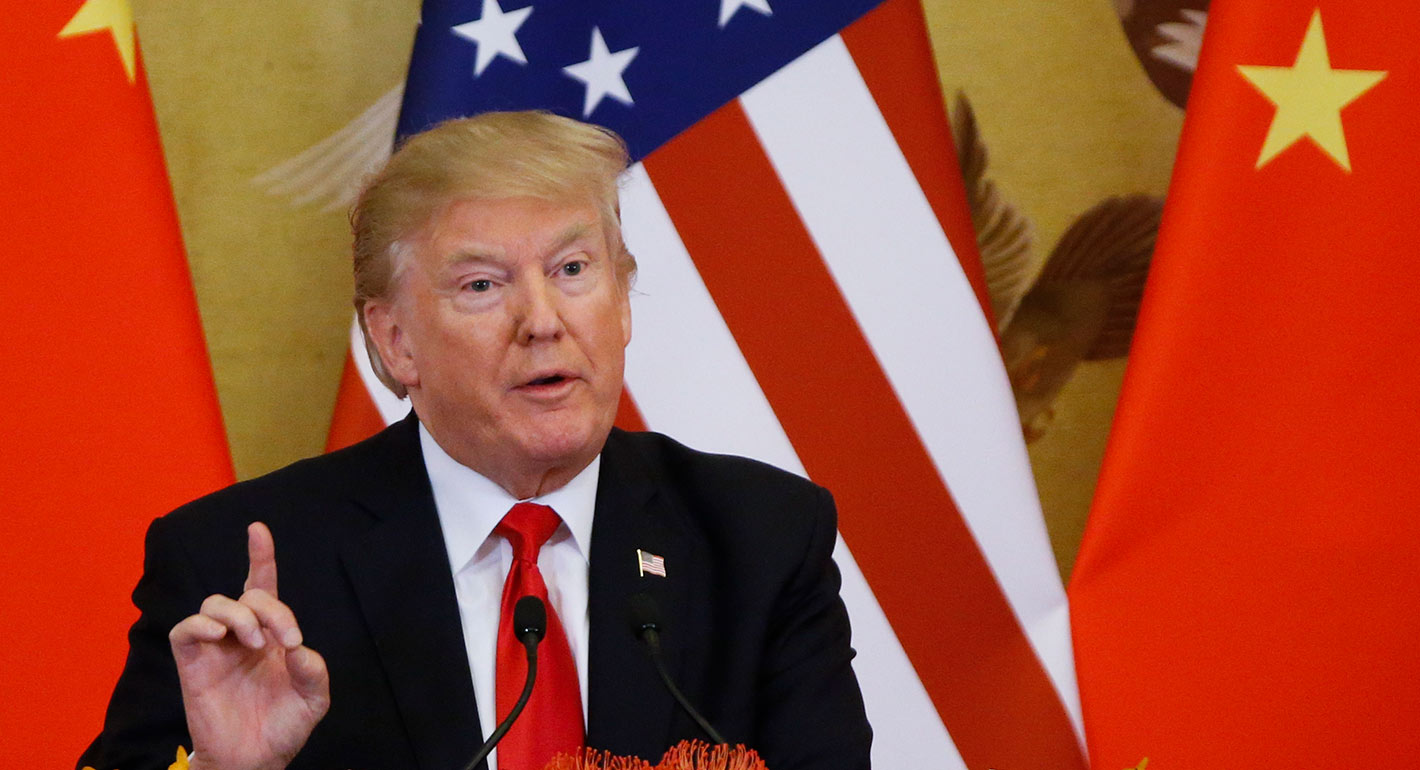
Washington and Beijing are not in a new cold war yet, but there is definitely a cold-war mentality at work that may diminish both sides’ capacity to manage crises effectively.
Source: South China Morning Post
Whatever the behind-the-scenes sequence of events that produced a failure to conclude a trade agreement between the US and China, the new reality is that hardliners on both sides have now gained the upper hand over those seeking to find an agreed way forward.
The net result will be fewer inhibitions on both sides about provoking the other not only on trade-related issues, but also on more sensitive and dangerous subjects.
Historians will debate whether China reneged on understandings reached between the negotiators, or US President Donald Trump decided it was politically more in his interest to campaign for his re-election by railing against China rather than defending a compromise agreement his opponents would pick apart.
Other considerations may prove to have been factors as well, such as overconfidence on both sides about their leverage over each other. But you could feel the winds shift in Washington within days of the failure of the talks, as Trump consecutively issued an executive order barring the Huawei telecommunications firm from the US market and then adding it to the US “entity list”, denying it access to US-related technologies.
These actions had been delayed for months as the trade talks played out. The argument for trying seriously to delink the US and Chinese economies, improbable as it has seemed, now has a starting point and exemplar with Huawei.
Advocates of delinking who believe China must be actively prevented from catching up with US advanced technology won the day, rather than trusting that US competitiveness would eventually outpace China’s. Containment beat out competition. Meanwhile, legal cases proliferated against Chinese agents for espionage and theft of intellectual property. Universities and research organisations like the powerhouse National Institutes of Health were warned to check on the activities of their Chinese-origin students and personnel. Visas are being scrutinised and often denied in ways not seen since the US and China established relations. Some US officials who are not in the hardliner camp continue to hold out hope that Trump and President Xi Jinping might reach agreement before the upcoming G20 meeting in Osaka , Japan, at the end of June.
But barring another radical turnabout by Trump himself – not impossible – there does not appear to be enough time to work through the remaining disagreements.
US Trade Representative Robert Lighthizer has a full agenda dealing with other festering trade agreements and disputes. After the trade talks collapsed, the rapid postponement of new tariffs and ending of some existing tariffs on other important trade partners indicated that US hands are full managing what is likely to be a long-term dispute with Beijing, and Washington is trying to declutter the trade front to concentrate on China.
China, for its part, has toughened its rhetoric while posturing that it is ready to resume talks if the US will moderate its demands. But Beijing has also taken subsidies , state-owned enterprises, tech transfer and enforcement off the table, making talks probably pointless.
Fortunately for the US, these steps are also likely to make the Chinese economy less competitive over time After the talks fell apart, Xi made an emblematic trip of defiance to Jiangxi province, accompanied by his chief trade negotiator, where he visited a rare earths production facility and invoked the spirit of the Communist Party’s famous “Long March” against adversity in the Chinese civil war, evidently symbolising a will to sacrifice and persevere against foreign pressure.
If Xi used the rare earths visit to send a signal that China can deny American industry what it needs when the US denies Huawei what it requires, then I am even more worried. The rare earths saga is complicated and worth separate attention, but in sum China does not have more than a transient hold on the supply as market forces are moving to reduce dependency on this singular source.
It is troubling that Xi decided to do this or received and accepted advice to do so when it is likely to prove a hollow threat.
The US and Chinese leaders are wilful, strong men, who often do not appear to be getting the best advice, nor do they routinely listen to it. This, too, is a bad omen.
Coincident with the downward turn in trade relations, the US has picked up the pace of its freedom-of-navigation challenges, inviting willing allied partners to show their flags in the South China Sea, and publicising previously unpublicised transits of the international waters of the Taiwan Strait.
A responsible US official publicly called on states that have diplomatic relations with Taiwan not to succumb to mainland blandishments to recognise Beijing instead, an obvious contradiction with Washington’s own formal stance of recognising Beijing.
The US Congress is becoming very active in promoting legislation to affirm the importance of Taiwan.
Quite a few senior officials in the Trump administration have long advocated expanding the scope and level of US interaction with Taipei, yet Trump himself seems to have kept a lid on ties with Taiwan, for reasons he has not articulated.
Meanwhile, Beijing has regularly increased its political, diplomatic, military and economic pressure on the island.
In this atmosphere, if the American hardliners achieve a breakthrough in elevating US-Taiwan ties, the inhibitions on Beijing responding for fear of adverse economic consequences have been reduced.
And the potential for confrontations extend beyond Taiwan to the South China Sea and other Chinese territorial claims, reconnaissance missions along the China coast, and other areas.
We are not in a new cold war yet, in my opinion, but there is definitely a cold-war mentality at work that may diminish both sides’ capacity to manage crises effectively.
The unrelated but concurrent examples of Iran and Venezuela do not give me confidence in the Trump team’s capacity.
How John Bolton became US foreign policy’s ‘devil incarnate’ Finally, this dicey situation is further dramatised by an upcoming presidential election in Taiwan where cross-strait relations are an important issue and the various candidates are struggling to win public support with policy nostrums that do not entirely inspire confidence in their ability to manage cross-strait ties.
The end of the trade talks seems likely to be the beginning of something much worse.
This article was originally published in the South China Morning Post.
Distinguished Fellow, Asia Program
Paal previously served as vice chairman of JPMorgan Chase International and as unofficial U.S. representative to Taiwan as director of the American Institute in Taiwan.
Recent Work
Douglas H. Paal


Douglas H. Paal, Tong Zhao, Chen Qi, …
Carnegie does not take institutional positions on public policy issues; the views represented herein are those of the author(s) and do not necessarily reflect the views of Carnegie, its staff, or its trustees.

With its public finances in shambles, the far right polling at 35 percent ahead of the 2027 presidential election, and a growing protest movement, is France’s crisis a threat to the EU’s geopolitical awakening?

Rym Momtaz, ed.

Ahead of a tough winter for Ukraine, Donald Trump’s swing back toward Russia bodes ill. But instead of panicking, Kyiv’s European allies are focusing on action.
Rym Momtaz

Funding Ukraine remains a priority for European leaders. As Russia’s war of aggression heads into another winter, two feasible options to mobilize support for Kyiv should be fast-tracked.


Vladyslav Rashkovan, Gregory P. Wilson

While the EU and European governments are embracing the much-lauded middle-power moment, this entails three difficult conundrums.

Richard Youngs

Europe is facing rising populism internally as well as external pressures from Russia, China, Turkey, and the United States.

Dimitar Bechev