

Commentary
- +5
Zaha Hassan, Sarah Yerkes, Yasmine Farouk, …
{
  "authors": [
    "Federiga Bindi"
  ],
  "type": "commentary",
  "centerAffiliationAll": "dc",
  "centers": [
    "Carnegie Endowment for International Peace"
  ],
  "collections": [],
  "englishNewsletterAll": "ctw",
  "nonEnglishNewsletterAll": "",
  "primaryCenter": "Carnegie Endowment for International Peace",
  "programAffiliation": "EP",
  "programs": [
    "Europe"
  ],
  "projects": [],
  "regions": [
    "East Asia",
    "China",
    "Western Europe",
    "Iran"
  ],
  "topics": [
    "Economy",
    "Trade",
    "Foreign Policy"
  ]
}
Source: Getty
Italy was the first big European economy to join China’s enormous infrastructure project, the Belt and Road Initiative (BRI). Why did Rome sign up, and what are the risks?
In March 2019, Italy signed a memorandum of understanding with China on the BRI. This culminated a long-standing economic relationship spanning decades, that was punctuated by finance minister Giovanni Tria’s August 2018 visit to China. Although Tria may have quickened the process, Italy’s political class were already in agreement about the merits of deepening relations with Beijing.
Industrial relations between Italy and China date back to the mid-1980s. When Romano Prodi (who would later serve two stints as prime minister) was president of Italy’s Institute for Industrial Reconstruction, China asked him to build a factory in Tianjin. In return, his Chinese counterparts helped him build a factory in what was then the Soviet Union. Once he became prime minister in 1997, Prodi led a massive trade mission to China, bringing over 100 companies to promote joint ventures in engineering, pharmaceuticals, foodstuffs, textiles, fashion, and finance.
Most Italian prime ministers over the years have shared Prodi’s warmth toward China: including Massimo D’Alema, Matteo Renzi, and Paolo Gentiloni. The only major dissenting voice has been Silvio Berlusconi, who—after selling his beloved Milan soccer team to Chinese investors—presented his candidacy for the 2019 European Parliament elections as a counterweight to Chinese hegemony. He asserted that Italy should side with the United States in its antagonism toward China.
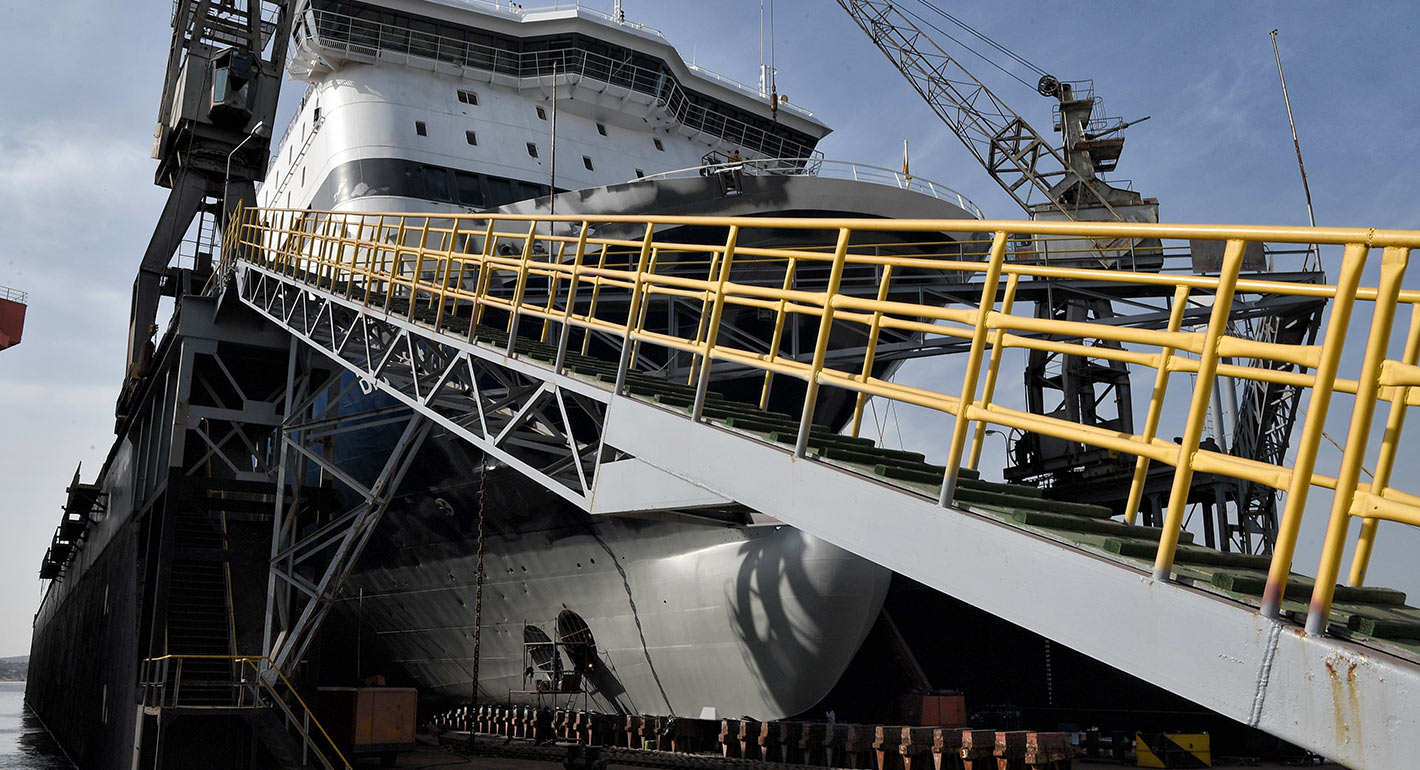
Italy has good reasons to nurture its friendship with China. Enrico Fardella and Giorgio Prodi of the University of Bologna have analyzed the BRI’s impact on Europe, particularly Italy. They point out that since a Chinese shipping company bought a controlling stake in the Greek port of Piraeus in 2016, the Mediterranean has become a more important trade hub for China.
Maritime transport is an important part of the BRI, because the vast majority of China-Europe trade travels on ships. According to Prodi and Fardella, in 2016, after China acquired the Port of Piraeus, 13 percent of Chinese trade passed through Greece, compared to just 2 percent seven years earlier.
Fardella and Prodi warn that, should Italy remain outside the BRI, it could miss trade opportunities. Specifically, Italian ports on the Adriatic Sea could lose business, should the Port of Piraeus become linked to Central Europe via rail – because this would mean that trade bypassed Italy entirely, instead of landing in Italian ports and being transported by Italian railways. Italian ports are already connected by rail to Central and Eastern Europe, so could serve as major hubs for trade coming from China via the Suez Channel.
Granted, signing up for the BRI does not come without risks. There is a risk that BRI financing could leave Italy further indebted, given that Italy, along with Greece, is already one of the two most indebted countries in the eurozone.
A second risk is that Italy will be perceived as drifting away from its traditional partners, other EU members and the United States. Yet, as Italy still suffers from the 2008 global financial crisis, feels betrayed by the United States because of the Libya disaster, and contends with being abandoned by Europe over the immigration and economic crises, Rome’s priority is to spur domestic economic growth. Other EU countries, especially France, may have expressed concerns about Italy’s engagement with China. But they have been quick to sign their own deals with Beijing too.
In some respects, Italy’s Western partners have limited its choices. As for Washington, it was Trump’s dismissal of both the Trans-Pacific Partnership and the Transatlantic Trade and Investment Partnership trade deals that made the BRI so attractive to Rome in the first place. The BRI is now the only major global initiative designed to link Europe with Asia, in terms of infrastructure, trade, and finance. It is only natural that Italy wants a piece of the pie.
Former Nonresident Scholar, Europe Program
Federiga Bindi was a nonresident scholar in the Europe Program at the Carnegie Endowment for International Peace working on European politics, EU foreign policy, and transatlantic relations.
Recent Work


Zaha Hassan, Sarah Yerkes, Yasmine Farouk, …
Federiga Bindi
Carnegie does not take institutional positions on public policy issues; the views represented herein are those of the author(s) and do not necessarily reflect the views of Carnegie, its staff, or its trustees.

With its public finances in shambles, the far right polling at 35 percent ahead of the 2027 presidential election, and a growing protest movement, is France’s crisis a threat to the EU’s geopolitical awakening?

Rym Momtaz, ed.

Ahead of a tough winter for Ukraine, Donald Trump’s swing back toward Russia bodes ill. But instead of panicking, Kyiv’s European allies are focusing on action.
Rym Momtaz

Funding Ukraine remains a priority for European leaders. As Russia’s war of aggression heads into another winter, two feasible options to mobilize support for Kyiv should be fast-tracked.


Vladyslav Rashkovan, Gregory P. Wilson

While the EU and European governments are embracing the much-lauded middle-power moment, this entails three difficult conundrums.

Richard Youngs

Europe is facing rising populism internally as well as external pressures from Russia, China, Turkey, and the United States.

Dimitar Bechev