

Q&A
Darshana M. Baruah, Satyendra Prasad, Denghua Zhang
{
  "authors": [
    "Darshana M. Baruah"
  ],
  "type": "other",
  "centerAffiliationAll": "dc",
  "centers": [
    "Carnegie Endowment for International Peace",
    "Carnegie India"
  ],
  "collections": [],
  "englishNewsletterAll": "ctw",
  "nonEnglishNewsletterAll": "",
  "primaryCenter": "Carnegie India",
  "programAffiliation": "SAP",
  "programs": [
    "South Asia"
  ],
  "projects": [
    "Security Studies",
    "Indian Ocean Initiative"
  ],
  "regions": [
    "South Asia",
    "India",
    "Indo-Pacific",
    "East Asia",
    "China"
  ],
  "topics": [
    "Foreign Policy",
    "Security"
  ]
}
Source: Getty
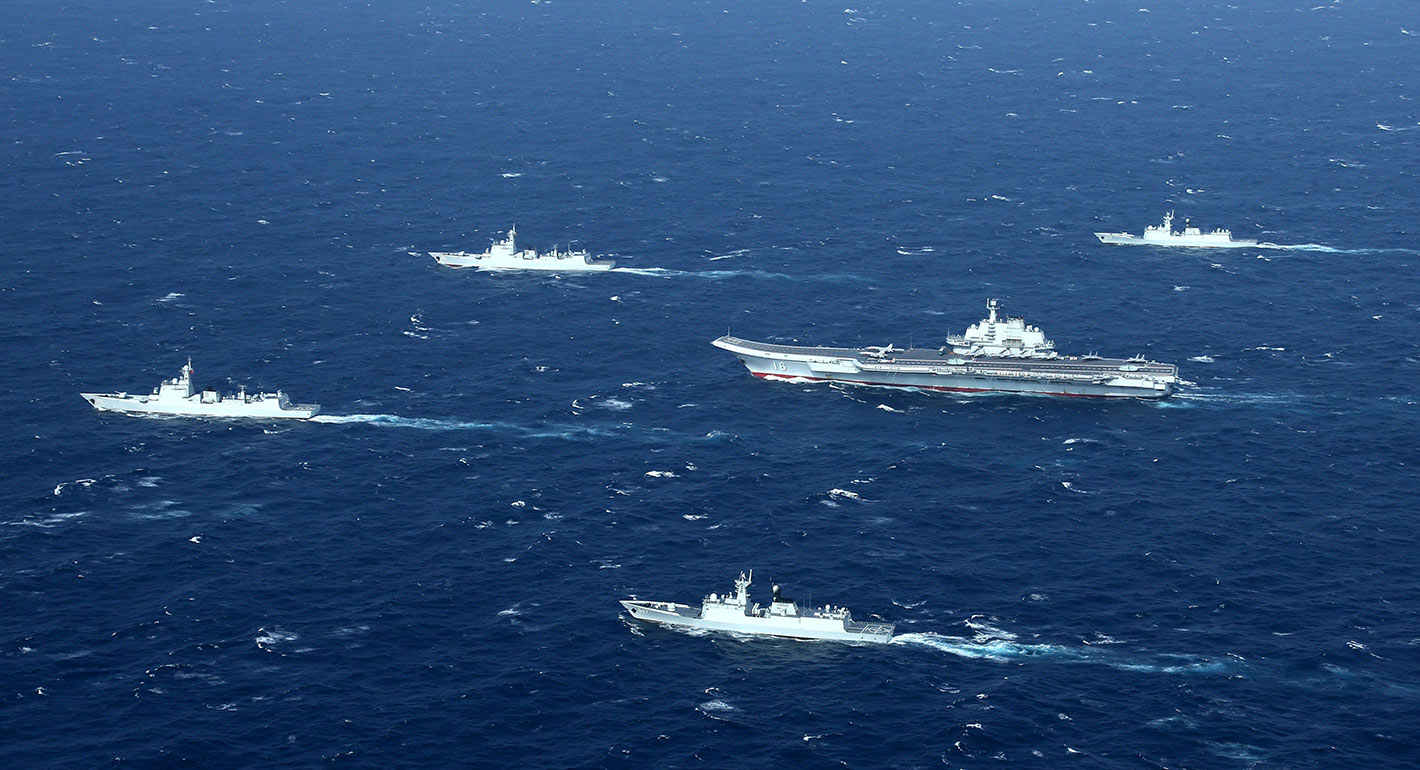
While India perceives a growing Chinese presence as competition to its strategic and security role in the Indian Ocean Region, Beijing is determined to stake its claim and emerge as a key player in the region.
Source: Center for a New American Security
The Indian Ocean region (IOR) is a critical juncture of the wider Indo-Pacific. It is one of the most crucial trade corridors that links the Middle East, Europe, Africa, South Asia, and Southeast and Northeast Asia. As outlined by the Indian Ocean Rim Association (IORA), the Indian Ocean is "[h]ome to nearly 2.7 billion people … carrying half of the world’s container ships, one third of the world’s bulk cargo traffic, and two thirds of the world’s oil shipments." After the Cold War, the Indian Ocean remained relatively peaceful, with minimal geopolitical competition. India and the United States have been the primary actors in the theater and largely accepted each other’s presence and operations. After the Cold War, Washington welcomed a greater Indian role, with then–U.S. Secretary of Defense Robert Gates encouraging India to be a "net provider of security in the Indian Ocean and beyond." However, as China continues to expand its presence and deepen its engagements across the Indo-Pacific, there is a new geopolitical competition emerging in the Indian Ocean. While India perceives a growing Chinese presence as competition to its strategic and security role in the IOR, Beijing is determined to stake its claim and emerge as a key player in the IOR. This ambition feeds into China’s larger objective of becoming a global maritime power.
This paper was originally published by the Center for a New American Security.

Former Nonresident Scholar, South Asia Program
Darshana M. Baruah was a nonresident scholar with the South Asia Program at the Carnegie Endowment for International Peace where she directs the Indian Ocean Initiative.
Recent Work

Darshana M. Baruah, Satyendra Prasad, Denghua Zhang
Darshana M. Baruah
Carnegie does not take institutional positions on public policy issues; the views represented herein are those of the author(s) and do not necessarily reflect the views of Carnegie, its staff, or its trustees.

The new U.S.–Denmark–Greenland agreement will help Washington exert political, economic, and financial dominance under the guise of security. Yet, it acknowledged Copenhagen’s and Nuuk’s sovereignty on the island.

Marc Pierini

A summer of escalation in the Black Sea has hurt Ukraine economically and is exacerbating world food security. A truce is needed—as is a broader reframing of Europe’s Ukraine strategy.

Thomas de Waal

Are Germany’s economic, industrial, and political struggles becoming a liability for the EU’s ability to rise to the geopolitical moment?

Rym Momtaz, ed.

European Commission President Ursula von der Leyen is about to give her annual address on the state of the EU. Here’s what she won’t—but should—say.
Rym Momtaz

The aftermath of the Ceuta crisis shows Europe has drawn the wrong lessons. Rather than doubling down on failed migration policies, the EU needs to address the underlying roots of such episodes.

Richard Youngs