

Article
Dan Baer, Erik Brown
{
  "authors": [
    "Dan Baer"
  ],
  "type": "legacyinthemedia",
  "centerAffiliationAll": "dc",
  "centers": [
    "Carnegie Endowment for International Peace"
  ],
  "collections": [],
  "englishNewsletterAll": "ctw",
  "nonEnglishNewsletterAll": "",
  "primaryCenter": "Carnegie Endowment for International Peace",
  "programAffiliation": "EP",
  "programs": [
    "Europe"
  ],
  "projects": [],
  "regions": [
    "North America",
    "United States",
    "East Asia",
    "Japan",
    "Iran"
  ],
  "topics": [
    "Democracy",
    "Economy",
    "Foreign Policy"
  ]
}
Source: Getty
In the midst of a still-escalating pandemic, most of our attention is rightly focused on dealing with the twin public health and economic emergencies we face.
Source: Foreign Policy
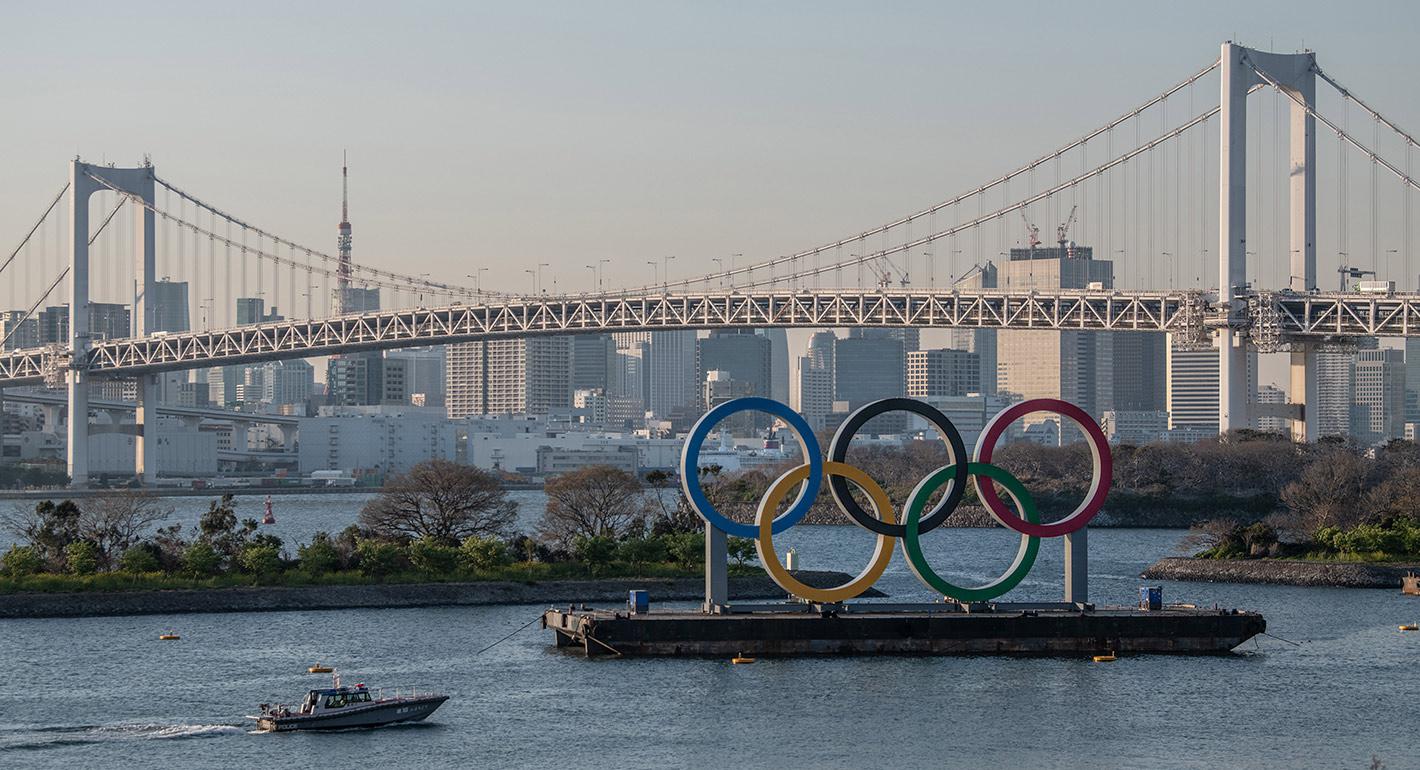
Japanese Prime Minister Shinzo Abe’s announcement on Tuesday that this summer’s Tokyo Olympics will be postponed for one year was not a surprise—it was inevitable. The games weren’t scheduled to start until July, but on top of the uncertainty about whether public health restrictions would allow a global gathering on that scale in four months, the coronavirus pandemic has already disrupted the lead-up for participants, organizers, and spectators. Athletes’ training regimes have become impractical. The qualifying events for selecting competitors within countries have been canceled. For the first time outside of World War I and World War II, the modern Olympics will not happen as scheduled.
In the midst of a still-escalating pandemic, most of our attention is rightly focused on dealing with the twin public health and economic emergencies we face. But we can also take time to mourn the loss of festivals and celebrations, of weddings and funerals, of graduation ceremonies and family reunions that have been canceled, postponed, or transported to the newly colonized planet of Zoom videoconferences. Empathy is important especially in a time like this, and we can allow ourselves to feel for the seniors in college who are spending their final spring back in their parents’ basements rather than staying up late in a dorm room dreaming about the future. We can spare a thought for the brides and grooms who have spent a year and a fortune planning weddings that would bring their families together and now wonder whether they’ll ever have the celebration they planned
We can mourn the loss of festivals and celebrations, weddings and funerals, graduation ceremonies and family reunions that have been canceled, postponed, or transported to the newly colonized planet of Zoom videoconferences.
Postponing the Olympics is a loss, too. We should care about the athletes who have dedicated most of their young lives to excellence at sport. The sacrifices they make to compete—their time, their financial resources, their education, their bodies—are immense. They spend years preparing for this competition, minutely planning their training regimes to achieve peak competitiveness at exactly the time of the games. Yes, the Olympics will happen next year, but there will be some athletes for whom the extra year will be the difference between making the team and staying at home. Others who might not have made it to Tokyo this summer will take their places. For all of them, the horizon has moved farther away—a year of additional sacrifice until their shot at standing on the podium.
In a different way, losing the games this summer is a loss for the rest of us, too. This tremendously painful and uncertain moment for the world is a moment when we could really use a celebration of the Olympic spirit: a coming together that reminds us that the whole world is in this together; a spectacle that inspires awe of our fellow human beings.
Of course many of us feel pride when our country’s athletes succeed—the Olympics are a contest among nations. But I find that no matter which country an athlete represents, as they step up onto the podium with a tearful eye and triumphant smile, years of training spinning through their head like a hyperspeed reflection reel, I feel a flash of transcendent joy. There is even a momentary sense of a kind of benign guilt: I am partaking in the athlete’s happiness by marveling at the beauty of someone achieving what I never could. The Olympics teach us that empathy is nurtured in moments of elation as well as suffering.
The Olympic Games showcase the capacity of human beings to stretch the limits of what the human body can do. They are also an opportunity for us to enlarge the scope of our empathy and to embrace our common humanity. Unlike so many rituals of decades and centuries past, these games first held over 2,000 years ago have not become an anachronism and still resonate with our 21st-century experience. It’s not frivolous to mourn their postponement; we need celebrations of the human spirit and our global community in times like these.

Senior Vice President; Director, Europe Program
Dan Baer is senior vice president and director of the Europe Program at the Carnegie Endowment for International Peace. Under President Obama, he was U.S. ambassador to the Organization for Security and Cooperation in Europe (OSCE) and he also served deputy assistant secretary of state for the Bureau of Democracy, Human Rights, and Labor.
Recent Work

Dan Baer, Erik Brown

Dan Baer, Sophia Besch
Carnegie does not take institutional positions on public policy issues; the views represented herein are those of the author(s) and do not necessarily reflect the views of Carnegie, its staff, or its trustees.

There is an elephant in the room when it comes to the EU’s upcoming security strategy: Donald Trump. Unless European leaders acknowledge the depth of the transatlantic crisis, true autonomy will remain out of reach.

Stefan Lehne
Europe’s industrial supply chains leave it vulnerable to global shocks. The EU needs a pragmatic green industrial strategy that balances durable partnerships and bolsters homegrown clean tech without sacrificing low-carbon ambition.


Milo McBride, Pauline Gerard
Defense tech innovations will be at the heart of Europe’s new security strategy. But so far, Brussels has been making moves without a broader plan, undermining readiness and credibility.

Raluca Csernatoni
When the U.S.-Iran memorandum of understanding was announced, the UK, France, Germany, and Italy declared their readiness to help demine the Strait of Hormuz and lift nuclear sanctions on Tehran. But does Europe need new tools to recover a diplomatic role?

Rym Momtaz, ed.
The Franco-German relationship is on the rocks again. But unlike previous moments of tension, the epochal changes on the world stage require that both step up investment in their bilateral ties.
Rym Momtaz