

• Research
  • Strategic Europe
  • About
  • Experts
Carnegie Europe logoCarnegie lettermark logo
EUUkraine
  • Donate
{
  "authors": [
    "Harith Hasan",
    "Harout Akdedian"
  ],
  "type": "other",
  "centerAffiliationAll": "dc",
  "centers": [
    "Carnegie Endowment for International Peace",
    "Malcolm H. Kerr Carnegie Middle East Center"
  ],
  "collections": [],
  "englishNewsletterAll": "menaTransitions",
  "nonEnglishNewsletterAll": "",
  "primaryCenter": "Malcolm H. Kerr Carnegie Middle East Center",
  "programAffiliation": "MEP",
  "programs": [
    "Middle East"
  ],
  "projects": [],
  "regions": [
    "Levant",
    "Syria",
    "Iraq",
    "Middle East"
  ],
  "topics": [
    "Political Reform"
  ]
}

Source: Getty

Other
Malcolm H. Kerr Carnegie Middle East Center

State Atrophy and the Reconfiguration of Borderlands in Syria and Iraq: Post-2011 Dynamics

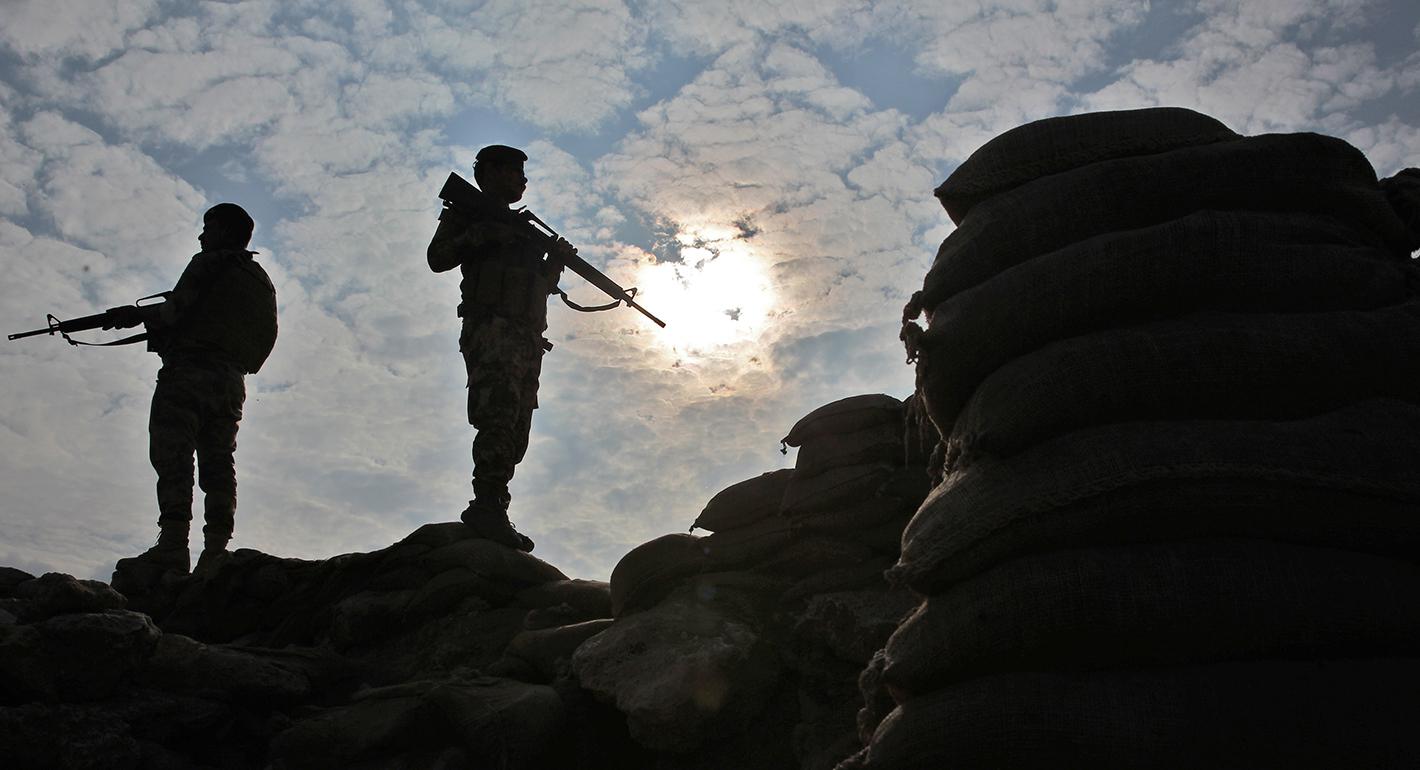
Since 2011, borderlands in the MENA region transformed into considerable sites of contested power by a plethora of actors.

Link Copied
By Harith Hasan and Harout Akdedian
Published on Mar 31, 2020

Source: Elsevier's Political Geography journal

Circumstances in the MENA region invite us to redirect our attention to geographic areas that emerged as primary sites of power-contest. This paper looks into emerging trends in the unraveling of bounded sovereign territoriality in borderlands by examining the contest over military, economic, and socio-political spaces in the wake of the devolution of the monopoly of violence and the rise of a multitude of new and old actors to local prominence. Since 2011, borderlands in the MENA region transformed into considerable sites of contested power by a plethora of actors. The paper points out emergent patterns of deterritorialization and reterritorialization of power in its various forms and manifestations in borderlands. The dynamics of ‘place and performance’ in the borderlands of Syria and Iraq showcase the variety of ways borders were instrumentalized under circumstances of state atrophy and their destructive tendencies for borderlands.

Read Full Text

This paper was originally published in Elsevier's Political Geography journal.

About the Authors

Harith Hasan

Associate researcher at the Arab Center for Research and Policy Studies.

Harith Hasan is an associate researcher at the Arab Center for Research and Policy Studies.

Harout Akdedian

Authors

Harith Hasan
Associate researcher at the Arab Center for Research and Policy Studies.
Harith Hasan
Harout Akdedian
Political ReformLevantSyriaIraqMiddle East

Carnegie does not take institutional positions on public policy issues; the views represented herein are those of the author(s) and do not necessarily reflect the views of Carnegie, its staff, or its trustees.

More Work from Carnegie Europe

  • Commentary
    Strategic Europe
    How to Join the EU in Three Easy Steps

    Montenegro and Albania are frontrunners for EU enlargement in the Western Balkans, but they can’t just sit back and wait. To meet their 2030 accession ambitions, they must make a strong positive case.

      Dimitar Bechev, Iliriana Gjoni

  • Commentary
    Strategic Europe
    Taking the Pulse: Is it NATO’s Job to Support Trump’s War of Choice?

    Donald Trump has demanded that European allies send ships to the Strait of Hormuz while his war of choice in Iran rages on. He has constantly berated NATO while the alliance’s secretary-general has emphatically supported him.

      • Rym Momtaz

      Rym Momtaz, ed.

  • Commentary
    Strategic Europe
    Russia’s Imperial Retreat Is Europe’s Strategic Opportunity

    The war in Ukraine is costing Russia its leverage overseas. Across the South Caucasus and Middle East, this presents an opportunity for Europe to pick up the pieces and claim its own sphere of influence.

      William Dixon, Maksym Beznosiuk

  • Commentary
    Strategic Europe
    The EU Needs a Third Way in Iran

    European reactions to the war in Iran have lost sight of wider political dynamics. The EU must position itself for the next phase of the crisis without giving up on its principles.

      Richard Youngs

  • Commentary
    Strategic Europe
    Europe on Iran: Gone with the Wind

    Europe’s reaction to the war in Iran has been disunited and meek, a far cry from its previously leading role in diplomacy with Tehran. To avoid being condemned to the sidelines while escalation continues, Brussels needs to stand up for international law.

      Pierre Vimont

Get more news and analysis from
Carnegie Europe
Carnegie Europe logo, white
Rue du Congrès, 151000 Brussels, Belgium
  • Research
  • Strategic Europe
  • About
  • Experts
  • Projects
  • Events
  • Contact
  • Careers
  • Privacy
  • For Media
  • Gender Equality Plan
Get more news and analysis from
Carnegie Europe
© 2026 Carnegie Endowment for International Peace. All rights reserved.