

Article
Zainab Usman
{
  "authors": [
    "Zainab Usman"
  ],
  "type": "commentary",
  "centerAffiliationAll": "dc",
  "centers": [
    "Carnegie Endowment for International Peace"
  ],
  "collections": [
    "Trade and Investment"
  ],
  "englishNewsletterAll": "africa",
  "nonEnglishNewsletterAll": "",
  "primaryCenter": "Carnegie Endowment for International Peace",
  "programAffiliation": "AFP",
  "programs": [
    "Africa"
  ],
  "projects": [],
  "regions": [],
  "topics": [
    "Economy",
    "Trade",
    "Global Governance"
  ]
}
Source: Getty
Can the leadership of a distinguished Nigerian economist steer the World Trade Organization onto a steadier course?
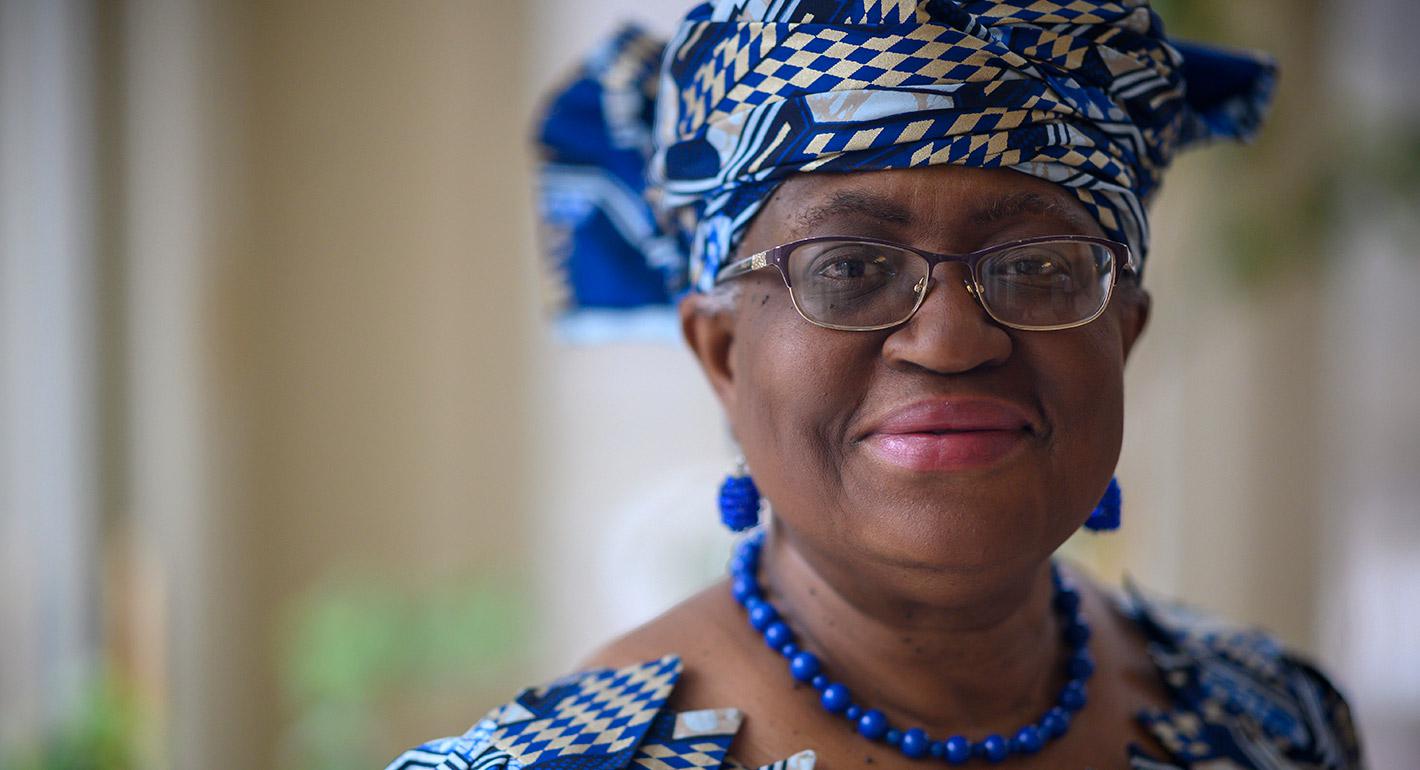
Global trade policy circles are abuzz with the news that Ngozi Okonjo-Iweala has been confirmed as the new director general of the World Trade Organization (WTO). Her appointment comes after months of deadlock in the selection process for the next head of the trade body to replace outgoing director general Roberto Azevêdo. Okonjo-Iweala was a clear front-runner, backed by most WTO member states including Japan and countries throughout Europe, but former president Donald Trump and his administration preferred South Korea’s trade minister, Yoo Myung-hee. The United States had been the sole member country to oppose Okonjo-Iweala’s appointment until President Joe Biden and his administration changed course and declared “strong” support for her after his inauguration—a policy shift that permitted a quick resolution of the drawn-out process.
Okonjo-Iweala is the first female head of the WTO. She is also the first African to head the body. A Harvard- and MIT-trained development economist, Okonjo-Iweala was a two-time finance minister of Nigeria and a former managing director at the World Bank. She brings vast experience in policy reforms and international economic relations to her new role at the WTO. Okonjo-Iweala played a key role in 2005 in Nigeria’s debt relief agreement, which cut the country’s debt by $30 billion. She also instituted various transparency initiatives in the management of Nigeria’s oil revenues, earning her a reputation as a reformer. At the World Bank, she managed the development portfolio for South Asia, Africa, Europe, and Central Asia.
Ngozi Okonjo-Iweala takes the helm of the WTO at a crucial moment in history. As the coronavirus pandemic continues to rage, she brings to this role her expertise as chair (since 2016) of Gavi, the Vaccine Alliance, and as the African Union’s special envoy on the pandemic. The efficacy of the WTO’s dispute resolution mechanism has been weakened over the past few years, demonstrating the need for major reform. Okonjo-Iweala has highlighted the need to “modernize the WTO’s rulebook” and “reboot the organization for the 21st century,” while also acknowledging the successes of the contemporary “rules-based multilateral trading system that that began with GATT” (the precursor to the WTO).
Okonjo-Iweala is expected to steer the WTO toward better coordination of global trade. Her immediate priorities could include: addressing export restraints to keep markets open for food and other goods, resuming multilateral trade negotiations on fisheries subsidies that lead to overcapacity and overfishing, and encouraging the United States and China “to find common ground” on trade (as Politico put it). She is also keen to restart the ongoing round of WTO negotiations to further remove trade barriers through the Doha Development Agenda—negotiations that have gone on since 2001.
Many developing countries hope that, under Okonjo-Iweala’s leadership, the WTO will oversee reform efforts to make the rules of trade fairer for them. She may also support India and South Africa’s proposal of an intellectual property waiver (suspension of parts of the TRIPS Agreement) to scale up vaccine production in poor countries. She has previously warned “against vaccine nationalism” in the global drive to immunize populations worldwide against COVID-19. Finally, the new director general has suggested that reviving the WTO requires avoiding a “business as usual” approach, even though she also insists that it is the “rules-based global trading system” that offers the best path away from protectionism and trade wars.
Ngozi Okonjo-Iweala also serves on the Board of Trustees for the Carnegie Endowment for International Peace.
Former Director, Africa Program
Zainab Usman was a senior fellow and the inaugural director of the Africa Program at the Carnegie Endowment for International Peace.
Recent Work
Zainab Usman, Anthony Carroll
Carnegie does not take institutional positions on public policy issues; the views represented herein are those of the author(s) and do not necessarily reflect the views of Carnegie, its staff, or its trustees.

While the EU and European governments are embracing the much-lauded middle-power moment, this entails three difficult conundrums.

Richard Youngs

Europe is facing rising populism internally as well as external pressures from Russia, China, Turkey, and the United States.

Dimitar Bechev

Much has been said of the changes Brussels is trying to make to the EU enlargement process. Here’s why gradual integration might—or might not—be the answer.
Dimitar Bechev

The European Commissioner for Trade is headed to China. But after President Xi’s bridge-building visit to Washington, can a more isolated EU overcome Beijing’s stranglehold on critical raw materials? Who will blink first?

Rym Momtaz, ed.

The domestic impacts of how long it is taking to end the war in Ukraine have pushed the French electorate to the political extremes and compromised the country’s diplomatic capacity.
Rym Momtaz