

Commentary
Alexander Baunov
{
  "authors": [
    "Alexander Baunov"
  ],
  "type": "commentary",
  "centerAffiliationAll": "",
  "centers": [
    "Carnegie Endowment for International Peace",
    "Carnegie Russia Eurasia Center"
  ],
  "collections": [],
  "englishNewsletterAll": "",
  "nonEnglishNewsletterAll": "",
  "primaryCenter": "Carnegie Endowment for International Peace",
  "programAffiliation": "",
  "programs": [],
  "projects": [],
  "regions": [
    "North America",
    "United States",
    "South Asia",
    "Afghanistan"
  ],
  "topics": [
    "Economy"
  ]
}
Source: Getty
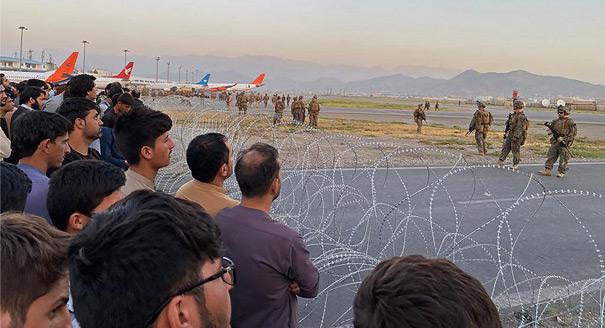
It would be foolish to assume the American withdrawal from Afghanistan will be repeated everywhere else that there is a U.S. presence.
U.S. President Joe Biden’s first speech following scenes of chaos and tragedy as the Taliban retook control of the Afghan capital Kabul contained some important implications for Russia. It presented a new format for the U.S. mission in Afghanistan and other countries where Washington has taken it upon itself to oversee a transition to democracy. The United States has absolved itself of responsibility for the end result, since, in Biden’s words, U.S. soldiers “cannot and should not be fighting in a war and dying in a war that Afghan forces are not willing to fight for themselves.” Biden also redefined the U.S. mission, stating that its aim was exclusively to ensure its own security following the 9/11 terrorist attacks on American soil, rather than nation building or creating democracy.
So, what conclusions can Russia draw from this new, self-restrained interpretation of the U.S. mission abroad? The Soviet Union conducted its own disastrous war in Afghanistan from 1979 to 1989, but it didn’t just pull out because it was unable to win the war. It withdrew at a time of deep internal crisis for the USSR, when people had become bitterly disappointed with their own country. Both the Soviet and U.S. strategies of “winning the hearts and minds” of the Afghan people were similar, except that instead of the Soviet values of “socialism,” “equality,” and “development,” the U.S. buzzword was “democracy.” Beyond the military action, the construction sites of schools and hospitals that rose up were strikingly similar, along with programs for thousands of students at universities; weapons for the armed forces; and concerts, libraries, and museums for the intelligentsia. But it’s hard to win over the hearts and minds of a foreign nation right when you’re losing those of your own people, and the United States is also leaving Afghanistan at a time of deep internal reflection.
The George W. Bush administration did, of course, have another motive for invading Afghanistan, in addition to punishing those responsible for 9/11 and showing Americans that they would be protected from future attacks. That motivation was to reshape the part of the world that the threat had issued from, to cut it off at the source. This is how the idea was born of a new Middle East that would join the world of pro-Western democracies and allies. At the beginning of the twenty-first century, America was at the peak of its power: it had emerged victorious from the Cold War and had no rivals. Now its withdrawal from Afghanistan and Iraq is an admission that it’s impossible to bring about the miracle of democracy from the outside alone.
The Bush administration, which started both wars, was guided by the experience of post–World War II presidents who oversaw the transformation of totalitarian regimes in Germany and Japan. That comparison was a big mistake. Germany, Austria, Italy, and Japan may, in some respects, have been lagging behind other countries before totalitarian regimes took hold there, but were still perfectly modernized societies with functioning legal systems and extensive experience of building their own parliamentary and democratic institutions. Their defeat in the war did not so much set them on a new (correct) path, as return them to their previous one. There is no such precedent in the Middle East: on the contrary, with few exceptions, modernizing experiments have failed in the region, whether secular monarchies, socialist juntas (both of which had been tried in Afghanistan before the U.S. intervention), or Islamic democracies, including the largely unsuccessful Arab Spring. It’s clear from these experiments in the Middle East that those who believe a democratic miracle can be brought about anywhere with the right external efforts are mistaken: the result will not be Japan, but Afghanistan. Such miracles happen only from within, and as a rule, it’s a long process.
Those who seek to turn any failure for the West into a victory for Russia are invariably also keen to occupy the vacated space on the map—and will, more often than not, find themselves on the brink of a similar debacle. Plus, the retreat from Afghanistan doesn’t mean that the West will give up its positions so easily (minus its twenty years of fighting, of course) elsewhere. Having routed al-Qaeda, the United States didn’t have any crucial interests in Afghanistan that it couldn’t surrender at any cost—but that’s not to say that it doesn’t have such interests in other places, and that it would do the same there. It would be cavalier and downright dangerous for Kremlin strategists to automatically assume a tactical defeat in one place will be repeated in all possible situations. On the contrary, U.S. talk of ending other people’s wars and prioritizing the country’s own security should be taken with a pinch of salt: if the opportunity arises to restore its lost prestige as a patron and an ally, the United States will seize upon that opportunity with renewed vigor.
It’s also dangerous when gloating over the defeat of a geopolitical rival to (even unwittingly) sympathize with the Taliban. Many commentators in both Russia and Ukraine have tried to apply the logic of events in Afghanistan to places closer to home: either it’s a foretelling of the Americans fleeing from Kyiv just as they are now deserting Kabul, or of the Russians leaving Donetsk. The Taliban is a force to be reckoned with, not least because it consists of men who literally have nothing to lose, which can’t be said of most other nations. The Islamist militants are light-years away from even the most conservative post-Soviet firebrands, and their anti-American position does not automatically make them friends of Moscow and its Central Asian neighbors. It’s worth remembering that the previous Taliban administration in Afghanistan was the only government in the world to recognize the Chechen Republic of Ichkeria, as the breakaway Russian region styled itself under Shamil Basayev and Aslan Maskhadov.
Now Russia will have to choose whether to continue on a good footing with the Taliban, or to support its traditional allies in the north of Afghanistan—Afghan Uzbeks and Tajiks, who are already showing the first signs of resistance—as it did in the 1990s. Even if this time Moscow tries a more balanced approach, the Taliban will always suspect Russia of acting against it in the north.
Over on the Western side, there’s a symmetrical danger that fans of the Great Game might seek to internationalize their defeat: why not let the same Taliban who beat the Americans go on to beat the Russians too, and the Chinese, and the Central Asian regimes? Fortunately, for now, such voices are far outnumbered by those who recognize the danger of such attitudes.
At first glance, a more restrained U.S. concept of its mission abroad might seem like bad news for the political and public space in non-Western countries, including Russia, but it could in fact turn out to have a positive side. If the West is truly going to temper its desire to remold other societies from the outside using its own values and institutes, other countries will be able to make use of those same values and institutes without fear, since they will stop being seen as tricks and geopolitical traps to enable foreign expansion, and become what they originally were in Western societies when they themselves were progressing toward power and enlightenment: important instruments of their own social development and internal modernization.

Senior Fellow, Editor-in-Chief, Carnegie Russia Eurasia Center
Baunov is a senior fellow and editor-in-chief at the Carnegie Russia Eurasia Center.
Recent Work
Alexander Baunov
Alexander Baunov
Carnegie does not take institutional positions on public policy issues; the views represented herein are those of the author(s) and do not necessarily reflect the views of Carnegie, its staff, or its trustees.
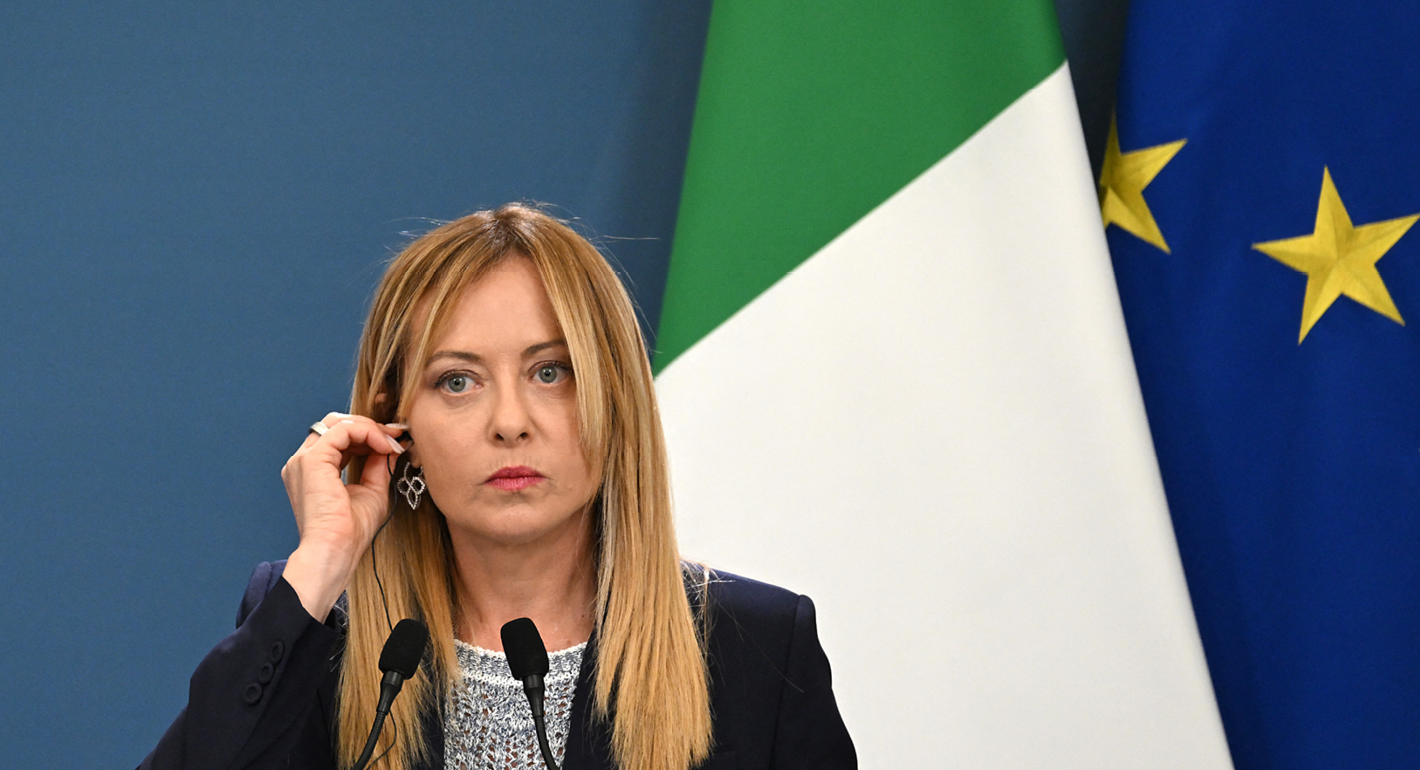
When Giorgia Meloni very publicly rebuked Donald Trump’s disparaging remarks about her, it surprised many who saw her as a European extension of Trumpism. Is the spat a sign of trouble in the radical right’s transatlantic axis?

Rym Momtaz, ed.

There is an elephant in the room when it comes to the EU’s upcoming security strategy: Donald Trump. Unless European leaders acknowledge the depth of the transatlantic crisis, true autonomy will remain out of reach.

Stefan Lehne
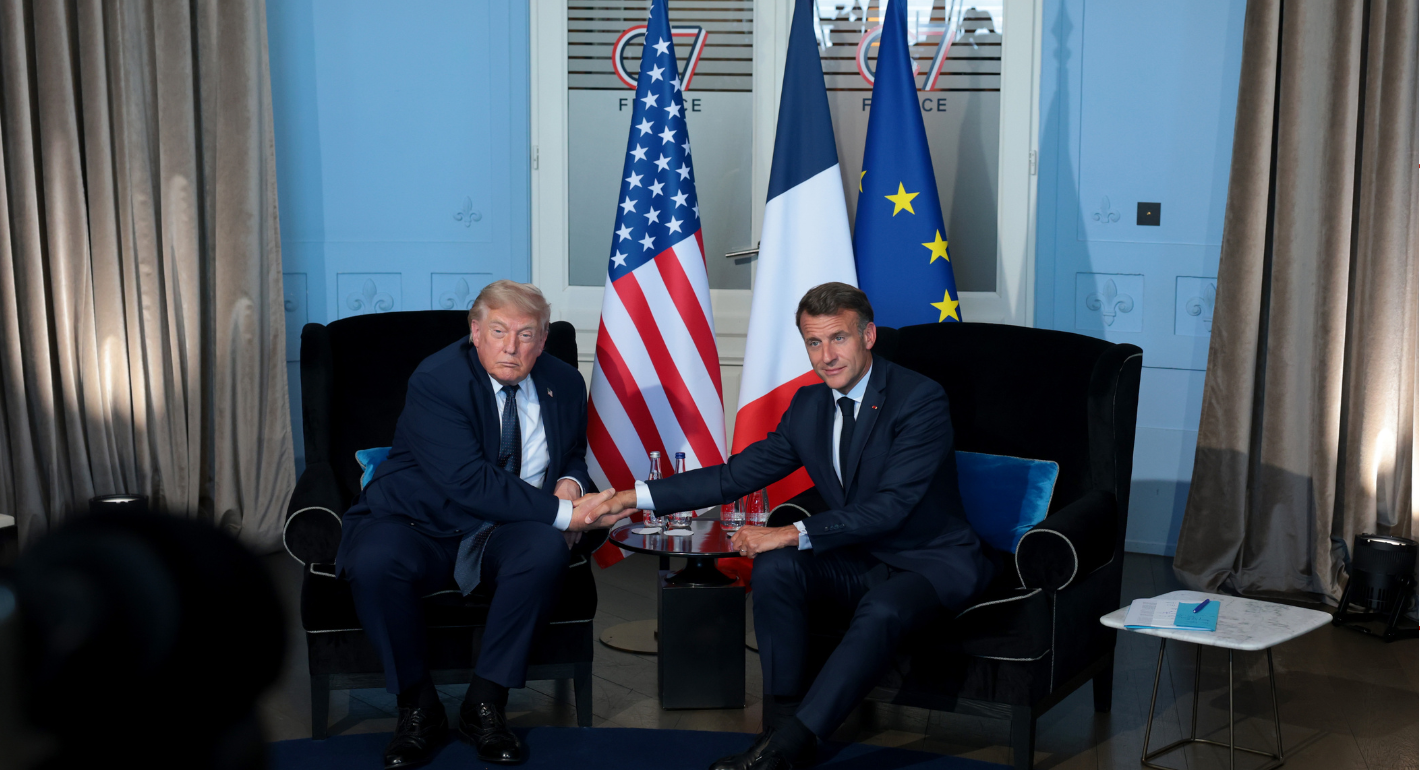
When the U.S.-Iran memorandum of understanding was announced, the UK, France, Germany, and Italy declared their readiness to help demine the Strait of Hormuz and lift nuclear sanctions on Tehran. But does Europe need new tools to recover a diplomatic role?
Rym Momtaz, ed.
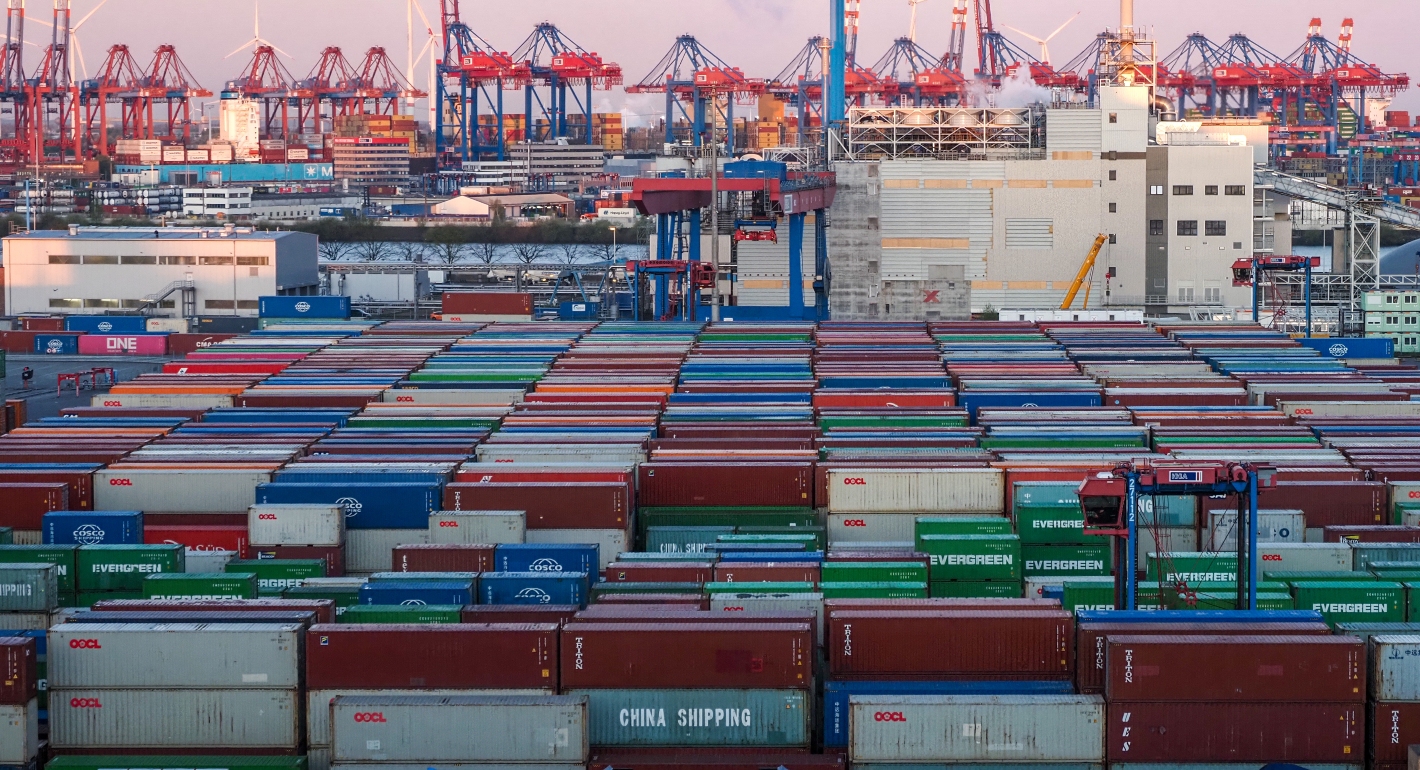
As geopolitical rivalry weaponizes global supply chains, the EU’s true vulnerability lies in emerging-risk imports. For these goods, suppliers are growing more concentrated, substitution more difficult, and political risk is looming.

Sinan Ülgen
The EU is putting together a new security strategy to meet today’s myriad challenges. But for any proposal to be effective, the union needs to grapple with its identity and ambitions.

Pierre Vimont