

Commentary
Rahul Bhatia
{
  "authors": [
    "Rahul Bhatia"
  ],
  "type": "commentary",
  "centerAffiliationAll": "",
  "centers": [
    "Carnegie Endowment for International Peace",
    "Carnegie India"
  ],
  "collections": [],
  "englishNewsletterAll": "",
  "nonEnglishNewsletterAll": "",
  "primaryCenter": "Carnegie India",
  "programAffiliation": "",
  "programs": [],
  "projects": [
    "Security Studies"
  ],
  "regions": [
    "South Asia",
    "India"
  ],
  "topics": [
    "Foreign Policy",
    "Security"
  ]
}
Source: Getty
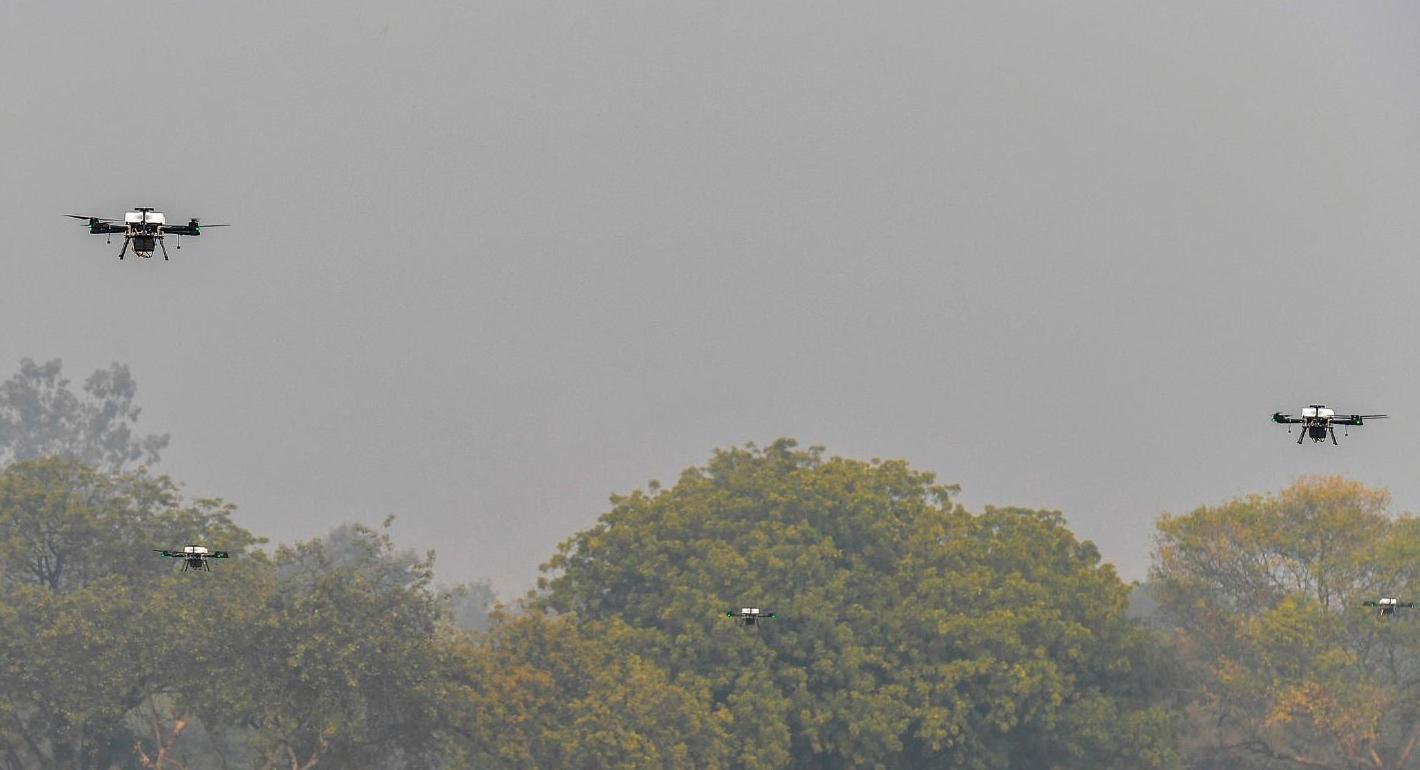
India’s military drone ecosystem has grown rapidly over the last few years and is on a promising trajectory, but it needs to be adequately nurtured.
Over the last few years, the Indian armed forces have stepped up the procurement of unmanned aerial vehicles (UAVs) or drones, primarily for the purposes of surveillance, reconnaissance, target acquisition, logistics, and precision strikes. The ongoing border standoff with China has provided a further impetus to this process. The Army recently ordered nearly 2000 drones to enhance its surveillance and reconnaissance capabilities along the India-China border and transport supplies to forward posts. It is further seeking drones to direct artillery fire, aiming to augment the accuracy and efficiency of its artillery systems deployed along the border.
The Indian armed forces see drones as a necessary force multiplier and intend to acquire several more in the coming years for a wide range of applications. This presents an opportunity for India to build up its military drone ecosystem. While India’s drone start-ups are increasingly able to equip the armed forces, unlocking the potential of India’s military drone ecosystem will require it to be sufficiently nurtured. It will also require the quick resolution of some key issues.
Although India’s drone industry is still in its infancy, it has grown rapidly over the last three years, and drone start-ups have been at the heart of this growth. While most of India’s 300-odd drone start-ups are geared toward civilian uses, a few make military drones as well. Besides this, some start-ups have developed dual-use drones, which meet both civilian and military requirements. For instance, a logistics drone that can be used to transport a package within a city can also be used to dispatch supplies to soldiers on the frontline.
Indian defense start-ups have the capacity to supply a range of military-grade drones to the armed forces. The Indian Army has already placed orders with start-ups such as ideaForge and Raphe mPhibr for drones to conduct surveillance and transport cargo in high-altitude areas along India’s borders. Moreover, another start-up, NewSpace Research & Technologies, is providing the Army with its first offensive swarm drone system. Here, a group of drones communicate with one another and work in tandem to hit targets, much like a swarm of insects. Although these orders indicate that an ecosystem for military drones is gradually being built, there is still a need to cultivate it further.
The Ministry of Defence (MoD) currently supports India’s military drone ecosystem through its programs. For example, the Innovations For Defence Excellence (iDEX) initiative provides grants to support the development of military-grade products, including drones. iDEX floats open challenges based on the specific requirements of the armed forces. Start-ups then pitch their ideas to meet these requirements and those with the best pitch win a grant to develop their product. Today, several military drones are being developed through this route. Drone start-ups have also benefitted from the Technology Development Fund. This scheme extends financial support along the same lines as iDEX to upgrade weapons systems and develop innovative technologies for defense applications.
The government could consider building on the successes of these initiatives. Given the tremendous potential iDEX has in facilitating the development of military drones, more iDEX challenges relating to UAVs are of the essence. Here, the government must extend enough financial assistance to enable defense start-ups to develop their products over time. Currently, iDEX only provides initial funding, capped at Rs. 1.5 crores (about $182,000), which is grossly inadequate to scale-up drone production.
Apart from the MoD, the armed forces have also launched initiatives to foster the development of military drones. For example, the Indian Air Force’s Mehar Baba Competition, which is aimed at encouraging the development of swarm drones, provided the initial push for military drones in India. Organized between 2018 and 2021, the first edition of this competition saw start-ups from across the country showcase their drones. A panel of domain experts guided these start-ups through the competition and evaluated the performance of their drones based on the parameters laid down by the Air Force. A second edition of the Mehar Baba Competition was launched in 2022.
Similarly, the Indian Army, in collaboration with the Drone Federation of India, launched the Him Drone-a-thon program in 2022. The program intends to provide India’s drone ecosystem with opportunities to develop its capabilities to meet the Army’s requirements. While such initiatives benefit India’s military drone ecosystem, they should be followed by procurement orders.
Although an environment that can facilitate the development and manufacture of military-grade drones seems to be falling in place, some hurdles are yet to be overcome. For instance, the Indian private sector currently lacks the capacity to manufacture key components used in drones and imports them instead. To address this, the government did launch a Production-Linked Incentive (PLI) scheme in 2021, aiming to incentivize the indigenous manufacture of drone components across the board. However, the scheme only has an outlay of Rs.120 crores ($14.5 million) where each beneficiary receives a small piece of the pie. Hence, while the PLI scheme will help in the indigenization of military drones—several defense start-ups are already benefitting from it—there is scope for the government to increase its outlay and aid more start-ups. It is also unreasonable to expect each drone start-up to manufacture the necessary components by itself. To create a truly indigenous drone industry, India needs to build a supportive ecosystem that can supply drone start-ups with indigenously produced components such as batteries, motors, propellers, flight control systems, etc.
Another key issue is the lack of research and development (R&D) being undertaken by drone start-ups. These start-ups are often short on capital and are reluctant to expend their scant resources on developing products the Indian armed forces are unsure about procuring. To encourage R&D, the armed forces need to assure drone start-ups of orders following the development of their products. For start-ups, even one order makes a world of difference, allowing them to scale-up production, further develop their products, and even incorporate more indigenous components. Apart from this, the Indian armed forces should formulate their requirements more efficiently—drone start-ups complain that the military often wants to procure UAVs with advanced features, but at a low cost.
Overall, the demand for military-grade drones is only set to grow, with the Indian armed forces themselves set to acquire more UAVs. This can propel the growth of the ecosystem and drones can become a cornerstone in India’s push to produce defense equipment indigenously. Furthermore, given that the global market for military drones is forecasted to grow from $11.73 billion in 2022 to $30.86 billion by 2029, there is immense potential to export drones. If countries like Turkey and Iran can become leading exporters of military drones, there is no question that a country with India’s talent pool and expertise in information technology cannot achieve the same. However, Indian drone start-ups will need to be adequately supported to make this a reality.

Former Research Analyst Carnegie India
Rahul Bhatia was a research analyst with the Security Studies Program at Carnegie India. His research focuses on India’s borders and India’s foreign and defense policies.
Recent Work
Rahul Bhatia

Rahul Bhatia, Konark Bhandari
Carnegie does not take institutional positions on public policy issues; the views represented herein are those of the author(s) and do not necessarily reflect the views of Carnegie, its staff, or its trustees.

Europe is facing rising populism internally as well as external pressures from Russia, China, Turkey, and the United States.

Dimitar Bechev

Much has been said of the changes Brussels is trying to make to the EU enlargement process. Here’s why gradual integration might—or might not—be the answer.
Dimitar Bechev

The European Commissioner for Trade is headed to China. But after President Xi’s bridge-building visit to Washington, can a more isolated EU overcome Beijing’s stranglehold on critical raw materials? Who will blink first?

Rym Momtaz, ed.
European NATO countries are wrestling with the possibility of U.S. disengagement from the alliance. With the continent’s security increasingly uncertain, governments must restore the credibility of their collective defense.


Hans-Dieter Lucas, Adam Thomson, Pierre Vimont

The new U.S.–Denmark–Greenland agreement will help Washington exert political, economic, and financial dominance under the guise of security. Yet, it acknowledged Copenhagen’s and Nuuk’s sovereignty on the island.

Marc Pierini