

Paper
- +2
Ian Klaus, Mark Baldassare, Rachel George, …
{
  "authors": [
    "Mark Baldassare"
  ],
  "type": "commentary",
  "centerAffiliationAll": "dc",
  "centers": [
    "Carnegie Endowment for International Peace"
  ],
  "collections": [
    "Democratic Innovation",
    "Climate Mobility"
  ],
  "englishNewsletterAll": "ctw",
  "nonEnglishNewsletterAll": "",
  "primaryCenter": "Carnegie Endowment for International Peace",
  "programAffiliation": "SCP",
  "programs": [
    "Sustainability, Climate, and Geopolitics",
    "Carnegie California"
  ],
  "projects": [],
  "regions": [
    "North America",
    "United States",
    "East Asia",
    "China"
  ],
  "topics": [
    "Climate Change"
  ]
}
Source: Getty
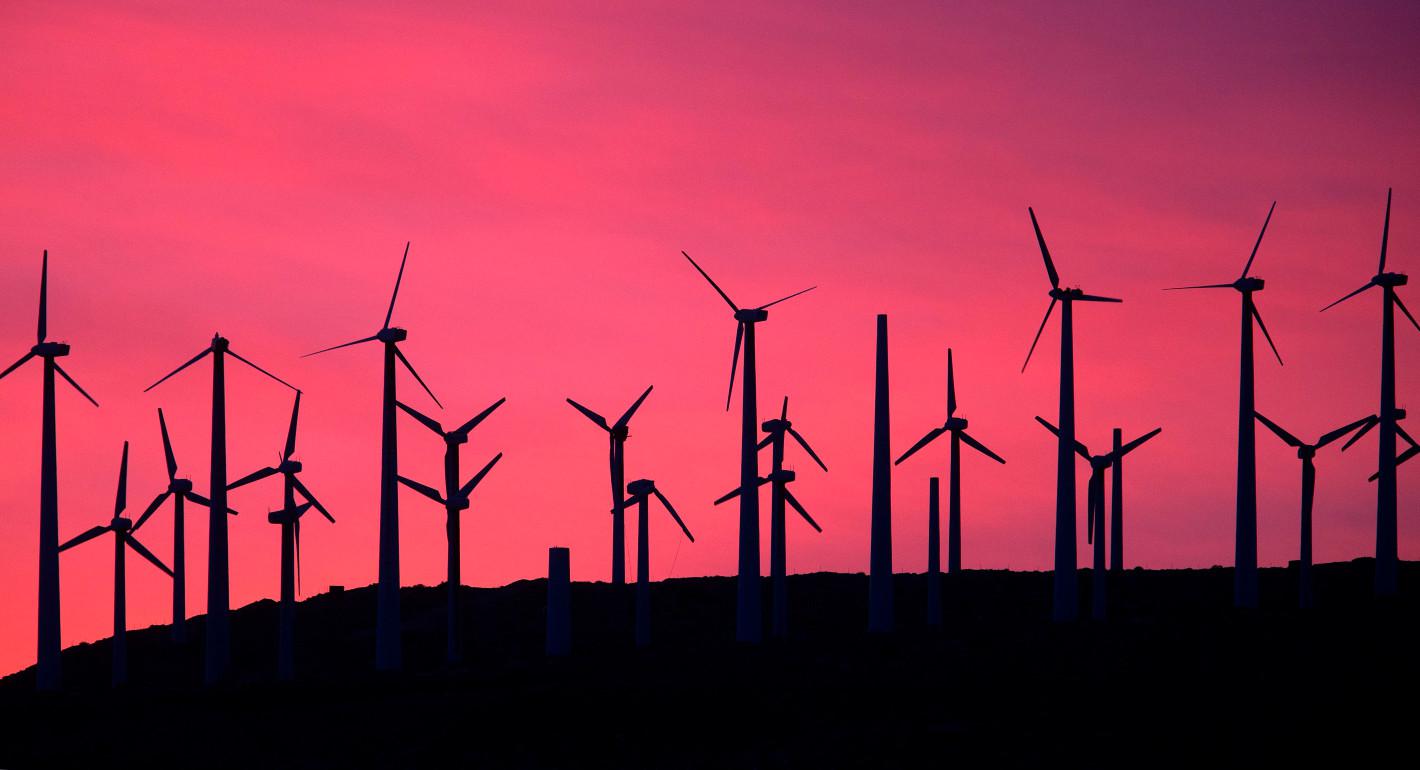
The state’s residents have been eager to be a world leader on a subnational level.
This week, U.S. climate envoy John Kerry met with Chinese officials in a sweltering Beijing to press the fellow economic juggernaut to urgently reduce its climate-warming greenhouse gas emissions. Kerry called the conversations “frank,” but China insisted that it would follow its own timetable for reducing emissions, and the two countries did not reach any agreement.
But cross-border action isn’t the only way forward for the world’s two largest polluters. California, even while suffering through its own record heat wave, offers a model for overcoming the impasse that has stalled national and international action.
California has a long history of environmental activism. The state has spearheaded the clean energy transition and set ambitious emissions reduction goals. Californians expect their state to lead in the climate change arena as federal priorities shift after elections. Importantly, most Californians believe that the effects of global climate change are impacting their communities, and they see climate change as a serious threat to the state’s future.
At the Public Policy Institute of California (PPIC), I direct an annual survey on the perceptions, attitudes, and policy preferences of Californians on climate change, energy, and economic and environmental issues. Over its twenty-three-year history, the survey has illustrated Californians’ shifting attitudes on their role as a world climate leader, state-level action, and more. Key results from the 2023 survey, conducted in June, illustrate the possibilities of subnational climate action when international efforts stall.
Three in four Californians say that the state’s role as a world leader in flighting climate change is important to them. At least seven in ten have held this view since PPIC started asking this question in 2017 after the president’s announcement that the United States would withdraw from the Paris Agreement. Today, majorities across state regions and among age, education, gender, income, and racial/ethnic groups retain this view. However, political parties are split, with 91 percent of Democrats and 71 percent of independents deeming it important, compared to 34 percent of Republicans. In California, Democrats outnumber Republicans in voter registration (47 percent to 24 percent).
This widespread view tracks with the state’s longtime climate leadership position on the world stage, and it’s a model for other subnational actors and their climate-conscious citizens, especially cities, to establish and follow.
Sixty-eight percent of Californians favor having the state government make its own policies, separate from the federal government, on climate change issues. Solid majorities have held this view with remarkable consistency for a decade. Like views on the state’s role as a world leader, the view holds across regions and demographic groups but diverges among partisans (with 86 percent of Democrats, 30 percent of Republicans, 66 percent of independents favoring the state government making its own policy).
Widely held beliefs about the reality of climate change and its effects underlie attitudes about state action. Solid majorities think that global climate change is “currently affecting their local community” and see it as a “serious threat to the economy and quality of life of California’s future.” Moreover, eight in ten say that addressing global climate change is an important concern to them personally.
Among those who place the most importance on California being a world leader on climate change, more than eight in ten believe that the effects of climate change have already begun to happen, that climate change is affecting their local community, that climate change is a serious threat to the state’s future, and that addressing global climate change is an important concern to them personally.
A majority of Californians say that it is “very important” for the state government to pass regulations and spend money now to prepare for the future effects of climate change (62 percent) and on efforts to reduce climate change (57 percent). Half or more hold these preferences across demographic groups, while partisans are divided. This support has increased since the 2013 survey, when 53 percent rated the state’s efforts to prepare for climate change as very important and 48 percent deemed reduction efforts as very important. This increasing support for state government intervention is consistent with the effects of climate change becoming more visible and salient to Californians over the past decade.
In addition, solid majorities of Californians agree with the statements that “stricter environmental laws and regulations in California are worth the cost” and “protection of the environment should be given priority, even at the risk of curbing economic growth.”
Most Californians are in favor of public policies to reduce greenhouse gas emissions, but fewer are willing to make personal changes to reach these goals. Forty-three percent are willing to pay more for electricity from renewable sources such as solar or wind. Fifty percent say they have seriously considered getting an electric vehicle, while 8 percent now have one. Coastal residents and eighteen-to-thirty-four- year-olds are more willing to make changes, yet the partisan divide remains stark: 55 percent of Democrats and 39 percent independents versus 21 percent Republicans are willing to pay more for electricity from renewable sources, while two-thirds of Democrats and independents are seriously considering or currently having an electric vehicle, versus 38 percent of Republicans.
In addition, this public opinion trend contrasts with the importance the Intergovernmental Panel on Climate Change report places on the personal, demand-side action. Clearly, more needs to be done to engage the broader public in preventing and preparing for global warming on a personal level. State-level policies to help people and their communities adapt to climate change should be a priority.
As much of the world swelters under record-breaking heat, the reality of climate change becomes more apparent. California can be a model for subnational jurisdictions frustrated by a lack of progress. Indeed, its local power grids have held up through repeated extreme weather events and the state economy has remained strong. Leaders at all levels of government in China and the United States can look to California as an example of making progress on climate action without national or international action.
Nonresident Scholar, Carnegie California
Mark Baldassare is a nonresident scholar at Carnegie California. He is an authority on elections, voter behavior, and political and fiscal reform.
Recent Work

Ian Klaus, Mark Baldassare, Rachel George, …
Mark Baldassare, Ian Klaus
Carnegie does not take institutional positions on public policy issues; the views represented herein are those of the author(s) and do not necessarily reflect the views of Carnegie, its staff, or its trustees.

Ahead of a tough winter for Ukraine, Donald Trump’s swing back toward Russia bodes ill. But instead of panicking, Kyiv’s European allies are focusing on action.

Rym Momtaz

While the EU and European governments are embracing the much-lauded middle-power moment, this entails three difficult conundrums.

Richard Youngs

Europe is facing rising populism internally as well as external pressures from Russia, China, Turkey, and the United States.

Dimitar Bechev

The European Commissioner for Trade is headed to China. But after President Xi’s bridge-building visit to Washington, can a more isolated EU overcome Beijing’s stranglehold on critical raw materials? Who will blink first?
Rym Momtaz, ed.

European NATO countries are wrestling with the possibility of U.S. disengagement from the alliance. With the continent’s security increasingly uncertain, governments must restore the credibility of their collective defense.



Hans-Dieter Lucas, Adam Thomson, Pierre Vimont