• Research
  • Strategic Europe
  • About
  • Experts
Carnegie Europe logoCarnegie lettermark logo
EUUkraine
  • Donate
{
  "authors": [
    "Cornelius Adebahr",
    "Barbara Mittelhammer"
  ],
  "type": "other",
  "centerAffiliationAll": "",
  "centers": [
    "Carnegie Endowment for International Peace",
    "Carnegie Europe"
  ],
  "collections": [
    "Europe’s Southern Neighborhood"
  ],
  "englishNewsletterAll": "",
  "nonEnglishNewsletterAll": "",
  "primaryCenter": "Carnegie Europe",
  "programAffiliation": "",
  "programs": [
    "Europe"
  ],
  "projects": [],
  "regions": [
    "Middle East",
    "Europe",
    "Iran",
    "Western Europe"
  ],
  "topics": [
    "Foreign Policy",
    "Democracy",
    "Political Reform"
  ]
}
Other
Carnegie Europe

Toward Accountability for Iran’s UN-Recognized Crimes Against Humanity

To quell the revolt sparked by Mahsa Jina Amini’s death in 2022, Iran committed crimes against humanity, including gender persecution. EU governments must coordinate to advance judicial accountability of those responsible while protecting vulnerable groups and countering digital repression.

Link Copied
By Cornelius Adebahr and Barbara Mittelhammer
Published on Apr 10, 2024

Why the Issue Is Important

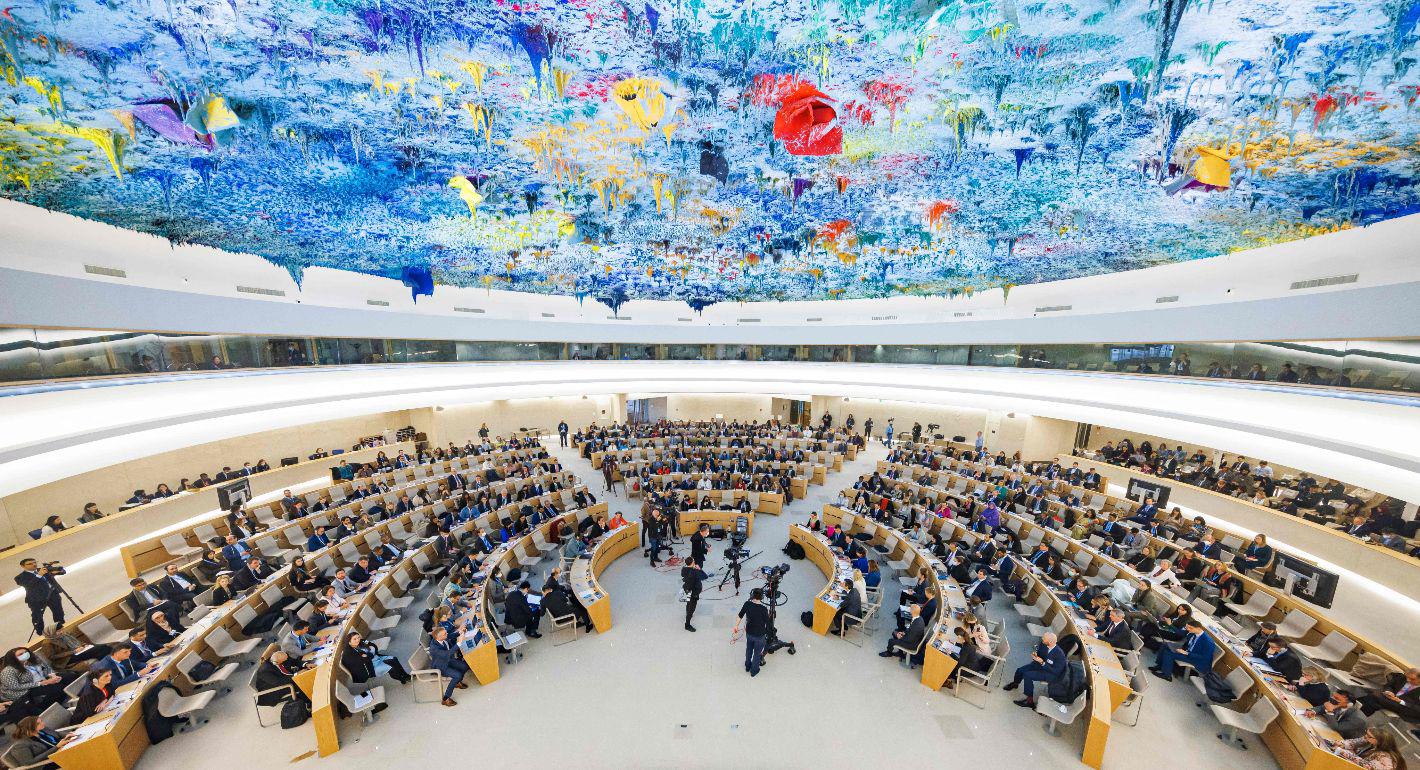
The March 2024 report of the UN’s independent international fact-finding mission on Iran (FFMI) concluded that the regime had committed crimes against humanity, including gender persecution, and other gross human rights violations. There were particularly severe abuses of the rights of women, children, and ethnic and religious minorities. The mission was created in November 2022 and tasked with investigating and analyzing human rights violations in Iran related to the Woman, Life, Freedom uprising after the death in police custody of Mahsa Jina Amini two months earlier. The FFMI report, presented to the UN Human Rights Council, stressed the institutionalized and systemic nature of the discrimination and segregation of women and girls. It established that Iran had committed “gender persecution”—a crime against humanity under international law, which provides crucial mechanisms for enabling the accountability of those responsible.

For those persecuted by the Iranian regime, governments around the world should strive to provide immediate protection, including through visa facilitation and asylum. Now that the UN Human Rights Council has decided on the renewal of the FFMI’s mandate, the EU and its member states should support the mission’s work, push for the investigation of intersectional persecution and violations of digital rights, and enable international accountability in their own jurisdictions as well as through multilateral instruments.

Priority Actions

  1. All UN member states should follow the FFMI’s recommendations and hold the Iranian government accountable via global and national instruments. In Iran, the mission’s calls for restraint will not only fall on deaf ears but also lead to pushback from the country’s authorities. Therefore, other states with genuine universal jurisdiction laws, like Germany, should apply these principles to the crimes against humanity committed by the Iranian regime, as established by the FFMI. Previous cases in the context of Syria can serve as an example. To protect those fleeing persecution for their involvement in the defense of human rights, including the right to peaceful protest, states should grant asylum, issue humanitarian visas, and provide medical and other life-saving assistance to individuals in Iran and third countries.
  1. The EU and its member states should aim to strengthen the credibility and long-term impact of the FFMI’s work by supporting its renewed mandate. The mission documented the regime’s deep-rooted, structural, and institutionalized discrimination and grave human rights violations, which potentially amounted to international crimes, during the 2022 revolt and its aftermath. However, even if widespread protests have subsided, state-sanctioned violence related to the protests has not. So, the mission needs more time to ensure the effective preservation of evidence for use in legal proceedings at both the domestic and the international level. The mission should also further investigate intersectional discrimination, the persecution of those groups most harmed in the revolt, and violations of Iranians’ digital rights. The EU and its member states should therefore support the FFMI’s renewed mandate based on the newly adopted UN Human Rights Council’s resolution. The resolution similarly called for an extension of the mandate of the long-standing UN special rapporteur on the situation of human rights in Iran and referred to the need for coordination between the two entities. The EU should support mechanisms that would strengthen such cooperation.
  1. EU governments should focus on the full implementation of existing norms on gender persecution to build robust legal cases against all perpetrators. Gender persecution is internationally recognized as a crime against humanity, including in the Rome Statute of the International Criminal Court (ICC); the FFMI, with its documentation of Iran’s gross human rights violations, serves as a powerful tool to hold the regime accountable. Iran has signed but not ratified the Rome Statute, yet it is liable in cases of gender persecution under customary international law. To end Tehran’s impunity, states should therefore use the material provided by the FFMI, building on policy guidance on gender persecution issued by the Office of the ICC Prosecutorto develop strong legal cases in national proceedings under universal jurisdiction. Using existing and possible future evidence provided by the FFMI, EU member states should coordinate on specific files to ensure the effective enforcement of universal jurisdiction. Countries such as Germany and Sweden, which have extensive experience in this field, would be well suited to lead this initiative, drawing on previous successful cases in the Syrian context.
  1. EU countries should understand that systemic discrimination of ethnic and religious minorities in Iran is an element of political persecution—and respond accordingly. The regime’s crackdown was harshest in Balochi and Kurdish areas, where disproportionately high numbers of protesters were killed and protests continue to the present day. While the UN report highlighted a “deeply entrenched system of oppression” that intersects with ethnic and religious discrimination, it did not label the systemic and widespread targeting of marginalized ethnic and religious groups as political persecution—that is, persecution based on an individual’s belonging to a specific group. This latter offense is a crime against humanity and thus triggers a wider and more robust set of accountability mechanisms under international criminal law. A renewed FFMI mandate should therefore evaluate whether Iran’s institutionalized and decades-long structural discrimination of marginalized groups also constitutes political persecution, which often intersects with gender persecution. In addition, the EU and its member states should prioritize support for women’s and human rights groups as well as labor unions, especially in marginalized areas.
  1. The EU should address Iran’s violations of digital rights as part of a broader, comprehensive strategy. By seeking to establish a national intranet, the Iranian authorities aim to effectively cut citizens off from the global internet and place them under full surveillance. The FFMI report outlined in detail how the Iranian regime uses censorship and internet shutdowns to enable and assist its repression, which additionally impacts the socioeconomic situations of vulnerable groups. The EU should therefore provide secure internet access to Iranian citizens while enhancing its digital security programming and funding to support Iranians in the country and the diaspora. The union should also examine the scope and gravity of Iran’s human rights violations in the digital sphere and propose general accountability measures in relevant forums. In addition to the UN Human Rights Council, this includes multistakeholder governance institutions, such as the Internet Corporation for Assigned Names and Numbers.

Conclusion

The EU and some of its member states were central in establishing the FFMI to assess the scale of Iran’s most recent violent excesses against peaceful protesters. Going beyond the mission’s impartial work to uphold international human rights, they now need to create political momentum for actual accountability. This means giving full force to the established crime of gender persecution while seeking to define the systemic discrimination of minoritized groups as intersecting acts of ethnic, religious, and political persecution. Through proceedings at the national level, EU member states can uphold these rights and principles in practice, not just in speeches. Finally, the core of any approach that claims to put human security at its center remains the strategic and systematic support of civil society actors, including through the provision of individual protection for those persecuted.

Barbara Mittelhammer is an independent political analyst and consultant. Her research focuses on human security, gender in peace and security, feminist foreign policy, and the role of civil society in foreign policy making.

Authors

Cornelius Adebahr
Former Nonresident Fellow, Carnegie Europe
Cornelius Adebahr
Barbara Mittelhammer

Barbara Mittelhammer is an independent political analyst and consultant. Her research focuses on human security, gender in peace and security, feminist foreign policy, and the role of civil society in foreign policy making.

Barbara Mittelhammer
Foreign PolicyDemocracyPolitical ReformMiddle EastEuropeIranWestern Europe

Carnegie does not take institutional positions on public policy issues; the views represented herein are those of the author(s) and do not necessarily reflect the views of Carnegie, its staff, or its trustees.

More Work from Carnegie Europe

  • Commentary
    Strategic Europe
    The EU and India in Tandem

    As European leadership prepares for the sixteenth EU-India Summit, both sides must reckon with trade-offs in order to secure a mutually beneficial Free Trade Agreement.

      Dinakar Peri

  • Commentary
    Strategic Europe
    Europe Faces the Gone-Rogue Doctrine

    The hyper-personalized new version of global sphere-of-influence politics that Donald Trump wants will fail, as it did for Russia. In the meantime, Europe must still deal with a disruptive former ally determined to break the rules.

      Thomas de Waal

  • Commentary
    Europe’s American Predicament

    Between Greenland and U.S. interference in Europe’s democracies, transatlantic relations risk rising to an unprecedented level of crisis. Amid continued arguments on how Brussels should react, tough times lie ahead for European leaders.

      Marc Pierini

  • Commentary
    Strategic Europe
    Taking the Pulse: What Issue Is Europe Ignoring at Its Peril in 2026?

    2026 has started in crisis, as the actions of unpredictable leaders shape an increasingly volatile global environment. To shift from crisis response to strategic foresight, what under-the-radar issues should the EU prepare for in the coming year?

      Thomas de Waal

  • Commentary
    Strategic Europe
    France, Turkey, and a Reset in the Black Sea

    A renewal of relations between France and Turkey is vital to strengthen European strategic autonomy. To make this détente a reality, Paris and Ankara should move beyond personal friction and jointly engage with questions of Black Sea security.

      Romain Le Quiniou

Get more news and analysis from
Carnegie Europe
Carnegie Europe logo, white
Rue du Congrès, 151000 Brussels, Belgium
  • Research
  • Strategic Europe
  • About
  • Experts
  • Projects
  • Events
  • Contact
  • Careers
  • Privacy
  • For Media
  • Gender Equality Plan
Get more news and analysis from
Carnegie Europe
© 2026 Carnegie Endowment for International Peace. All rights reserved.