• Research
  • Strategic Europe
  • About
  • Experts
Carnegie Europe logoCarnegie lettermark logo
EUNATO
  • Donate
India in Asian Geopolitics
Book

India in Asian Geopolitics

Asia will produce close to, if not, half of the world’s economic product by 2025. This is the real emergent change in international politics, but despite this fact the United States will remain the dominant power in the international system for the foreseeable future.

Link Copied
By Ashley J. Tellis
Published on Jun 1, 2007

Additional Links

Full Text (PDF)

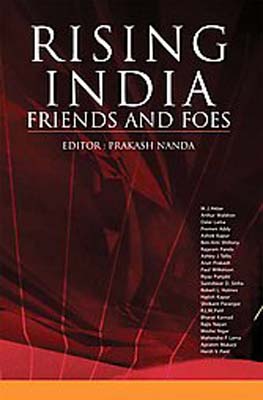
Source: Rising India: Friends and Foes

The international political system is likely to stay, quite durably, a unipolar system for along time to come: that is, for at least another twenty years or so, if the statisticians are to be believed. But this reality is going to manifest itself in a world where the centre of gravity is shifting from where it has traditionally been for the last 500 years—Europe—to Asia. Asia will produce close to, if not, half of the world’s economic product by 2025. This is the real emergent change in international politics, but despite this fact the United States will remain the dominant power in the international system for the foreseeable future.

About the Author

Ashley J. Tellis

Former Senior Fellow

Ashley J. Tellis was a senior fellow at the Carnegie Endowment for International Peace.

    Recent Work

  • Paper
    Multipolar Dreams, Bipolar Realities: India’s Great Power Future

      Ashley J. Tellis

  • Commentary
    India Sees Opportunity in Trump’s Global Turbulence. That Could Backfire.

      Ashley J. Tellis

Ashley J. Tellis
Former Senior Fellow
North AmericaUnited StatesSouth AsiaIndiaEast AsiaChinaEconomyTrade

Carnegie does not take institutional positions on public policy issues; the views represented herein are those of the author(s) and do not necessarily reflect the views of Carnegie, its staff, or its trustees.

More Work from Carnegie Europe

  • Commentary
    Strategic Europe
    Trump Turns NATO into a Tool of Coercion

    The full list of humiliations Europe has endured since Donald Trump returned to the White House makes for grim reading. But Washington’s adversarial approach to its allies undermines its own power base.

      • Rym Momtaz

      Rym Momtaz

  • Commentary
    Strategic Europe
    Taking the Pulse: Is it Worth it for Europeans to Placate Trump?

    After spending much of 2025 trying to placate Donald Trump, some European leaders are starting to change posture. But is even a hostile Washington still so important to Europe that the U.S. president’s outbursts are worth putting up with?

      • Rym Momtaz

      Rym Momtaz, ed.

  • Commentary
    Strategic Europe
    Europeans Are Quiet Quitting the United States

    European leaders have now not only lost faith in Donald Trump’s U.S. presidency, but also in America’s hegemony as a whole. But short-term challenges make an immediate divorce unwise.

      • Rym Momtaz

      Rym Momtaz

  • Commentary
    Strategic Europe
    The EU Equivocating on Turkey Is Bad Geopolitics

    Following Ursula von der Leyen’s gaffe equating Turkey to Russia and China, relations with Ankara risk deteriorating even further. Without better, more consistent diplomatic messaging, how can the EU pretend to be a geopolitical power?

      Sinan Ülgen

  • Commentary
    Strategic Europe
    The Fog of AI War

    In Ukraine, Gaza, and Iran, AI warfare has come to dominate, with barely any oversight or accountability. Europe must lead the charge on the responsible use of new military technologies.

      Raluca Csernatoni

Get more news and analysis from
Carnegie Europe
Carnegie Europe logo, white
Rue du Congrès, 151000 Brussels, Belgium
  • Research
  • Strategic Europe
  • About
  • Experts
  • Projects
  • Events
  • Contact
  • Careers
  • Privacy
  • For Media
  • Gender Equality Plan
Get more news and analysis from
Carnegie Europe
© 2026 Carnegie Endowment for International Peace. All rights reserved.