

Paper
Omayma Abdel-Latif
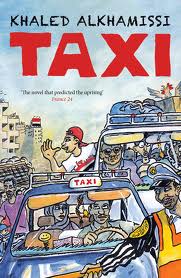
Four months before he passed away in July, leading Egypt scholar Alain Roussillon expressed deep concerns over the rising tensions in Egyptian society. They reflected the return of “the social question” in Egyptian politics. The greatest threat to the regime was not the Muslim Brotherhood or any other opposition group but rather the popular attitudes toward it.
Source: Book Review
Taxi
By Khaled Al Khamissi
222 pages, Cairo: Dar alShorouk, 2007 (in Arabic)
Four months before he passed away in July, leading Egypt scholar Alain Roussillon expressed deep concerns over the rising tensions in Egyptian society. They reflected the return of “the social question” in Egyptian politics. The greatest threat to the regime, he suggested, was not the Muslim Brotherhood or any other opposition group but rather the popular attitudes toward it. Judging from the more than 200 sit-ins, work stoppages, hunger strikes, and demonstrations that occurred across the country last year alone, Egyptians are increasingly expressing genuine grievances with their government.
But you wouldn’t sense the fear or anger of the average Egyptian by listening to the high-minded talk of the country’s elites at political seminars and salons. As in many countries throughout the Middle East, it is the “street language” that explains the ways in which average Egyptians think and behave politically. Strong as they are in numbers, the majority of the country’s citizens represent an Egypt whose voice is hardly heard.
So, when Khaled Al Khamissi, an Egyptian political scientist-turned-screenwriter and journalist, set out to decipher the political attitudes of the average person on the Arab street, he decided to talk to the people who spend their days driving it: the cabbies of Cairo. They have the privilege of mingling with people from across the social spectrum; as such, their views often reflect the thinking of al-ghalaba, a popular term coined to refer to the lower strata of society who live on the periphery of politics and yet are so affected by it. During his year of traveling the city almost exclusively in cabs, Khamissi came to believe that some taxi drivers offer a much deeper analysis than prominent and well-versed political analysts, that they are important barometers of popular moods and grievances against the government.
The result of his research is Taxi, a novel released in January and already a huge bestseller, with more than 35,000 copies sold in a country where 3,000 is considered a success. But instead of weaving together a well-defined narrative or adventure, Khamissi produced a series of vignettes of different drivers’ experiences, in an attempt to capture the broadest possible picture of the other side of Egyptian politics. For that reason, and perhaps also to protect characters’ identities, the “drivers” he introduces in Taxi are composite figures, fictional products of his time spent talking to cabbies about everything from economics and education to health and politics.
Egyptians’ interest in the book shouldn’t be surprising. Although there has been an abundance of scholarly work attempting to determine “what happened to the Egyptians,” Khamissi’s novel stands out. His unlikely approach, lucid prose, and rare insight into popular perceptions make Taxi perhaps the most interesting of the works that chronicle the social and political transformations Egypt has undergone during the past five decades.
Of course, it helps that he chose to document the “street” at one of the most politically charged moments in recent Egyptian history. For the first time in decades, popular dissent was not directed primarily against Israel or the United States, but against a domestic adversary—the state—and the security apparatuses that control the nerve centers of the regime. From April 2005 to March 2006, Khamissi watched the street emerge as a center stage of political activities from anti-regime protests, demonstrations, elections, and scenes of abhorrent violence committed against protesters.
He had a front-row—or, more accurately, backseat—view of Egyptians’ reactions to the first nonpartisan protest movement to challenge President Hosni Mubarak’s regime. A series of political events were to follow, including the country’s first presidential elections, with nine other candidates vying for Egypt’s top post. (Not that it made any difference.) Then came parliamentary elections in which the Muslim Brotherhood won 88 seats after hard, violent battles and thuggery by the ruling party. The year also saw the street become the heart of the battle between the younger Mubarak supporters and critics.
And all the while, Khamissi was watching, listening to the drivers, who are often teachers, accountants, and lawyers by training but whose country cannot offer them work to match their education. Outraged by economic austerity and ruled by the discontent of the impoverished lower classes, taxi drivers appropriated their little public space to vent their anger and frustration against the government to strangers who might espouse similar grievances. Taxi’s brilliance is that it captures the point at which cabs cease to be just a means of transportation and instead become a space for debate and exchange, at a time when all other public spaces, including the street itself, had become inaccessible under the brutal force of the police state.
Amid this tumultuous atmosphere, Khamissi’s conversations yield several great insights into the schizophrenic relationship between the Egyptian and the state. There is at once a deep-rooted contempt for authority but also an overwhelming fear that stops them from rebelling against it. Some theories date this conflict back to the time of the pharaohs, noting that Egypt has always been a strong and interventionist state—and Egyptians have simultaneously, almost religiously, feared and worshipped its authority since the country’s infancy. Khamissi recreates one incident that reflects this ambivalent relationship through a driver who insults the Interior Ministry, a symbol of oppression for many, but in the same breath says he respects it.
In another episode, Khamissi offers a simple answer as to why Egyptians don’t join street protests, despite their suffering and misery. “Everything has lost its meaning now,” says one driver. “Two hundred people are surrounded by two thousand officers and conscripts.” Although, as Khamissi tells it, the popular perception of the government is that “it is weak, corrupt, and terrified. If you blow it away, it will fall to pieces,” report several drivers. But if that is the dominant perception, why don’t they rise against it? Explaining the chronic political apathy of the Egyptians, one driver remarks: “The problem is with us Egyptians, the government has planted the seeds of fear from hunger in us. This made us only think of ourselves, and our only preoccupation is how we make ends meet.” As Khamissi has one of his “drivers” eloquently putting it, “We are living a lie, and the government’s role is to make sure that we continue to believe it.”
Among the cabbies whose voices Khamissi recreates, the economic question remains by and large the real headache—with salaries that are barely enough for basic necessities and price hikes that are a daily routine. His drivers blame the government, which thinks only about the “rich and the tourists.” “The government’s real plan is to drive us out of the country. But if we do, it will have no one to cheat and steal from.” Not exactly the kind of honesty you get from Cairo’s salons or think tank meetings on democratization in the Middle East.
That’s exactly why Khamissi has struck a chord. More than anything, his taxi tales suggest that there is a huge social storehouse of anger and frustration against the status quo. The sad reality is that, if Khamissi’s depiction of Cairo’s jaded drivers is correct, there is little chance their disaffection will soon be turned into a force for change in a society whose development has been stalled for so long.
Omayma Abdel-Latif is projects coordinator at the Carnegie Endowment for International Peace’s Middle East Center in Beirut.
Former Research and Program Associate, Middle East Center
Abdel-Latif, formerly the assistant editor-in-chief at Al-Ahram Weekly, has done extensive work on Islamist movements with special emphasis on the Muslim Brotherhood of Egypt.
Recent Work
Omayma Abdel-Latif
Omayma Abdel-Latif
Carnegie does not take institutional positions on public policy issues; the views represented herein are those of the author(s) and do not necessarily reflect the views of Carnegie, its staff, or its trustees.

As the EU confronts profound challenges, several leaders have called for fundamental reform to the union’s model—but only modest, superficial changes have resulted. What if Europe really could be reimagined from zero today: What should such a redesigned European order look like?

Richard Youngs, ed.

The EU’s new migration policy is not suited to today’s realities. With climate change increasingly becoming a driver of displacement, Europe needs to rethink its deterrence-focused approach.

Shana Tabak
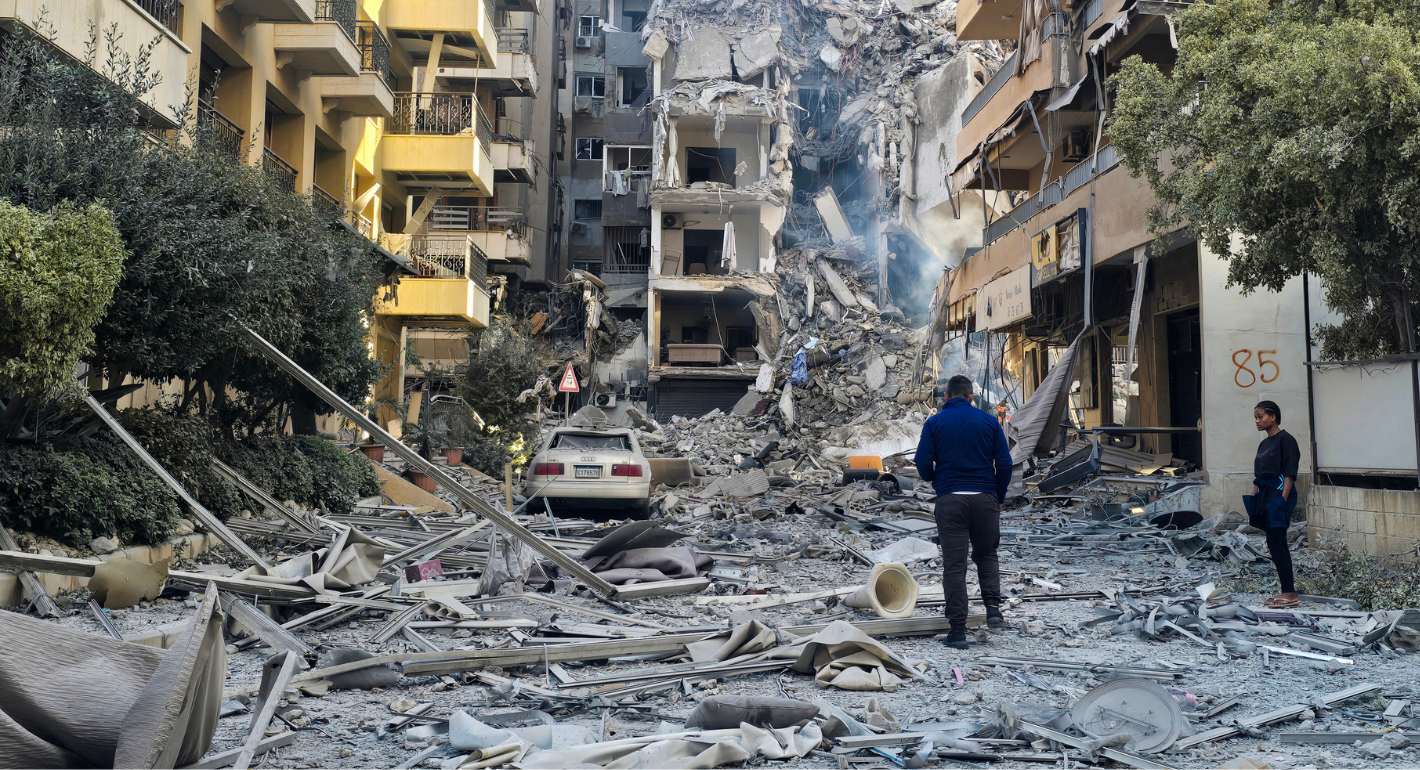
Europe seems to have accepted its sidelining in the Middle East. The EU must reassert its support for the international rules-based order and step up engagement.

Rym Momtaz

Preparing candidate countries for EU membership is no longer enough. As the enlargement process becomes a reality, the union must also prepare its own societies.

Iliriana Gjoni
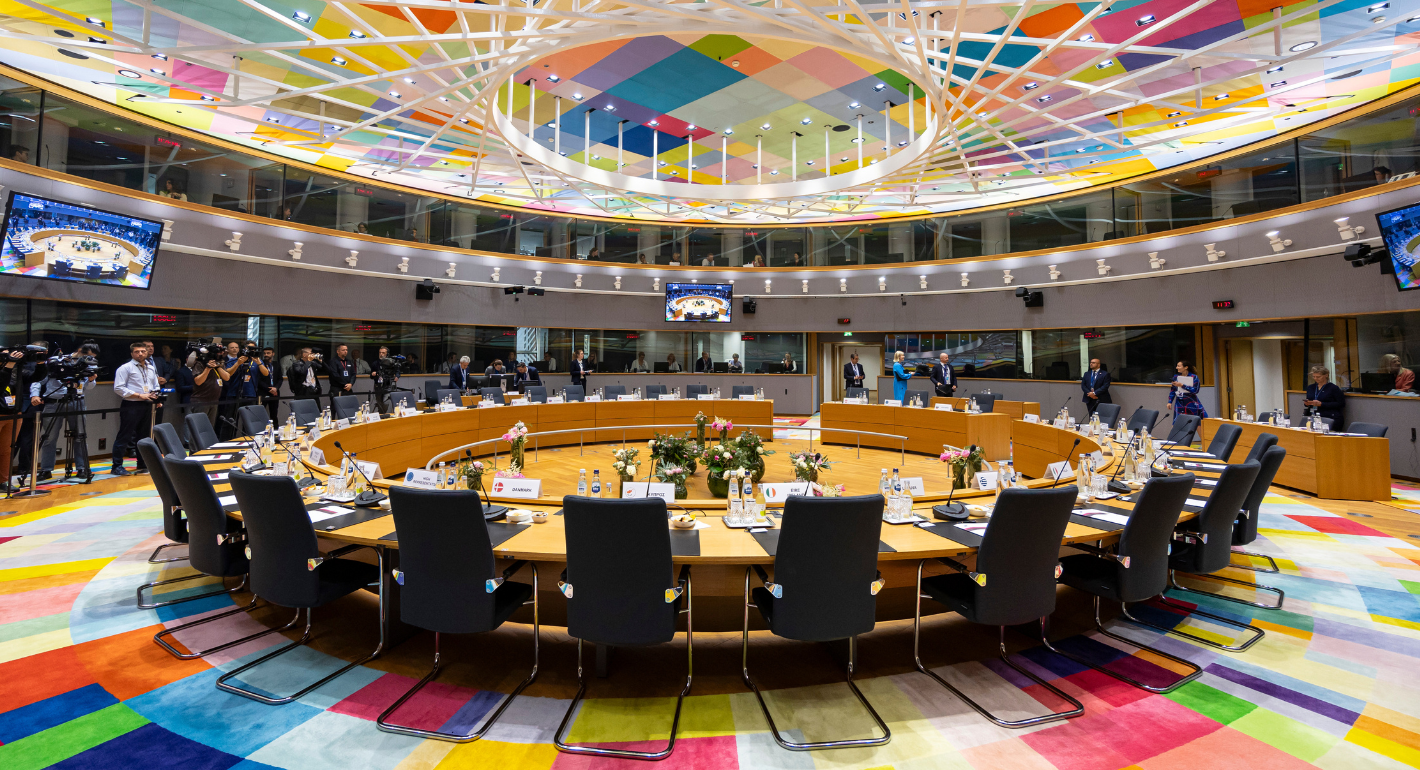
Countries face several hurdles in joining the EU, including the final stage of ratifying their accession treaties. Procedural reforms and substantive adjustments could help move the process forward.

Stefan Lehne