

In The Media
Lilia Shevtsova
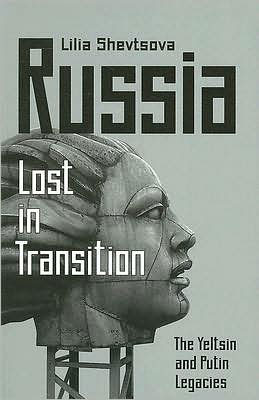
Lilia Shevtsova searches the histories of the Yeltsin and Putin regimes, exploring within them conventional truths and myths about Russia, paradoxes of Russian political development, and Russia’s role in the world.
Source: Washington

As Russia is in the news, startling the international community with its assertiveness and facing both parliamentary and presidential elections, Lilia Shevtsova searches the histories of the Yeltsin and Putin regimes, exploring within them conventional truths and myths about Russia, paradoxes of Russian political development, and Russia’s role in the world. Russia—Lost in Transition discovers a logic of government in Russia— a political regime and the type of capitalism that were formulated over the course of the Yeltsin and Putin presidencies and will continue to dominate Russia’s trajectory in the near-term.
Looking forward as well as back, Shevtsova speculates about the upcoming elections, the self-perpetuating system in place—the legacies of Yeltsin and Putin—and how it will dictate the immediate political future, and explores several scenarios for Russia’s future over the next decade.
Lilia Shevtsova chairs the Russian Domestic Politics and Political Institutions Program at the Carnegie Endowment for International Peace, dividing her time between the Carnegie office in Washington, D.C. and the Carnegie Moscow Center.
“A serious contribution to the understanding of Russia’s transition throughout the last two decades. Highly recommended to all who deliberate on Russia’s future.”
—Mikhail Gorbachev, former president of the Soviet Union, Nobel Peace Prize winner, and president of the Gorbachev Foundation
"One could ask for no better guides than Trenin ... combine extraordinary intellectual sophistication and an ability to think outside their national skins with hardheaded realism—analytic skills applied equally well to Western policies toward their country."
—Robert Legvold, Foreign Affairs
“With Russia—in Lilia Shevtsova’s words—moving both forwards and backwards at the same time, and once again emerging as an actor on the international stage, the need to understand the nature of the uncertain policies of the country is indeed urgent. With a regime of personalized power, the present phase of transition to a new president is obviously of key importance. Lilia Shevtsova has previously given us invaluable guides to the Yeltsin and Putin periods, and her thoughts and analysis now give us new help in understanding a country we simply have to understand.”
—Carl Bildt, minister for foreign affairs, and former prime minister, Sweden
“Once again, Lilia Shevtsova has proved herself to be a unique source of wisdom about what is happening in Russia—and why it is happening, and why it matters so much to all of us. In this, her most comprehensive book to date, her insights into the Yeltsin and Putin years range from the political dynamics of the leadership, to the paradox—and vulnerabilities—of “bureaucratic capitalism,” to the Kremlin’s domestication of the oligarchs, to the resurgence of feistiness in Russian foreign policy. An indispensable, timely and compelling contribution on what is still, though in new and unpredictable ways, one of the most important countries on earth.”
—Strobe Talbott, president, The Brookings Institution
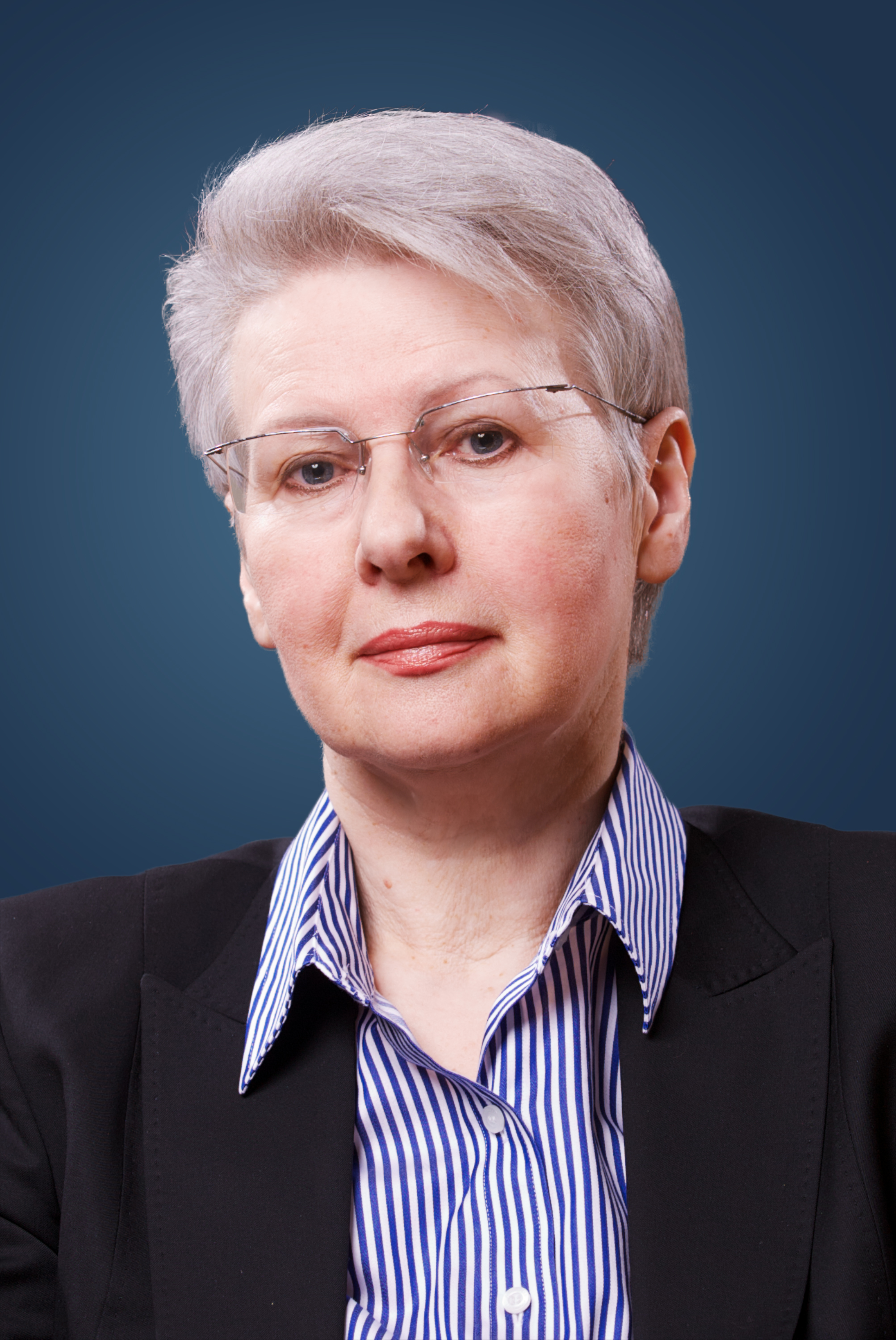
Former Senior Associate, Russian Domestic Politics and Political Institutions Program, Moscow Center
Shevtsova chaired the Russian Domestic Politics and Political Institutions Program at the Carnegie Moscow Center, dividing her time between Carnegie’s offices in Washington, DC, and Moscow. She had been with Carnegie since 1995.
Recent Work
Lilia Shevtsova
Lilia Shevtsova
Carnegie does not take institutional positions on public policy issues; the views represented herein are those of the author(s) and do not necessarily reflect the views of Carnegie, its staff, or its trustees.

The EU can impose sanctions but struggles to enforce them without the United States. With Washington increasingly disinterested in backing European interests, the bloc must now fend for itself.


Nicu Popescu, Tiago Antunes

Russia is testing the waters of NATO’s mutual defense clause. What do strikes in Romanian territorial waters mean for the alliance’s posture toward Moscow?

Dimitar Bechev

With its public finances in shambles, the far right polling at 35 percent ahead of the 2027 presidential election, and a growing protest movement, is France’s crisis a threat to the EU’s geopolitical awakening?

Rym Momtaz, ed.

Ahead of a tough winter for Ukraine, Donald Trump’s swing back toward Russia bodes ill. But instead of panicking, Kyiv’s European allies are focusing on action.
Rym Momtaz

Funding Ukraine remains a priority for European leaders. As Russia’s war of aggression heads into another winter, two feasible options to mobilize support for Kyiv should be fast-tracked.


Vladyslav Rashkovan, Gregory P. Wilson