

Commentary
Fabrice Pothier
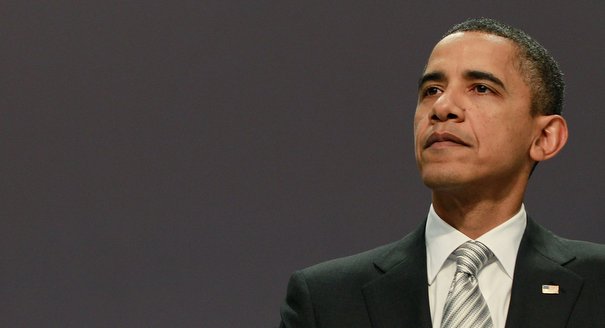
Source: Getty
Obama has made listening and dialogue the trade-mark of the first 100 days of his foreign policy. Europe has responded with more rhetoric when what the transatlantic relationship really needs is commitment and courage.
100 days into Obama’s Presidency and everyone in Europe is competing to present the definitive assessment of his performance. Few have reversed the question and asked how Europe has performed so far with Obama. Has Europe met the opportunities provided by a new, reportedly ‘European minded’ U.S. President to bring fresh ideas and commitments to the transatlantic table? Unfortunately, a closer scrutiny, Europe’s 100 days with Obama on issues from the financial crisis and Afghanistan, to Russia and Iran, has been mixed at best.
EU-U.S. relations started relatively well with the G20 meeting in London. The G20 was neither the failure predicted by some pundits, nor the aggiornamento claimed by others. It was an important moment of global solidarity and an opportunity for international cooperation to mend fractured international financial institutions. But the economic instincts of the U.S. and Europe are fundamentally different, and a coherent strategy both between the transatlantic partners and within the EU to face down the global financial crisis has yet to be devised.
Later during his European tour, Obama has demonstrated yet again his unparalleled gift to reach beyond the traditional political and media constituencies to the masses. Despite Europe’s ‘Obamania’, European leaders themselves have failed to mobilise public opinion to support the necessary troop increase needed for a renewed commitment in Afghanistan. Liberal Europe’s bête noire, Robert Kagan, hit a nerve when he underlined Europe’s pathological tendency to make itself irrelevant in important global foreign policy efforts such as that in Afghanistan. With most of the few hundred European troops deployed intended as a temporary monitoring presence in the run-up to the Afghan elections in August and with no clear plan for a civilian ‘surge’, Europe has so far defected from any strategic rendez-vous with the new Obama strategy in Afghanistan and Pakistan.
But Europe could do more and could do better. Provided it gains the political support of its capitals, the EU could leverage its multi-annual budget and long-term civilian presence in Afghanistan to improve its performance in three key areas: strengthening its police training; uniting its border management programmes within an integrated border management centre; and implementing a targeted assistance strategy toward Pakistan, mainly in the police and rule of law sectors.
Obama’s foreign policy is one of dialogue and engagement: he is attempting to re-set the relationship with a resurgent Russia, and is rekindling diplomatic ties with Iran. Despite these being considered to be the elements that should be most inclusive of Europe, Obama’s early foreign policy moves may relegate European states to the sidelines. Russia’s sense of superpower status is dictated by its bilateral engagement - some would say confrontation - with the U.S. Europe’s dependence on Russian gas and its engagement with Russia on issues concerning their ‘shared’ neighbourhood are at best fodder in the playground of this great power game. Indeed, although Europe has kept the flame of dialogue burning with Iran over the last few years, the truly effective bargaining must take place between the U.S. and Iran. In fact the newly adopted ‘soft’ power posture of the U.S., robs Europe of what it formerly regarded as its exclusive added-value during the Bush era.
But things are not so bleak. Europe can raise its game. There is an opportunity to formulate an energy strategy that will integrate Russia in the broader European economic system and reduce the risk of the annual cycle of gas wars reoccurring. As for Iran, Europe’s seat at the negotiation table will remain an enabling factor in U.S. – Iranian discussions and should help to smooth any tensions that surface.
Most importantly, Europe has probably missed its biggest opportunity in Obama’s greatest foreign policy shift: the dismantling of the Bush administration’s war on terror. This does not mean that all aspects of the U.S. war on terror policy will diminish in significance. After all, Obama’s Afghanistan – Pakistan strategy rests on the key principle of fighting terrorism abroad. But it does mean the end of a policy of abuse and expediency that has seriously damaged America’s standing in the world. The reluctance of European countries to repatriate former inmates from Guantanamo Bay is a true political failure for countries that have actively denounced the existence of the detention centre.
Far from external and foreign policy concerns, Europe is currently preoccupied with its own internal cohesion and on its regular leadership crises with the German and British leaders in election mode. The Lisbon Treaty, whose fate is still in Irish hands, might ultimately grant Europe greater institutional coherence but political commitment will still be needed to make Europe a relevant, active global player.
Obama has made listening and dialogue the trade-mark of the first 100 days of his foreign policy. But Europe has misinterpreted this and responded with more rhetoric when what the transatlantic relationship really needs is commitment and courage.

Former Director, Carnegie Europe
Pothier, director of Carnegie Europe, is a noted commentator on European policy in Afghanistan and Pakistan, transatlantic issues, and global drug policy.
Recent Work
Fabrice Pothier
Fabrice Pothier
Carnegie does not take institutional positions on public policy issues; the views represented herein are those of the author(s) and do not necessarily reflect the views of Carnegie, its staff, or its trustees.
French President Emmanuel Macron has unveiled his country’s new nuclear doctrine. Are the changes he has made enough to reassure France’s European partners in the current geopolitical context?

Rym Momtaz, ed.
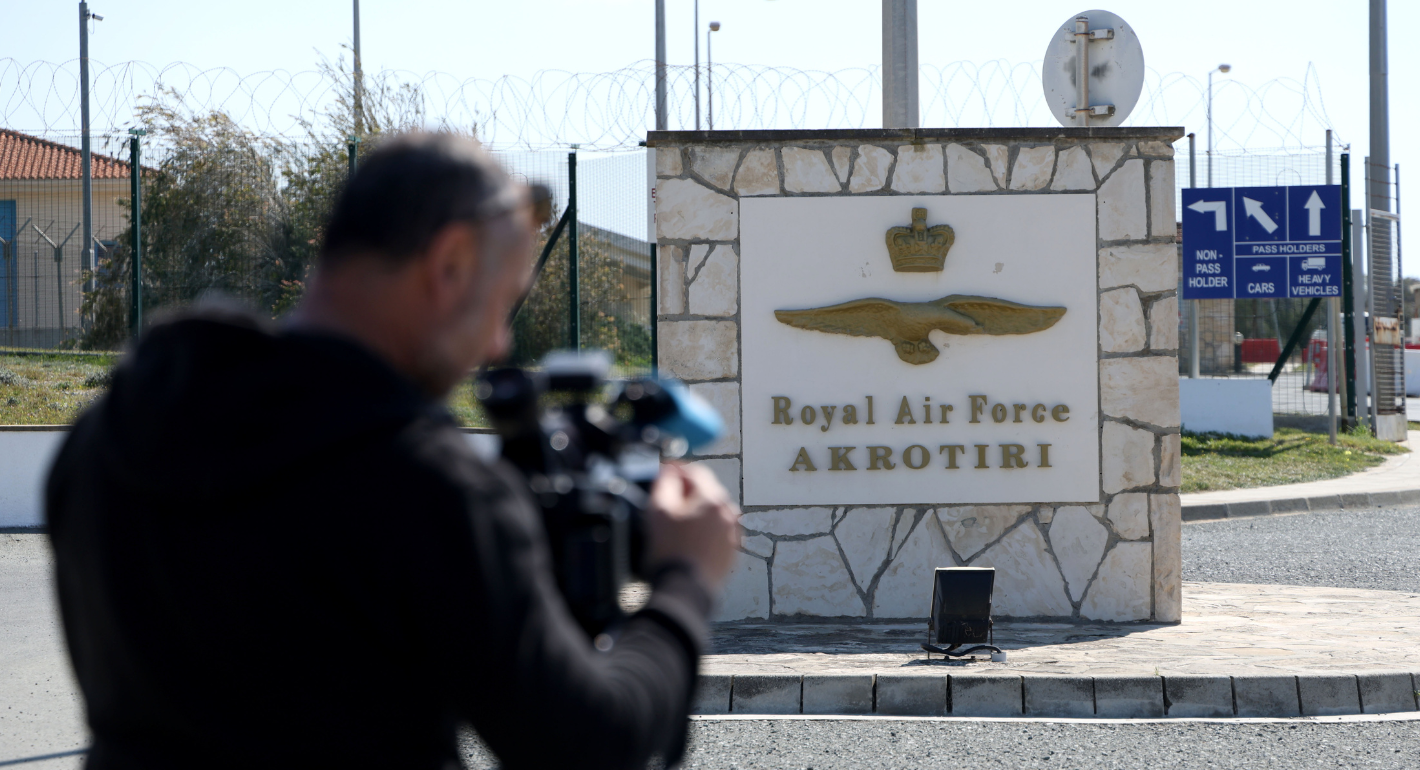
The drone strike on the British air base in Akrotiri brings Europe’s proximity to the conflict in Iran into sharp relief. In the fog of war, old tensions in the Eastern Mediterranean risk being reignited, and regional stakeholders must avoid escalation.

Marc Pierini
European reactions to the war in Iran have lost sight of wider political dynamics. The EU must position itself for the next phase of the crisis without giving up on its principles.

Richard Youngs
For years, the United States anchored global cyber diplomacy. As Washington rethinks its leadership role, the launch of the UN’s Cyber Global Mechanism may test how allies adjust their engagement.

Patryk Pawlak, Chris Painter
Europe isn’t as weak in the new geopolitics of power as many would believe. But to leverage its assets and claim a sphere of influence, Brussels must stop undercutting itself.

Dimitar Bechev