

Commentary
The European Commissioner for Trade is headed to China. But after President Xi’s bridge-building visit to Washington, can a more isolated EU overcome Beijing’s stranglehold on critical raw materials? Who will blink first?
Rym Momtaz, ed.
Source: Getty
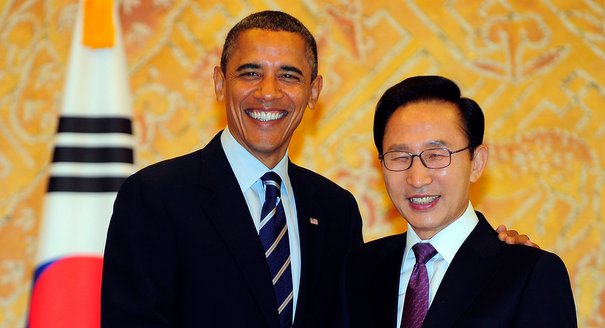
President Obama will travel to Japan, Singapore, China, and South Korea starting on October 11. Carnegie experts will answer your questions about the possible implications and outcomes of the trip for the U.S. strategic and economic relationship with the region.
Andy (Taipei): Do you think the U.S. should use India to counter China's influence in Asia? If so, do you think it is reasonable or legitimate for China develop its own counter-measure to such an alliance?
Swaine: U.S. policies toward India are not simply directed at counter-balancing China, and would likely fail in any event, given the larger strategic dynamics of all the players. The Obama administration is currently engaged in efforts to deepen cooperation with China in many areas, and to downplay or deflect sources of contention. It is not opposed to China's "growing influence" in Asia, unless such influence were to become hostile to U.S. interests. India will not in any event become drawn into a game of strategic balancing against China vis-à-vis an alliance with the U.S. It has its own reasons to improve relations with both Washington and Beijing. And of course Beijing and New Delhi are also pursuing improved relations, despite recent tiffs over the Dalai Lama and territorial issues. Thus, all players are seeking to improve their relations with one another while avoiding any confrontational security alliances of a zero-sum sort. This all makes eminent sense, so I do not expect that Washington will "use" relations with India to counter China's influence in Asia, and I therefore do not expect that the Chinese will pursue some sort of counter-measure.
Paal: Some armchair strategists in Washington think India can be used to counterbalance China. Maybe a few Indians do as well. But I believe all these countries, in the post Cold War era, are seeking to hedge relationships with a policy of improving relations with all. India will not ally with the US against China, nor will the U.S. seek India's support to act against China. Nevertheless, it would make no sense for the U.S. to ignore the opportunity to stabilize and improve relations with India, given the rise of the opportunity after fifty years of its studious non-alignment and leaning toward the Soviet Union.
Kristin (Washington, D.C.): Increasing consumption in China will require changing the current growth model. China has indicated it will boost its services sector, which is now a small part of its GDP. Do you believe that one reason the services sector hasn’t grown is due to the currency policy, which favors manufacturing? If so, why do you think services companies don't add their voice to this debate?
Pettis: Policymakers have certainly promised to boost the service sector, but I am skeptical about their abilities to do so without a serious restructuring of the development model. At any rate, five years ago they made similar claims about boosting consumption and the service sector as a share of GDP, with little result. Service companies are very small and have little clout in the debate. It is also almost impossible for them to borrow money from the banks – banks lend mostly to entities that are explicitly or implicitly guaranteed (the state-owned sector) or lend against collateral.
Alex (Chicago): You mentioned China's social safety net and its potential impact on consumption. Both the U.S. and China are currently reforming their healthcare systems. What, if anything, can the U.S. can learn from China's healthcare reforms?
Pettis: The systems are so different, and the levels of health care and income so disparate that I am not sure there is a whole lot either can learn from the other. As I see it, health care reform in China is part of the rebalancing only to the extent that it represents a transfer of income from the state sector to the household sector. Without such a transfer, health care reform in China will do little to increase household consumption.
Paal: It's not realistic to compare the Chinese and American health systems. China's former system was rudimentary but inexpensive and available to all, but that has now collapsed in the market era and today is spotty but much more high-quality than before for those with privileges or who can afford high cost care. The government intends to broaden health care coverage and establish an insurance system, but it has a vast distance to cover. China especially needs to increase its supply of doctors, caregivers and hospitals. This will require a big investment in schools and facilities.
By contrast, the U.S. has widespread high-quality, high-cost care, but which leaves out about 40 million from insurance schemes. The emerging legislation will bring about half of the 40 million into the system, the other half already access it through subsidized or free emergency room care. This will add demand to the current system, and the new legislation does not address the supply side of increasing medical training and facilities, so we are likely to see an overall reduction in average per person access.
Evan (CSIS Jakarta): In his big trip to Asia, is it wise for Obama to cancel his stop in Indonesia? Why do you think he canceled? Was it really an issue of technicality, or would his cancellation be seen as a snub?
Paal: Obama had a serious conversation with Yudhoyono about how to handle the trip. The choices were a hurried stop in Indonesia this year, or a longer visit to his old home next year, with his family accompanying him. Obviously Indonesia would like both visits, but realistically, Yudhoyono saw the merits politically and bilaterally of a longer, richer visit next year, and issued a statement. So it's not a snub, and probably smart politically for both Obama and Yudhoyono.
Inna (Voice of America): Is U.S. influence at risk in Asia? What role does Russia play in the U.S. regional agenda?
Paal: U.S. influence is always at risk of not being developed and exercised effectively, as was the case in the second George W. Bush administration. To a considerable extent, Barack Obama is trying to reverse that and recover whatever may have been lost through personal diplomacy by leaders of his administration.
Russia plays a regional role, but it is so far limited. For example, Russia has been constructively part of the Six Party talks with North Korea, and is the only country besides the U.S. to have actually met a commitment to provide the North with oil. As Russia's energy supplies to Asia increase, there will naturally be greater economic influence, but up until now in most areas there is notional diplomatic engagement only.
Richard (St. Louis): Do you see the possibility of the U.S. brokering or helping to bring China and India together in joint naval operations to increase security in the greater South China Sea - Indian Ocean, especially in relation to the increased amount of piracy and other criminal/terrorist activities?
Paal: India has its own initiative to "cope" with China's increasing presence, and it involves multilateral efforts to provide common goods, such as anti-piracy cooperation. The U.S. will certainly work closely with India to develop a multilateral approach to issues in the region's waters, as Washington and Delhi also strengthen their bilateral cooperation against the possibility that the multilateral effort fails, and to support it, if it does not.
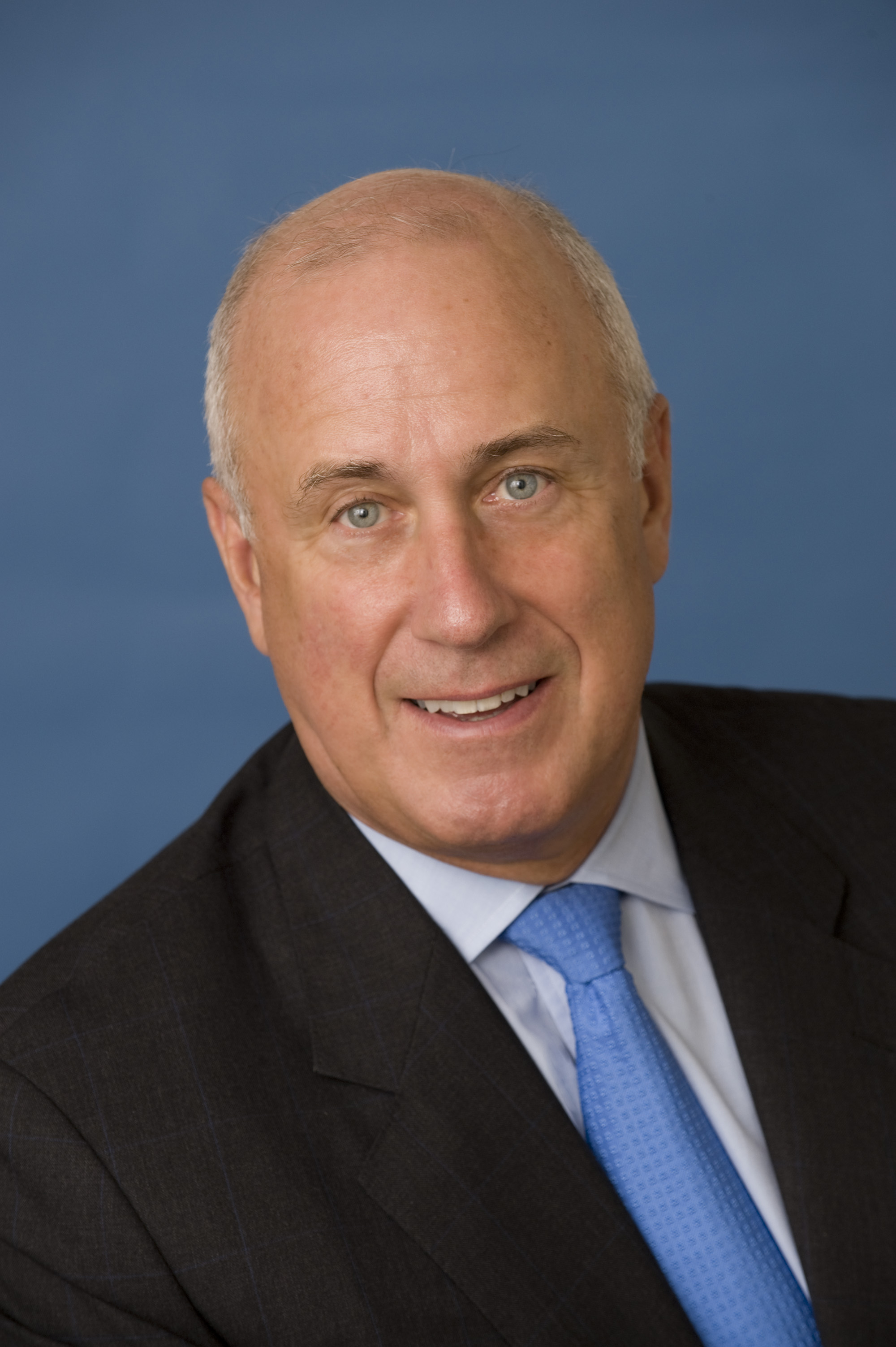
Distinguished Fellow, Asia Program
Paal previously served as vice chairman of JPMorgan Chase International and as unofficial U.S. representative to Taiwan as director of the American Institute in Taiwan.

Nonresident Senior Fellow, Carnegie China
Michael Pettis is a nonresident senior fellow at the Carnegie Endowment for International Peace. An expert on China’s economy, Pettis is professor of finance at Peking University’s Guanghua School of Management, where he specializes in Chinese financial markets.

Former Senior Associate, Energy and Climate Program, Asia Program
Smith has spent the last decade working in international negotiations. Most recently, she served as a member of Secretary Hank Paulson’s senior management team from 2006 to 2009 as the deputy chief of staff and executive secretary for the U.S. Department of the Treasury.

Former Senior Fellow, Asia Program
Swaine was a senior fellow at the Carnegie Endowment for International Peace and one of the most prominent American analysts in Chinese security studies.
Carnegie does not take institutional positions on public policy issues; the views represented herein are those of the author(s) and do not necessarily reflect the views of Carnegie, its staff, or its trustees.

The European Commissioner for Trade is headed to China. But after President Xi’s bridge-building visit to Washington, can a more isolated EU overcome Beijing’s stranglehold on critical raw materials? Who will blink first?

Rym Momtaz, ed.

European NATO countries are wrestling with the possibility of U.S. disengagement from the alliance. With the continent’s security increasingly uncertain, governments must restore the credibility of their collective defense.



Hans-Dieter Lucas, Adam Thomson, Pierre Vimont

The domestic impacts of how long it is taking to end the war in Ukraine have pushed the French electorate to the political extremes and compromised the country’s diplomatic capacity.
Rym Momtaz

The new U.S.–Denmark–Greenland agreement will help Washington exert political, economic, and financial dominance under the guise of security. Yet, it acknowledged Copenhagen’s and Nuuk’s sovereignty on the island.

Marc Pierini

A summer of escalation in the Black Sea has hurt Ukraine economically and is exacerbating world food security. A truce is needed—as is a broader reframing of Europe’s Ukraine strategy.

Thomas de Waal