

Commentary
The domestic impacts of how long it is taking to end the war in Ukraine have pushed the French electorate to the political extremes and compromised the country’s diplomatic capacity.
Rym Momtaz
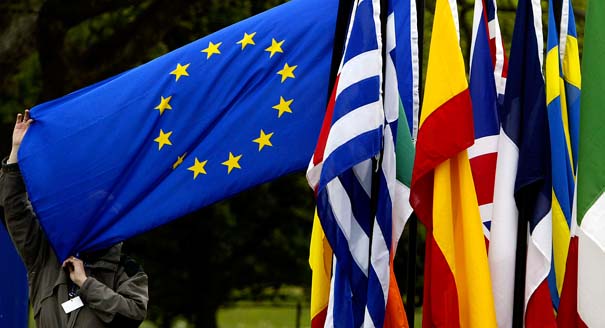
Source: Getty
The route for a future strategic Europe lies in forging or strengthening alliances and partnerships, treating partners as partners, and intensifying constructive dialogue.
Indubitably the talk about Europe exceeds the traditional notion of a strategic actor, a notion that is generally limited to the mere consideration of geographic importance and scope and intensity of economic or political influence. The talk about “Strategic Europe,” however, necessarily entails a talk about “Global Europe,” a rising pole that possesses the assets to transform the power structure of the international system as a whole. According to this broader perspective, a long-term thinking of Europe’s interests and objectives is inseparable from considering that rising pole’s global strategic vision and policy.
Signs of Europe’s significant rise in the still budding post‒Cold War global power structure have not been confined to economic advancement. Rather, it went beyond consolidating itself as a global economic power to affirming its status as an un-ignorable global political vigor, mainly deriving its allure from the multilateralism it epitomizes and the normative strength it convincingly presents. These unique characteristics are increasingly fitting in current and future tackling of new forms of soft security threats. These include the collective handling of ecological problems, securing energy sources, combating terrorism, limiting illegal migration, and containing the assertive and sizable culturally diverse communities on the aging continent. Europe’s untraditional power sources therefore are apt in a globalized era where the art of managing diversity through operating non-military means climbed to unexpected importance in the changing global milieu. Perhaps because of this logic, Europe is still globally strategic, despite the fact that its economic and political rise has not been matched by an equivalent military ascent.
By the same token, classical issue areas of current exalted concern—specifically, terrorism, illegal migration, energy security, and political, economic, and demographic stability in the near south and east abroad—are expected to constitute the prime sources of Europe’s headache in the long term. Future concentration on these classical spheres of action does not impede, however, a European reconsideration of a comprehensive strategic vision and policy for more remote areas, particularly Asia and Latin America, where Europe’s role has been generally limited and primarily reactive to developments there. Indeed, the time has come for Europe to consider the challenge of capitalizing on its current strong economic ties with single Asian and Latin American poles and groupings and promote them to wider political clout and influence.
Certainly, the optimism that the preceding lines unfold about the scope and intensity of Europe’s ability to act and how realistic ambitions could be on its future foreign conduct is dependent on that rising pole’s serious reconsideration of its global commitments, costs, and responsibilities of the empire it can be. The actual experience demonstrates that Europe has been reluctant to act beyond its classical near abroad, which is supposedly described as its vital sphere of influence and where Europe has been particularly eager to create a ring of friends. Perhaps looking into the example of Europe’s Mediterranean partnership demonstrates how Europe has been especially blinkered in restricting its attention to the southern Arab Mediterranean countries, from which transnational security threats emanate and encroach on Europe’s security, without appropriately raising its sight to the other eastern Arab flank in the Levant and the Gulf.
Conceivably, the most influential means for Europe to pursue its goals and objectives in the future would be governed by two main facts that seem to dominate current and future international politics: the first is the supremacy of economics in an increasingly globalized world, where the flow of money, business, and technology matters the most; and second is the upsurge of identity and cultural dimensions, which provide ever more plausible explanations for conflictive or cooperative relations as well as for distinguishing friends from foes. Therefore, a combination of Europe’s soft power instruments—basically the moral leadership it represents and the cultural and civilizational approach it embraces—and the sticks and carrots of its economic power would be essential in the near future. Elaborating on what it can do, forging or strengthening alliances and partnerships, treating partners as partners, and intensifying constructive dialogue are thus thought to be the routes for future strategic Europe.
Sally Khalifa Isaac is an assistant professor of political science at Cairo University.
To reinvigorate debate over European foreign policy and Europe’s role in the world, Carnegie Europe is publishing a series of essays from leading policymakers, diplomats, experts, and journalists on Strategic Europe over the coming weeks. A new essay will appear every day.
Sally Khalifa Isaac
Cairo University
Carnegie does not take institutional positions on public policy issues; the views represented herein are those of the author(s) and do not necessarily reflect the views of Carnegie, its staff, or its trustees.

The domestic impacts of how long it is taking to end the war in Ukraine have pushed the French electorate to the political extremes and compromised the country’s diplomatic capacity.

Rym Momtaz

Before the next wave of EU enlargement takes place, the union needs to grapple with thorny questions of how power is distributed among its members.


Emil Sondaj Hansen, Ditte Brasso Sørensen

The new U.S.–Denmark–Greenland agreement will help Washington exert political, economic, and financial dominance under the guise of security. Yet, it acknowledged Copenhagen’s and Nuuk’s sovereignty on the island.

Marc Pierini

Are Germany’s economic, industrial, and political struggles becoming a liability for the EU’s ability to rise to the geopolitical moment?
Rym Momtaz, ed.

European Commission President Ursula von der Leyen is about to give her annual address on the state of the EU. Here’s what she won’t—but should—say.
Rym Momtaz