

Commentary
Nathalie Tocci, Jan Techau
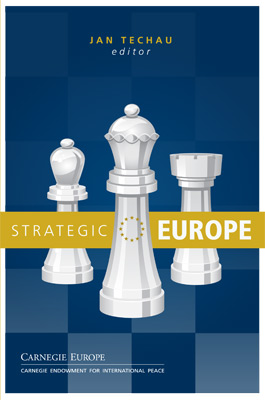
The obvious and often painful mismatch between aspiration and reality in European foreign policy has plagued discourse on European integration during the last decade.
The obvious and often painful mismatch between aspiration and reality in European foreign policy has plagued discourse on European integration during the last decade. Today, the simple truth is that the Lisbon institutions have brought more ambiguity than clarity about Europe’s capacity and role in the world.
In the fall of 2011, Carnegie Europe asked a select group of policymakers, diplomats, academics, think tank experts, and journalists to contribute concise and timely interpretations about what a truly strategic Europe would look like.
The resulting volume looks to reinvigorate the debate about Europe’s global impact with new perspectives, fresh impulses, and thought-provoking ideas on how Europe can better position itself as a strategic player on the world stage.

Director, Europe Team, Eurasia Group
Techau is director with Eurasia Group's Europe team, covering Germany and European security from Berlin. Previously, he was director of Carnegie Europe.
Recent Work

Nathalie Tocci, Jan Techau
Jan Techau
Carnegie does not take institutional positions on public policy issues; the views represented herein are those of the author(s) and do not necessarily reflect the views of Carnegie, its staff, or its trustees.

Are Germany’s economic, industrial, and political struggles becoming a liability for the EU’s ability to rise to the geopolitical moment?

Rym Momtaz, ed.

European Commission President Ursula von der Leyen is about to give her annual address on the state of the EU. Here’s what she won’t—but should—say.
Rym Momtaz

Radical-right parties are expected to do well in upcoming elections in four of the EU's biggest member states. If successful, they could prevent the union from addressing key challenges ahead.

Stefan Lehne

The aftermath of the Ceuta crisis shows Europe has drawn the wrong lessons. Rather than doubling down on failed migration policies, the EU needs to address the underlying roots of such episodes.

Richard Youngs

An overwhelming victory by a far-right-wing party in a small state in eastern Germany will have major repercussions for Chancellor Friedrich Merz’s coalition.

Judy Dempsey