

Commentary
The EU can impose sanctions but struggles to enforce them without the United States. With Washington increasingly disinterested in backing European interests, the bloc must now fend for itself.
Nicu Popescu, Tiago Antunes
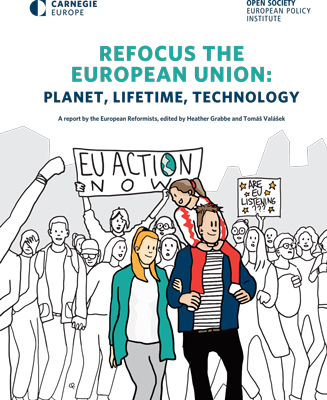
This report is a rallying cry for Europeans to pull together and mobilize the EU’s assets to manage the three biggest changes of our times.
This report is a rallying cry for Europeans to pull together and mobilize the EU’s assets to manage the three biggest changes of our times. Each section briefly diagnoses the consequences of climate change, aging populations, and digital revolutions and then explores the role the EU could play in supporting the inevitable transitions. The purpose is not to provide a detailed blueprint for each transition, but rather to launch a new kind of debate about the EU—a debate that does not revolve around how to tweak the current institutions but instead how to address a reordered set of priorities.
The insights and recommendations presented draw on ideas and analysis that emerged from a series of discussions between a group of Europeans with innovative ideas and a pro-reform mindset. This group, referred to as the European Reformists, was brought together by the Open Society European Policy Institute and Carnegie Europe between October 2017 and December 2018 to discuss the continent’s biggest challenges over the next fifteen years.
These challenges are not necessarily new, and the EU has started work on most of them. But much faster and more radical action is essential to avoid massive social, economic, and political disruption. The time is now ripe for two reasons. First, there is a renewed political appetite for a positive vision in which the EU provides solutions to people’s worries.1 Second, there is no time to waste.
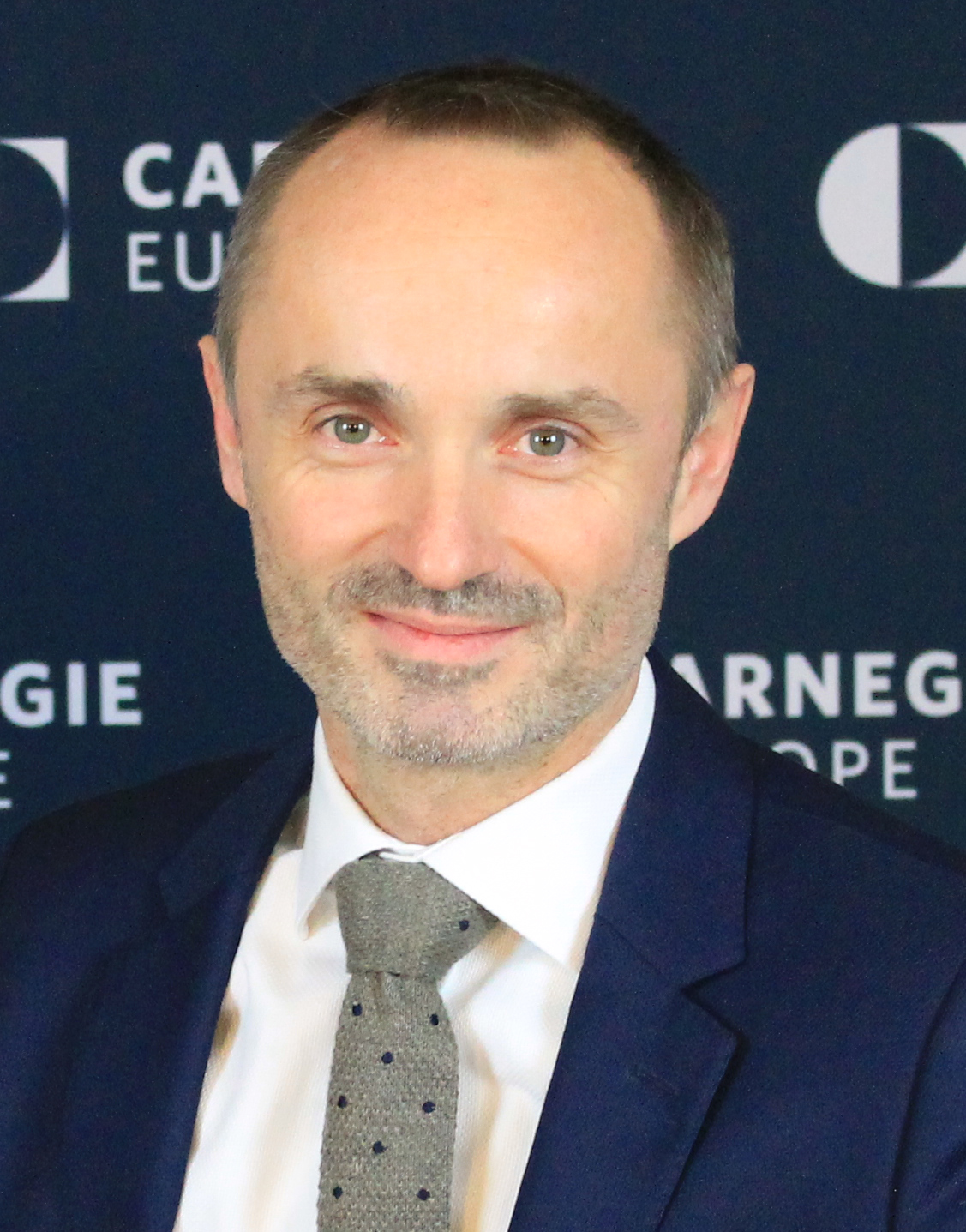
Former Director, Carnegie Europe
Valášek was director of Carnegie Europe and a senior fellow, where his research focused on security and defense, transatlantic relations, and Europe’s Eastern neighborhood.
Heather Grabbe
Grabbe is director of the Open Society European Policy Institute.
Carnegie does not take institutional positions on public policy issues; the views represented herein are those of the author(s) and do not necessarily reflect the views of Carnegie, its staff, or its trustees.

The EU can impose sanctions but struggles to enforce them without the United States. With Washington increasingly disinterested in backing European interests, the bloc must now fend for itself.


Nicu Popescu, Tiago Antunes

Russia is testing the waters of NATO’s mutual defense clause. What do strikes in Romanian territorial waters mean for the alliance’s posture toward Moscow?

Dimitar Bechev

With its public finances in shambles, the far right polling at 35 percent ahead of the 2027 presidential election, and a growing protest movement, is France’s crisis a threat to the EU’s geopolitical awakening?

Rym Momtaz, ed.

Ahead of a tough winter for Ukraine, Donald Trump’s swing back toward Russia bodes ill. But instead of panicking, Kyiv’s European allies are focusing on action.
Rym Momtaz

Funding Ukraine remains a priority for European leaders. As Russia’s war of aggression heads into another winter, two feasible options to mobilize support for Kyiv should be fast-tracked.


Vladyslav Rashkovan, Gregory P. Wilson