

Commentary
Sinan Ülgen
{
  "authors": [
    "Sinan Ülgen"
  ],
  "type": "commentary",
  "blog": "Strategic Europe",
  "centerAffiliationAll": "",
  "centers": [
    "Carnegie Endowment for International Peace",
    "Carnegie Europe"
  ],
  "collections": [],
  "englishNewsletterAll": "",
  "nonEnglishNewsletterAll": "",
  "primaryCenter": "Carnegie Europe",
  "programAffiliation": "",
  "programs": [],
  "projects": [],
  "regions": [
    "Europe",
    "Middle East"
  ],
  "topics": [
    "EU",
    "Security"
  ]
}
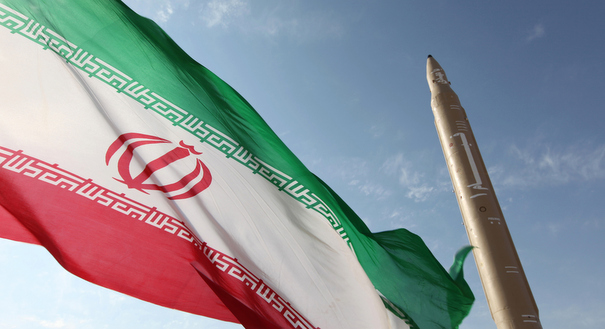
Source: Getty
Catherine Ashton faces a daunting task in leading the P5+ 1 in talks with Iran on its nuclear program.
The next round of the nuclear talks between the P5+ 1 and Iran are slated to take place next week in Istanbul. For many, these talks are seen as the last opportunity for pre-empting a new military conflict in the Middle East. Indeed an Israeli and/or U.S. strike against Iran’s nuclear facilities can no longer be discounted. Only a succesful outcome can eliminate this prospect. But how can success for this round of talks be defined?
It would be unrealistic to expect the parties to reach an overall settlement on an issue that has remained intractable for so long. But there can nonetheless be two measures of success. The first will be the continuation of the talks. In other words, the Istanbul round should not end prematurely the way that the previous round, also held in Istanbul in early 2011, ended. The first meeting should be concluded at least with a shared desire to continue the talks. As long as negotiations are continuing, a military confrontation will be politically suicidal and therefore highly unlikely.
The P5 + 1 may nonetheless want to impose a deadline so as to prevent Iran from using the talks to gain time. But in fact there is already a natural deadline. A new set of sanctions on Iran’s oil exports will enter into force on July 1. This date can also be interpreted as a deadline for the next round of negotiations. If the Iranian leadership is willing to come to an agreement, that will happen before July 1. Iranian political culture will preclude such a “concession” from the Iranian negotiators after the July 1. They will be perceived by the hardliners in Iran to have capitulated under pressure.
The second measure of success for the talks will be its substantive part. Tehran will need to offer a substantial offer that will be perceived as such by the P5+1. The suspension of Iran’s program for high level uranium enrichment, the acceptance of more intrusive inspections by the International Atomic Energy Agency (IAEA) or a political commitment to become party to the Additional Protocol of the Non Proliferation Treaty are a few examples of potential openings that will enable the talks to be labeled as successful.
EU High Representative Catherine Ashton will be in the driving seat for the P5+1. She will thus be responsible for coordinating not only the EU’s position but also maintaining cohesion among the members of the UN Security Council. That may end up being the most difficult challenge for Barroness Ashton. Not only will she have to pressure her Iranian counterparts to put a substantive offer on the table, she will also strive to maintain the unity fo the P5 + 1 and ensure that no divisions emerge among the members of her own group on the seriousness and acceptability of a potential Iranian opening.

Senior Fellow, Carnegie Europe
Sinan Ülgen is a senior fellow at Carnegie Europe in Brussels, where his research focuses on Turkish foreign policy, transatlantic relations, international trade, economic security, and digital policy.
Recent Work
Sinan Ülgen

Raluca Csernatoni, Sinan Ülgen
Carnegie does not take institutional positions on public policy issues; the views represented herein are those of the author(s) and do not necessarily reflect the views of Carnegie, its staff, or its trustees.
Following Ursula von der Leyen’s gaffe equating Turkey to Russia and China, relations with Ankara risk deteriorating even further. Without better, more consistent diplomatic messaging, how can the EU pretend to be a geopolitical power?
Sinan Ülgen
Closer EU-UK ties could help address urgent European concerns. But is the EU ready for rapprochement with the United Kingdom?

Rym Momtaz, ed.
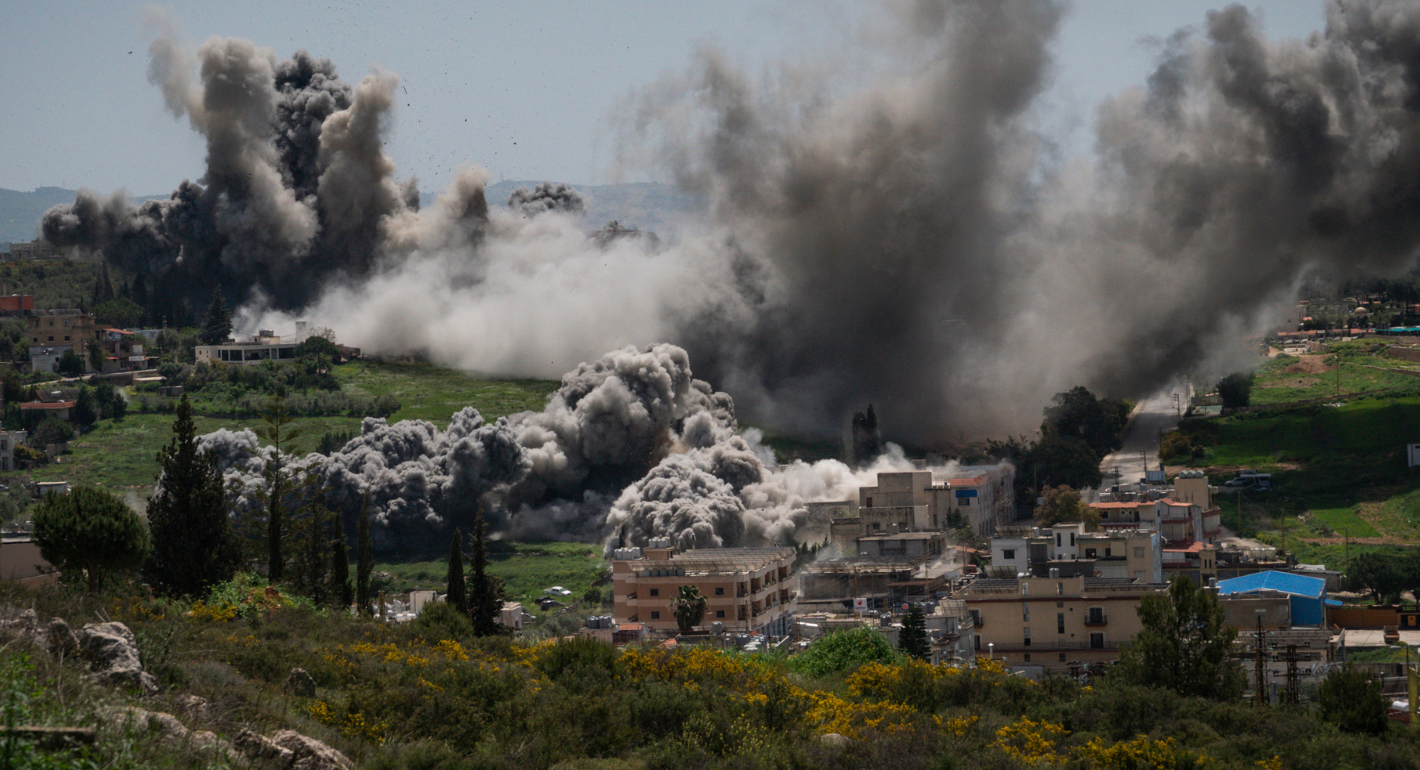
Europe has been standing by while its Southern neighborhood is being redrawn by force. To establish a path to peace between Israel and Lebanon, it’s time for Europeans to get involved with hard power.
Rym Momtaz
In Ukraine, Gaza, and Iran, AI warfare has come to dominate, with barely any oversight or accountability. Europe must lead the charge on the responsible use of new military technologies.
Raluca Csernatoni

Montenegro and Albania are frontrunners for EU enlargement in the Western Balkans, but they can’t just sit back and wait. To meet their 2030 accession ambitions, they must make a strong positive case.


Dimitar Bechev, Iliriana Gjoni