

Commentary
Judy Dempsey
{
  "authors": [
    "Judy Dempsey"
  ],
  "type": "commentary",
  "blog": "Strategic Europe",
  "centerAffiliationAll": "",
  "centers": [
    "Carnegie Endowment for International Peace",
    "Carnegie Europe"
  ],
  "collections": [],
  "englishNewsletterAll": "",
  "nonEnglishNewsletterAll": "",
  "primaryCenter": "Carnegie Europe",
  "programAffiliation": "",
  "programs": [],
  "projects": [],
  "regions": [
    "Europe"
  ],
  "topics": []
}
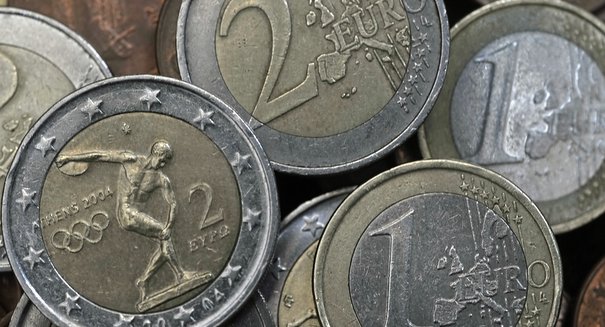
Source: Getty
Every week leading experts answer a new question from Judy Dempsey on the international challenges shaping Europe's role in the world.
Every week leading experts answer a new question from Judy Dempsey on the international challenges shaping Europe's role in the world.
Three years ago, Greece began its desperate journey through the worst economic crisis of its history. The lies, the mystified public accounts, austerity, economic depression, the debt restructuring of last March, the risk of an exit from the eurozone: Greece is at the center of any discussion about the fate of the euro. But the main problem is primarily domestic. After two bailouts, what has changed? Nothing. Greek politicians continue to spend an ocean of money. The byzantine structure of the Greek public sector is still present, and alive. The structural reforms and privatizations requested by the IMF, European Central Bank, and the EU Commission—the so-called Troika—were not implemented in the Greek economy as expected. The country needs a change of mindset, not new money, a new debt restructuring, or more time to reach a balanced budget, like the Eurogroup said during their last meeting. Only with a new ruling class, with new pro-European politicians, without corruption, tax evasion, and political malfeasance, will there be the beginning of the end for the Greek tragedy.
As underscored in the latest troika draft report on Greece, Greece has made a bigger fiscal adjustment than any other developed nation in the past 30 years. However, there has been far too much emphasis on fiscal austerity in Greece, and far too little focus on implementing the structural reforms that have already been legislated.
The troika has laid out a series of fiscal targets for the Greek government to hit. The government has pursued these targets the most expedient way possible—by repeatedly cutting wages and pensions. This is not sustainable, particularly for a country in its fifth year of recession. A more difficult, but more sustainable, route towards hitting these targets would be for the Greek government to open up labor and product markets to plug the budget gap with tax revenues born out of productivity gains and growth. Measures to open up labor and product markets are notoriously painful and unpopular in the short term, however.
The Greek government will need to implement structural reforms if it is to ever find sustainable growth going forward. This is the case whether Greece stays in the eurozone or not.

Nonresident Senior Fellow, Carnegie Europe
Judy Dempsey is a nonresident senior fellow at Carnegie Europe
Recent Work
Judy Dempsey
Judy Dempsey
Carnegie does not take institutional positions on public policy issues; the views represented herein are those of the author(s) and do not necessarily reflect the views of Carnegie, its staff, or its trustees.
While the EU and European governments are embracing the much-lauded middle-power moment, this entails three difficult conundrums.

Richard Youngs
Much has been said of the changes Brussels is trying to make to the EU enlargement process. Here’s why gradual integration might—or might not—be the answer.

Dimitar Bechev
The European Commissioner for Trade is headed to China. But after President Xi’s bridge-building visit to Washington, can a more isolated EU overcome Beijing’s stranglehold on critical raw materials? Who will blink first?

Rym Momtaz, ed.
The domestic impacts of how long it is taking to end the war in Ukraine have pushed the French electorate to the political extremes and compromised the country’s diplomatic capacity.
Rym Momtaz
Before the next wave of EU enlargement takes place, the union needs to grapple with thorny questions of how power is distributed among its members.


Emil Sondaj Hansen, Ditte Brasso Sørensen