

Commentary
Nathalie Tocci, Jan Techau
{
  "authors": [
    "Jan Techau"
  ],
  "type": "commentary",
  "blog": "Strategic Europe",
  "centerAffiliationAll": "",
  "centers": [
    "Carnegie Endowment for International Peace",
    "Carnegie Europe"
  ],
  "collections": [],
  "englishNewsletterAll": "",
  "nonEnglishNewsletterAll": "",
  "primaryCenter": "Carnegie Europe",
  "programAffiliation": "",
  "programs": [],
  "projects": [],
  "regions": [
    "Europe",
    "Russia",
    "North America"
  ],
  "topics": [
    "EU",
    "Security"
  ]
}
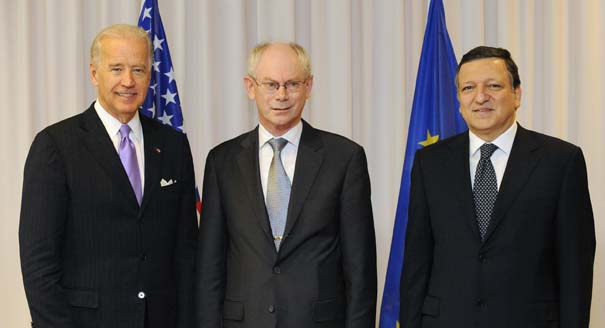
Source: Getty
To become a world player, Europe needs to start defining its collective interests.
When the 49th Munich Security Conference starts on Friday—with Carnegie Europe cooperating in the event—the mental divide that exists across the Atlantic on security issues will become apparent again. In Europe, typically, all discussions conclude with the question: “Okay, so what can we do?” That is a perfectly reasonable thing to ask. Americans will ask the same question at the end of their debates. But in Washington, another question will be added. One that you never hear in Brussels: “Okay, and what can they do for us?”
In other words: Europeans are politely asking how they can do the right thing. Americans, in addition to that, want to know what is in it for them. Americans have an agenda, based on identified interests, which they seek to further. Europeans struggle to identify their shared interests and therefore miss out on the realpolitik edge that foreign policy should and must have.
It may be unfair to compare Washington and Brussels in this respect. Washington is a place of tremendous executive power in foreign and security affairs; Brussels lacks that power almost completely.
In Washington, you will have people in the room whose recommendations have far-reaching consequences in the Pentagon, Congress, or the White House, and therefore in the world. In Brussels, up to the highest institutional level, foreign policy people are essentially advisors. Their words need to go through additional filters in the national governments of EU and NATO member states before having much of an impact. Brussels institutions don’t have the final decision-making power, and so debate there often lacks the executive edge that a real foreign policy discourse needs.
As unfair as it might seem to compare apples and oranges, the difference matters. Because not only Americans, but Europeans themselves—including many other players around the world, for that matter—expect more realpolitik and more executive edge from Europe. They don’t just look at London and Paris, where they know they will find strategic openness but limited and shrinking assets. They look at Europe’s potential to be a decisive provider of global stability and a weighty advocate of a liberal world order—if only Europeans could get their act together. Brussels is the place that symbolizes the unfulfilled promises of European foreign and security policy. The lack of realpolitik edge and executive culture in Brussels illustrates the wider European malaise, and that’s why the comparison is less unfair than it might seem at first.
Many theories have been provided to explain why Europe lacks the ambition to become the big player almost everybody wants it to be. The problem is not rampant pacifism, as Robert Kagan’s Mars/Venus theory suggests. Europeans are not pacifists per se; they have gone to war quite frequently since 1945. Nor is the problem a prevailing post-modernist culture in which power is regarded as evil and the use of force as a political instrument has been discredited, even though the Brussels corridors harbor many self-delusions of this kind. The problem is that whatever realpolitik ambition Europeans may have, they don’t have it collectively. They still have it as Brits and French, and maybe even, on very rare occasions, as Germans. They may have it, on a smaller scale, as Poles and Swedes and Dutch and Italians. But they don’t have it as Europeans.
The nation state remains the vessel for foreign policy ambition in Europe. And by definition, this means that ambitions can only be small. It is the tragic irony of realpolitik in Europe that the very standard-bearer of power politics—and the very thing proponents of realpolitik love the most—the nation state, is now the most important obstacle to a more powerful, more realpolitik role for Europe in the world.
As national sentiments are on the rise across Europe, the near future does not hold much hope for change. Yet the need for change becomes ever more pressing, and not just because of shrinking budgets that dictate more cooperation, or the West’s diminishing importance in the emerging multi-polar world. The need for Europeans to change arises primarily from the fact that they are living in the most dangerous neighborhood in the world. Most hotspots on the various international risk maps are in the immediate or wider European neighborhood, from the Arctic to Russia and Eastern and Central Europe, to the Balkans to the Caucasus and Central Asia, to the Middle East to Northern Africa and the Sahel. Daniel Keohane, Head of Strategic Affairs at the Spanish think tank FRIDE, describes the European dilemma this way: “Just as the strategic case for more European security and defense becomes so much stronger, the political case for more integration becomes weaker and weaker in Europe’s nations.”
Obviously, the mismatch between the pressures of reality and the political will to deal with them are not sustainable in the long run. In the end, politics will be forced to catch up with reality, and painful, unpopular adjustments will have to be made. Europe is still at the beginning of this adjustment process. Syria, Libya, and Mali were hefty wake-up calls, and there clearly are more to come. The question is how many of them will be needed and how long will it take for reality to sink in.
The debate at the Munich Security Conference will show us where we stand on all this. Observers should listen very carefully whether this time, Europeans, not only Americans, will finally begin to ask the right question: “What is in it for us?” That’s the question Europeans need to learn to ask collectively, as Europeans, if they want to preserve their peace and freedom, contribute to global stability, and matter in the world.
Director, Europe Team, Eurasia Group
Techau is director with Eurasia Group's Europe team, covering Germany and European security from Berlin. Previously, he was director of Carnegie Europe.
Recent Work

Nathalie Tocci, Jan Techau
Jan Techau
Carnegie does not take institutional positions on public policy issues; the views represented herein are those of the author(s) and do not necessarily reflect the views of Carnegie, its staff, or its trustees.

As we close out another season of Strategic Europe, it is worth taking stock of the deep shifts underway.

Rym Momtaz
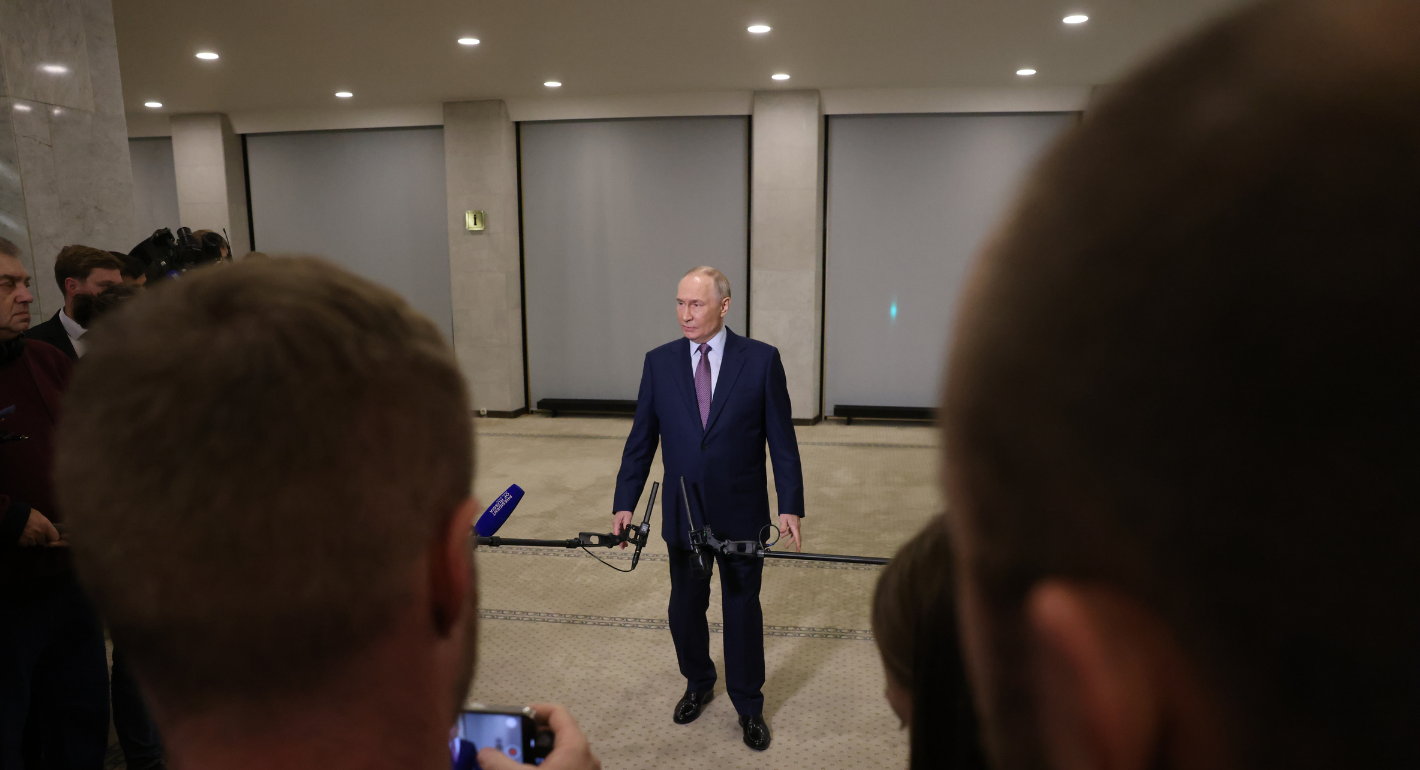
The EU had to compromise to adopt a twenty-first sanctions package against Russia, exposing growing cracks in the union’s resolve. Is this latest, weaker round worth it to keep pressure on Moscow?
Rym Momtaz, ed.

Trump is distracted and Ukraine wants Europe to step up. The continent’s leaders must find their voice and assert it in talks with Russia.

Alissa de Carbonnel

Mounting economic strain and battlefield losses will not necessarily make the Kremlin less dangerous. They could instead push Moscow toward a more aggressive hybrid campaign designed to test NATO’s Eastern flank, exploit allied hesitation, and fracture European resolve.

Maksym Beznosiuk
Over the past ten years, NATO has held almost as many summits as it did during the entirety of the Cold War. Are they still useful, or is it time to stop holding annual meetings?
Rym Momtaz, ed.