

Commentary
Nathalie Tocci, Jan Techau
{
  "authors": [
    "Jan Techau"
  ],
  "type": "commentary",
  "blog": "Strategic Europe",
  "centerAffiliationAll": "",
  "centers": [
    "Carnegie Endowment for International Peace",
    "Carnegie Europe"
  ],
  "collections": [],
  "englishNewsletterAll": "",
  "nonEnglishNewsletterAll": "",
  "primaryCenter": "Carnegie Europe",
  "programAffiliation": "",
  "programs": [],
  "projects": [],
  "regions": [
    "Europe",
    "Middle East",
    "North America"
  ],
  "topics": [
    "EU",
    "Security"
  ]
}
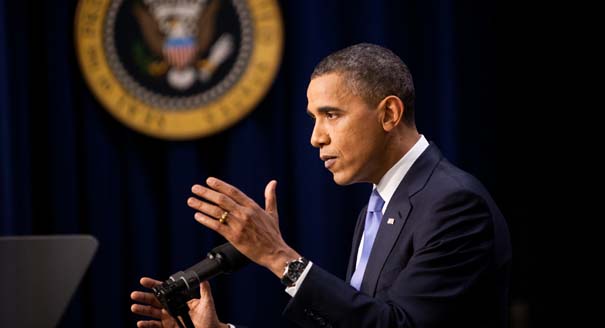
Source: Getty
Many Europeans have demanded the end of U.S. interference in the world. They might now get their wish—and regret it. Yet this might be the wake-up call that Europe needs.
“This is amazing. The Americans now sound French. And the French sound American.” This was a comment often heard at this year’s Brussels Forum, the splendid high-profile foreign policy conference held by the German Marshall Fund of the United States. What had happened?
Predictably, one of the meeting’s most prominent sessions was dedicated to the subject of interventions, and what the cases of Mali (successful intervention—kind of) and Syria (no intervention, continued civil war) can tell us about the West’s willingness and ability to enforce rules and protect values around the world.
As part of that panel, U.S. Under Secretary of State for Political Affairs Wendy Sherman and the new director of policy planning in the French foreign ministry, Justin Vaïsse, performed a remarkable role reversal.
The topic under discussion was whether the West—in the absence of any intention to intervene directly in Syria—should supply arms to the outgunned rebels fighting President Bashar al-Assad. Sherman, pressed hard on the issue, was forced to use the full arsenal of diplomatic vernacular to say “no” while maintaining that the United States was deeply concerned about the atrocious situation on the ground.
She sounded believable on both counts. She was visibly torn, but her statements were an exercise in caution, passivity, and the carefully crafted abstention that only seasoned diplomats can produce. She was very professional in saying “no,” but there was also just enough genuine pain in her performance to avoid appearing cold.
In other words, she was the epitome of the U.S. foreign policy posture in President Barack Obama’s second term.
Vaïsse, in contrast, argued so fervently in favor of arming the insurgents that no one in the room could remember when old Europe had last looked so young and ready to act. At least France, after Libya and Mali, looks decidedly rejuvenated these days. Vaïsse argued that France would also prefer a negotiated solution for Syria, and that it had tried—in various ways, both inside and outside the UN Security Council—to reach one.
These efforts, however, had led to nothing, and it was now time for plan B. Together with the UK, he said, France was considering sending weapons to some rebel groups, despite the recently prolonged EU embargo on arms deliveries to Syria.
Regardless of whether one believes such a plan is a good idea, the scene is of high significance. It is important less for the robustness of France’s position than for the defensiveness of America’s.
While everyone knows that unilateral French interventionism would not be a game changer in world affairs, unilateral American passivity would. So I asked myself afterward: Is this the America that Europe wants? Is this the America that Europe needs? The answer to both questions is—unfortunately—yes.
Most Europeans, with few exceptions (I am one), have always wanted a United States that sounds like Wendy Sherman sounded in Brussels. One that stays out of problems instead of feeling responsible for solving them. One that believes that the use of force is not the solution to every conflict. One that thinks it cannot afford to be the world’s policeman.
Europeans who follow this line of thinking feel encouraged by examples like the disastrous failure of the U.S. intervention in Iraq. They now dismiss as arrogant and gravely mistaken the idea that the United States should be a global provider of stability. That this was and is an epic miscalculation does not occur to most Europeans. They have no idea what it would mean if they really were to get a passive, non-interfering United States.
That brings us—in a slightly convoluted way—to why this is the kind of United States that Europe might actually need. It may well be that only the pain of America’s absence will bring the old world to its senses. Perhaps—as Europeans start to realize that, without U.S. help, global peace and stability are much less stable—they will start to invest in the intellectual, political, diplomatic, and military tools to become a more self-sustained, decisive player in the world.
It seems that, very slowly, this lesson is sinking in with part of the European audience. But the lesson comes at a difficult time, of course, as the resources to make these investments are scarce, and will likely get scarcer over the next few years.
It would be so much better if Europeans could come to this important conclusion without Wendy Sherman’s unintended school lesson (or the very much intended one given by former U.S. secretary of defense Robert Gates before her).
The real lesson here is that Europe needs to invest in its instruments because it needs to be both more self-sufficient and more useful as a partner for the United States. In the end, U.S. passivity and European weakness are two sides of the same coin. It is the global liberal order, Western democracy, stability, and open societies that will suffer otherwise. Europe has much to lose in the emerging new world, but very little capacity to defend it.
As things stand, Europeans will inevitably suffer more pain until it hurts enough for them to finally do something about it. It may be cynical to hope that pain will bring about a reassessment of the situation, but that is better than no hope at all.
Europeans should take a careful look at Wendy Sherman’s pain over Syria if they want to understand that the time for outsourcing the protection of their own strategic interests is fast coming to an end. It won’t be enough for the French alone to realize that.
Director, Europe Team, Eurasia Group
Techau is director with Eurasia Group's Europe team, covering Germany and European security from Berlin. Previously, he was director of Carnegie Europe.
Recent Work
Nathalie Tocci, Jan Techau
Jan Techau
Carnegie does not take institutional positions on public policy issues; the views represented herein are those of the author(s) and do not necessarily reflect the views of Carnegie, its staff, or its trustees.

Before the next wave of EU enlargement takes place, the union needs to grapple with thorny questions of how power is distributed among its members.


Emil Sondaj Hansen, Ditte Brasso Sørensen

A summer of escalation in the Black Sea has hurt Ukraine economically and is exacerbating world food security. A truce is needed—as is a broader reframing of Europe’s Ukraine strategy.

Thomas de Waal

Are Germany’s economic, industrial, and political struggles becoming a liability for the EU’s ability to rise to the geopolitical moment?

Rym Momtaz, ed.

European Commission President Ursula von der Leyen is about to give her annual address on the state of the EU. Here’s what she won’t—but should—say.
Rym Momtaz

The aftermath of the Ceuta crisis shows Europe has drawn the wrong lessons. Rather than doubling down on failed migration policies, the EU needs to address the underlying roots of such episodes.

Richard Youngs