

Commentary
There is an elephant in the room when it comes to the EU’s upcoming security strategy: Donald Trump. Unless European leaders acknowledge the depth of the transatlantic crisis, true autonomy will remain out of reach.
Stefan Lehne
{
  "authors": [
    "Gianni Riotta"
  ],
  "type": "commentary",
  "blog": "Strategic Europe",
  "centerAffiliationAll": "",
  "centers": [
    "Carnegie Endowment for International Peace",
    "Carnegie Europe"
  ],
  "collections": [],
  "englishNewsletterAll": "",
  "nonEnglishNewsletterAll": "",
  "primaryCenter": "Carnegie Endowment for International Peace",
  "programAffiliation": "",
  "programs": [],
  "projects": [],
  "regions": [
    "Europe"
  ],
  "topics": [
    "EU"
  ]
}
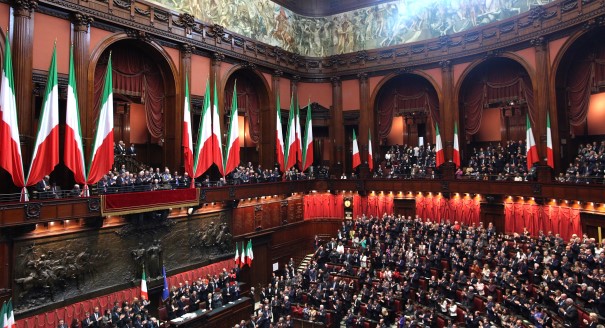
Source: Getty
The EU will allow Italy’s new prime minister a bit of room for maneuver—but not much. Italians must use that space to bring back the virtues of an earlier time.
Giulio Andreotti, who was prime minister of Italy seven times, died on May 6 at the age of ninety-four. He was the last champion of the country’s postwar order: a Christian Democrat who had started his political career in 1945 as the right-hand man of prime minister Alcide De Gasperi, and who eventually became an icon for an eternal and immovable political class.
Andreotti’s followers were averse to innovation and positive that Italy could always play according to its own rules. They believed in printing money when needed and in solving every problem by expanding the deficit and public debt while allowing companies to fall behind on productivity and global market shares. They mocked the world and its speed, content to manage things all’italiana: in a clubby, cozy, old-fashioned style.
Alas, their Italy is gone forever. If the country does not manage to compete in the twenty-first century, playing according to twenty-first-century rules, further decline is inevitable—with grim consequences for Italy and the rest of Europe.
February’s parliamentary elections were a disaster, leading to three months of stalemate. It took all of President Giorgio Napolitano’s savvy and moral authority to finally nominate the young, energetic Enrico Letta as prime minister.
Letta then did the unthinkable: after twenty years of rabid political propaganda, he built a coalition between the center-right and the center-left. His cabinet includes technocrats, women, young faces, and the first ever African-Italian minister. Italians, after months of tensions and resentment, are finally feeling a glimmer of hope.
Letta has promised to implement the reformist agenda that eluded his predecessor Mario Monti for over a year, adjusting it to the new European mood of emphasis on growth, not austerity. He also wants to push through a new electoral law, reduce property taxes, and foster innovation, high-tech enterprises, and startups.
In the European debate, Italy’s new prime minister will side neither with French demands for growth nor with German insistence on austerity. Letta’s first act in office was to meet Germany’s Chancellor Angela Merkel and France’s President François Hollande. He asked his European partners’ permission to relax rigid austerity rules and allow Italy to jumpstart an economy paralyzed for over twenty years.
He received a positive answer of sorts: an amber, if not a green, light. With austerity going out of fashion in Europe, Merkel and Hollande will give Italy more time to put its house in order. Besides, the EU cannot afford to treat Italy as another Cyprus. Italy is, after all, the third-largest economy in the EU and a founding member state—too big and too rich to fail.
Not only is the €1,900 billion of public debt mostly owned by Italians, it is outweighed by €9,000 billion of private wealth. While the state is so heavily burdened by historic debt, most families are not. They still provide a safety net for the unemployed youth.
Will Letta’s cabinet last until the indispensable reforms have been launched?
Europe will press hard for a stable government in Italy, and the country’s own Mario Draghi, president of the European Central Bank, will quietly support the new administration. Draghi cannot openly intervene in the toxic Italian political debate, but Letta’s finance minister is Fabrizio Saccomanni, for many years Draghi’s chief assistant at Italy’s Central Bank. While Saccomanni is a fiercely independent character, it is clear he and Draghi think—and act—alike.
However, the Italian political elite has not, all of a sudden, morphed into a wise men’s council of national unity. Partisan fury has not dimmed, although nobody wants new elections. Former prime minister Silvio Berlusconi enjoys the status quo. At the same time, the Democratic Party’s young Turks need some respite to lick their wounds after their disappointing election result. Even the flamboyant comedian-turned-activist Beppe Grillo doubts he can improve on his 25 percent triumph.
A few months of national unity could be useful, but stability is a means, not an end. Italy’s national mood of stagnation, skepticism, and fear of the future is a deeply entrenched disease. For over three generations, a negative demographic balance has clouded the Catholic country’s outlook. Italians love bambini, but too few of them are being born. Immigration is not enough to energize the country.
Italy’s beloved network of small companies—traditionally a source of great pride for the EU’s second-largest manufacturing power—has come under pressure in the global marketplace. One-third of small and medium-sized enterprises thrive on exports, but two-thirds are relegated to the domestic market, where they languish.
During the Renaissance, Italy created the first wave of globalization. During the era of La Dolce Vita and the boom economico of the 1960s, Italy produced Vespa and Fiat, fashion and design, to please a new generation. Pirelli, Ferrari, Ferrero, Piaggio, and Eni still are household names in many countries.
Letta will get some leeway from Europe—but not much. Then it will be up to Italians to get serious and bring back the days when a job done all’italiana meant elegance, thrift, and timing, not corruption, debt, and bureaucracy.
Gianni Riotta
There is an elephant in the room when it comes to the EU’s upcoming security strategy: Donald Trump. Unless European leaders acknowledge the depth of the transatlantic crisis, true autonomy will remain out of reach.

Stefan Lehne
Defense tech innovations will be at the heart of Europe’s new security strategy. But so far, Brussels has been making moves without a broader plan, undermining readiness and credibility.

Raluca Csernatoni
When the U.S.-Iran memorandum of understanding was announced, the UK, France, Germany, and Italy declared their readiness to help demine the Strait of Hormuz and lift nuclear sanctions on Tehran. But does Europe need new tools to recover a diplomatic role?

Rym Momtaz, ed.
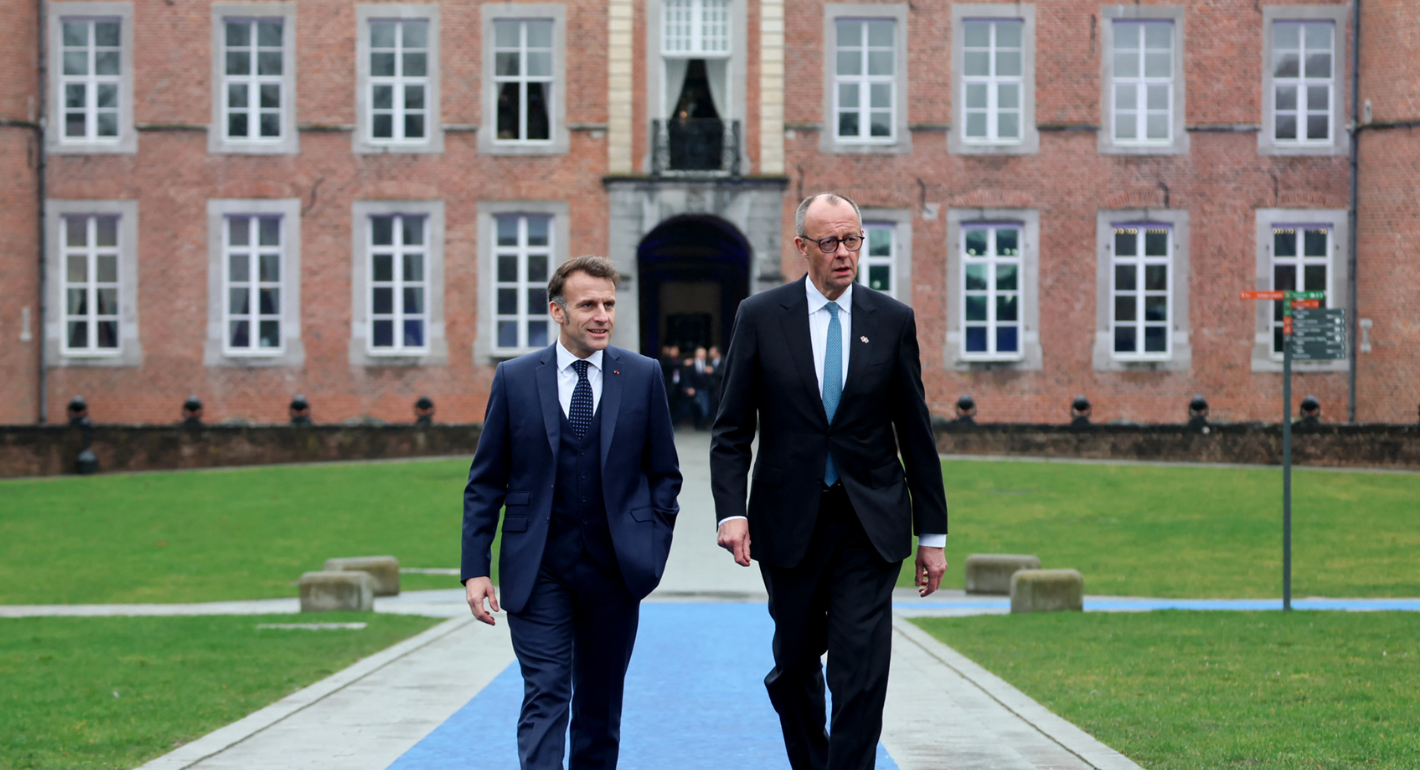
The Franco-German relationship is on the rocks again. But unlike previous moments of tension, the epochal changes on the world stage require that both step up investment in their bilateral ties.
Rym Momtaz
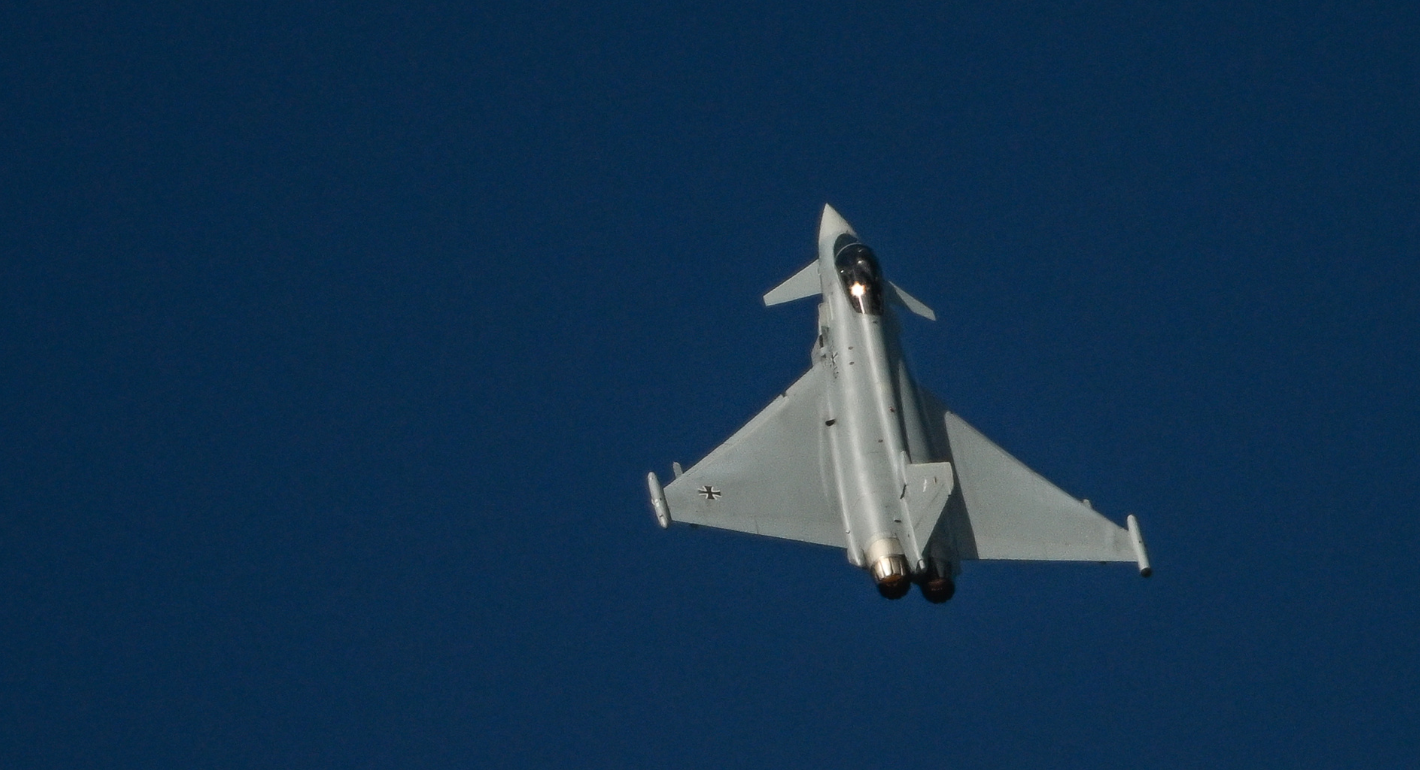
The EU is putting together a new security strategy to meet today’s myriad challenges. But for any proposal to be effective, the union needs to grapple with its identity and ambitions.

Pierre Vimont