

Commentary
The aftermath of the Ceuta crisis shows Europe has drawn the wrong lessons. Rather than doubling down on failed migration policies, the EU needs to address the underlying roots of such episodes.
Richard Youngs
{
  "authors": [
    "Roderick Parkes"
  ],
  "type": "commentary",
  "blog": "Strategic Europe",
  "centerAffiliationAll": "",
  "centers": [
    "Carnegie Endowment for International Peace",
    "Carnegie Europe"
  ],
  "collections": [],
  "englishNewsletterAll": "",
  "nonEnglishNewsletterAll": "",
  "primaryCenter": "Carnegie Europe",
  "programAffiliation": "",
  "programs": [],
  "projects": [],
  "regions": [
    "Europe"
  ],
  "topics": [
    "EU"
  ]
}
Source: Getty
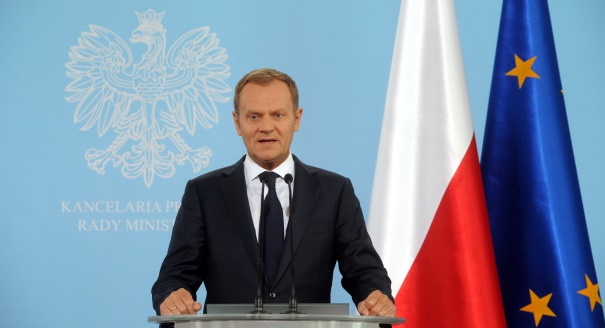
The breakdown in relations between Britain, France, and Germany has strengthened Poland’s hand. Now, Warsaw needs to explain what it wants to do with its new power.
There’s much to be learnt about power in the EU just by walking around its capitals. Parisians don’t walk so much as proceed; Berliners stare; Londoners apologize when bumped into, then look resentful. As for Varsovians, they simply don’t make space for others.
Conclusions? The French view power in terms of self-aggrandizement; the Germans, in terms of scrutiny and mutual control; the British, as a furtive game of playing states off against each other. As for the Poles, everyone knows why they don’t budge: they have an inferiority complex and a strong dose of territorial angst.
Except, of course, that these days they do budge. Polish street etiquette is improving markedly, and a stroll from Nowy Świat to Ulica Warecka is no longer a full-body contact sport. That’s good news for visiting Brits, who no longer have to apologize as they are trodden underfoot.
It’s good news, too, for the EU: it speaks of a growing sense of ease among Poles as the country’s weight in the bloc has grown. The question now is what Poland wants to do with its new-found clout.
This transformation was facilitated by the 2007 election of a new center-right government, by Poland’s sound economic performance, and by the demand for the country’s expertise on Eastern Europe and democratic transformation. But the definitive factor was probably the breakdown in relations between the Big Three—France, Germany, and the UK.
When Poland joined the EU in 2004, it was as mistrustful of an overbearing Germany as it was of an enlargement-skeptical France. Poland oscillated between a balancing state vis-à-vis the UK on issues of sovereignty and economic liberalism, and a blocking power seeking concessions by brinkmanship.
The shift to a more constructive approach came in 2007. Consciously breaking with the Poland’s reputation as a blocking state, the new government began to conceive of the country as a catch-up power. It sought inclusion in Western European affairs and established its place as one of the top five member states.
Warsaw’s understanding of power was not about increasing the country’s coercive influence, but about being dynamic, enjoying the exercise of power, and realizing its potential.
This new understanding was encouraged by a gradual rapprochement with Berlin. But it was drastically sharpened at the end of 2011, when the relationship between the Big Three fractured due to disagreements over the Fiscal Compact, a new treaty designed to enforce budget discipline within the EU. That episode raised the specter that Poland’s catch-up potential would be cut short by its political marginalization.
Under market pressure, the Franco-German tandem had been growing ever more intolerant of British foot-dragging. The inevitable clash came at the EU summit of December 2011, when, having blocked formal treaty change, the UK was elbowed aside, and the other member states created a separate institutional architecture for the eurozone alone.
For Poland, the Big Three had dramatically changed character. The UK had become a liability, undermining the efforts of non-eurozone members to affect decisions. France had gained a formal basis for excluding Poland. And Germany was emerging as the guarantor of its inclusion and thus for Poland’s catch-up.
France’s 2012 presidential election occasioned a further shift in Polish policy. By revealing French economic and political frailty, the election weakened the Franco-German duo. That only increased German sensitivity to any challenge to the relationship, with Berlin even encouraging Paris to find allies within the EU to even things up.
This allowed Poland to overcome its historic tensions with France. Warsaw was able to secure a guarantee from Paris to be included in eurozone decisionmaking. The weakened Franco-German relationship also allowed Warsaw to reinvigorate French-German-Polish cooperation, and Poland brought on board its neighbors in the Czech Republic, Hungary, and Slovakia.
Poland’s relations with the UK are more ambiguous. As the UK loosens its ties with the EU, Poland becomes more influential, but in a less influential EU.
Faced with these developments, Warsaw has learned that it can exert influence by bridging differences between Paris, London, and Berlin. Poland is still a balancing power, but not one at the Big Three’s disposal.
Moreover, Poland’s success in this role is fueling speculation that any further breakdown in relations between France, Germany, and the UK will allow it to emerge as a partner to one of the Big Three—or even as a leader in its own right.
There is naturally a degree of skepticism about whether Poland can deliver. Commentators cite three big problems: Poland’s continued unease about Germany; its divergence from core EU members on the eurozone, energy, and enlargement; and question marks over its domestic political and economic development.
Yet the biggest challenge for Poland now is to articulate more clearly what it wants. Other states are tired of hearing that it is an emerging power within the bloc. They want to know what this new power expects. In this sense, Warsaw has been a victim of its own rapid ascent, and must scramble to develop a rationale for its new status.
Roderick Parkes
Stiftung Wissenschaft und Politik

The aftermath of the Ceuta crisis shows Europe has drawn the wrong lessons. Rather than doubling down on failed migration policies, the EU needs to address the underlying roots of such episodes.

Richard Youngs

An overwhelming victory by a far-right-wing party in a small state in eastern Germany will have major repercussions for Chancellor Friedrich Merz’s coalition.

Judy Dempsey

Canadian Prime Minister Mark Carney has twice inspired praise for standing up to U.S. President Donald Trump: at the 2026 World Economic Forum in Davos and on Canada-U.S. trade negotiations. Is Carney showing a third way better than the EU has in dealing with the Trump administration?

Rym Momtaz, ed.

The EU’s responses to two recent incidents expose the gulf between European perceptions and capabilities. Unless the union can bridge that gap, it will never become a real geostrategic power.
Rym Momtaz

In supporting Europe’s far-right, MAGA and Russia both want the same thing: a weaker EU. Europe must defend itself without abandoning the openness these forces exploit.

Armida van Rij