

Commentary
Judy Dempsey
{
  "authors": [
    "Judy Dempsey"
  ],
  "type": "commentary",
  "blog": "Strategic Europe",
  "centerAffiliationAll": "",
  "centers": [
    "Carnegie Endowment for International Peace",
    "Carnegie Europe"
  ],
  "collections": [],
  "englishNewsletterAll": "",
  "nonEnglishNewsletterAll": "",
  "primaryCenter": "Carnegie Europe",
  "programAffiliation": "",
  "programs": [],
  "projects": [],
  "regions": [
    "Europe",
    "Middle East"
  ],
  "topics": [
    "EU",
    "Security"
  ]
}
Source: Getty
Every week leading experts answer a new question from Judy Dempsey on the foreign and security policy challenges shaping Europe’s role in the world.
Every week leading experts answer a new question from Judy Dempsey on the foreign and security policy challenges shaping Europe’s role in the world.
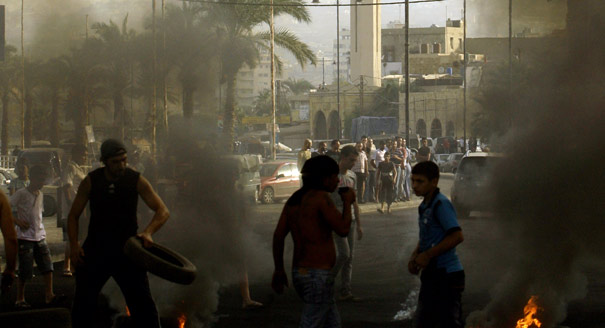
If Europe has been reluctant to assume a proactive role in preventing the Middle East from igniting, would it not be naive to discuss what role could Europe exert when the Middle East really does ignite?
The experience of the past two years demonstrates a rather superficial European reaction to the Arab revolutions. It started with a hollow re-release of the European Neighborhood Policy in May 2011, coupled with a defensive reaction of seeking to secure the Mediterranean. Europe has also shown a complete lack of interest in collective involvement in the region’s problems—from the Gulf to North Africa.
Joint European action has been significantly undermined by a number of factors. Europe has failed to speak with one voice on the many troublesome developments in the countries of the region, including over the military operation in Libya in 2011. Europe has also been reluctant and unable to revive the Middle East peace process. And, more generally, it has seemed incapable of independent action to counterweight the role of the United States—a major aspiration among large segments of Arab society.
This is especially the case when it comes to hard-security issues. That goes not only for encouraging regional peace, but also for reaching out to important Middle Eastern actors that are key to regional developments, most importantly the Gulf states.
Europe should work to reach a consensus on a common European vision backed up by collective European action. That is the only way to deal with the many combustible situations across a region that is vital to Europe’s own security and prosperity.
The Middle East is already in a precariously incendiary moment, but yes, it can get worse.
Israeli air strikes against Syria heightened the prospects of regional spillover from that conflict (though not enough to warrant a delay in the Israeli prime minister’s trip to China) and gave ammunition to those in Europe and Washington seeking to cajole and embarrass U.S. President Obama into some form of military intervention.
Europeans should be looking at how to prevent a greater regional explosion, rather than waiting for or encouraging the Middle East to ignite. De-escalation–driven diplomacy is the imperative, not the relaxing of arms embargoes, the picking of Syrian opposition winners, or point-scoring against Russia or Iran.
A partial military effort in Syria would likely exacerbate current destructive trends, while a full-scale military assault and occupation would be the ultimate march of folly. Hence the need to push back against the current malaise of diplomatic defeatism and put de-escalation first.
That entails engaging more actively with friend and foe alike and walking back the sectarian escalation that most threatens and radicalizes the region—from Syria to Iraq, Lebanon to the Gulf.
Europe should also revisit the Geneva Agreement of June 2012 and revitalize the mission of UN Special Envoy to Syria Lakhdar Brahimi. In its dealings with its allies, Europe should restrain Turkey, Saudi Arabia, and—ultimately—Qatar, while signaling that Israel too must ratchet down. At the same time, Europe should prioritize regional de-escalation over other files in its dealings with Iran and Russia, while supporting Egyptian President Mohamed Morsi’s regional quartet and empowering the pro-diplomacy wing in Washington, not its tried and failed hawkish alternative.
Parts of the Middle East are already burning. Syria has now been ablaze for almost two years. The risk of the fire extending to neighboring countries is not necessarily greater today than it was a year or eighteen months ago. But the risk is no smaller, either.
Europe doesn’t have the means to extinguish the fire. It will mainly try to prevent the flames from spreading further, both inside Syria and across its borders. And it needs to actively support any effort to make national and regional structures more fireproof for the future.
Europe’s main instrument in Syria will be conscious, robust diplomacy. The EU could bring together leaders from all sects and groups in the country to find out whether a consensus for a common state can still be found. In the meantime, the EU needs to extend effective support to areas outside regime control, and thereby help to build nuclei of credible governance. EU member states also need to be prepared to contribute—with troops, not just advice—to a UN peacekeeping mission, once conditions are ripe for that.
Europe mustn’t give up on a two-state solution for Israel and Palestine. The EU needs to be more outspoken and make clear that that outcome was not invented for the sake of the Palestinians, but to enhance Israel’s legitimacy and survivability in the region. If Israeli governments choose to make a two-state solution impossible by extending settlements, Europe will have no choice but to support a state for all people living between the Jordan and the Mediterranean—with equal rights for all.
The Middle East has already ignited. The fire is consuming most of Syria, with brush fires erupting in Iraq and Lebanon, and threatening Jordan. The conflict has fully polarized an already divided Middle East—with Turkey, Saudi Arabia, and other Arab states on one side; and Iran, Iraq, Syria’s Assad regime, and Hezbollah on the other. It has also polarized the international community, drawing in the traditional superpowers in what evolved into the first full proxy war since the end of the Cold War.
Recent Israeli air strikes on Damascus indicate that instability in Syria could also ignite another war across Israel’s northern frontier. The conflict in Syria has already sent 1 million Syrians fleeing the country, and several million more have been internally displaced. The UN estimates that half of all 20 million Syrians will be displaced by the year’s end.
Europe has two main roles to play: humanitarian and political. On the humanitarian side, the internal and external refugee tragedy that is unfolding requires much higher levels of engagement and response. It might be too late to save Syria, but it’s not too late to save Syrians.
On the political front, European leaders need to vigorously encourage efforts to find a political resolution to the crisis. Giving maximum support to the recent U.S.-Russian initiative to start Syrian peace talks is imperative. The initiative may have been late in coming, but it is currently the Syrians’ best hope of avoiding a full destruction of their country and future.
There is no military solution to the Syrian crisis. It needs to be resolved politically before it consumes more Syrian souls and a wider swathe of the Middle East.
The way the question is formulated calls for a cynical reply, with the bottom line that Europe—meaning the EU—is irrelevant as an international player when it comes to foreign and defense policies. Whether the Middle East ignites or not, no one is asking for the EU’s phone number in order to seek its help. The “declining” United States remains critical to the future of the region.
It is not enough to speak about the interdependency between Europe’s stability and prosperity and developments in the Middle East. Nor is it sufficient for the EU to issue endless declarations, which have, over the years, become a substitute for a clear strategy and clear policies.
In an ideal world, the EU would have defined its collective interests, developed meaningful hard power to complement its soft power, and backed up its statements with a willingness to act. Then, it might have been taken seriously by its Middle Eastern neighbors.
Instead, what we see is an EU that is dogged by national interests, that finds it difficult to face the challenge of the Arab awakening, and that is a mere observer to events in Syria. Against this backdrop, asking what role Europe can play seems more like an academic exercise than one with real-world relevance.
Syria is spiraling out of control. Unclear evidence of the use of nerve gas, even less certain indications of who was behind such crimes, and Israel’s blatant bombing of Syria—ostensibly to prevent weapons falling into the hands of Lebanon’s Hezbollah—all point to a rapidly degenerating crisis.
Simply put, the Syrian conflict has three interwoven levels. First, there is a local level, in which regime and rebel forces confront one another in a vicious cycle of violence, in which neither side seems able to prevail. Second, there is a regional level, represented most visibly by a cold war between Iran and the Gulf, which first Turkey and now Israel are being drawn into. Third, there is an international level, pitting the West against the BRICS. Specifically, the United States and Europe favour a revisionist agenda, while Russia remains staunchly opposed to any international intervention.
Within this spiraling three-leveled conflict, what role could Europe play?
Arguably, the scope for decisive European action at the local and international levels is highly circumscribed. Even if the EU were to lift its arms embargo in the weeks ahead, the risk is a greater militarization of the conflict. At the broader international level, the two game-changers are Russia and the United States. It is only through negotiations between the two—which, for a while, offered only dim hope of progress—that international diplomacy has a realistic chance of a breakthrough.
However, at the regional level, the EU could pull its weight far more effectively. Specifically, its role as interlocutor on the Iranian nuclear question could be expanded to engage Iran in a broader debate on Tehran’s regional aspirations and concerns, which are integrally linked to the Syrian crisis.

Nonresident Senior Fellow, Carnegie Europe
Dempsey is a nonresident senior fellow at Carnegie Europe
Recent Work
Judy Dempsey
Judy Dempsey
Carnegie does not take institutional positions on public policy issues; the views represented herein are those of the author(s) and do not necessarily reflect the views of Carnegie, its staff, or its trustees.
French President Emmanuel Macron has unveiled his country’s new nuclear doctrine. Are the changes he has made enough to reassure France’s European partners in the current geopolitical context?

Rym Momtaz, ed.
European reactions to the war in Iran have lost sight of wider political dynamics. The EU must position itself for the next phase of the crisis without giving up on its principles.

Richard Youngs
Europe isn’t as weak in the new geopolitics of power as many would believe. But to leverage its assets and claim a sphere of influence, Brussels must stop undercutting itself.

Dimitar Bechev
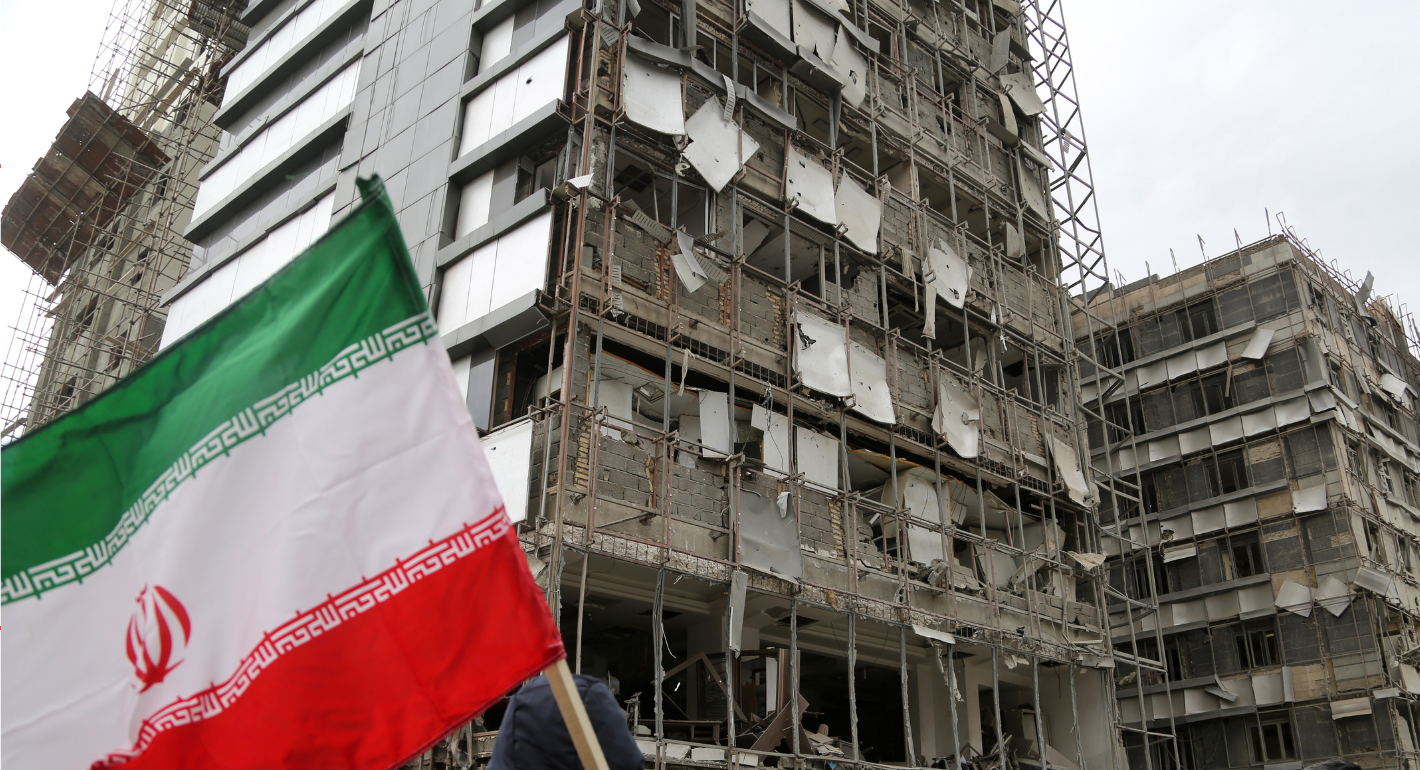
Europe’s reaction to the war in Iran has been disunited and meek, a far cry from its previously leading role in diplomacy with Tehran. To avoid being condemned to the sidelines while escalation continues, Brussels needs to stand up for international law.

Pierre Vimont
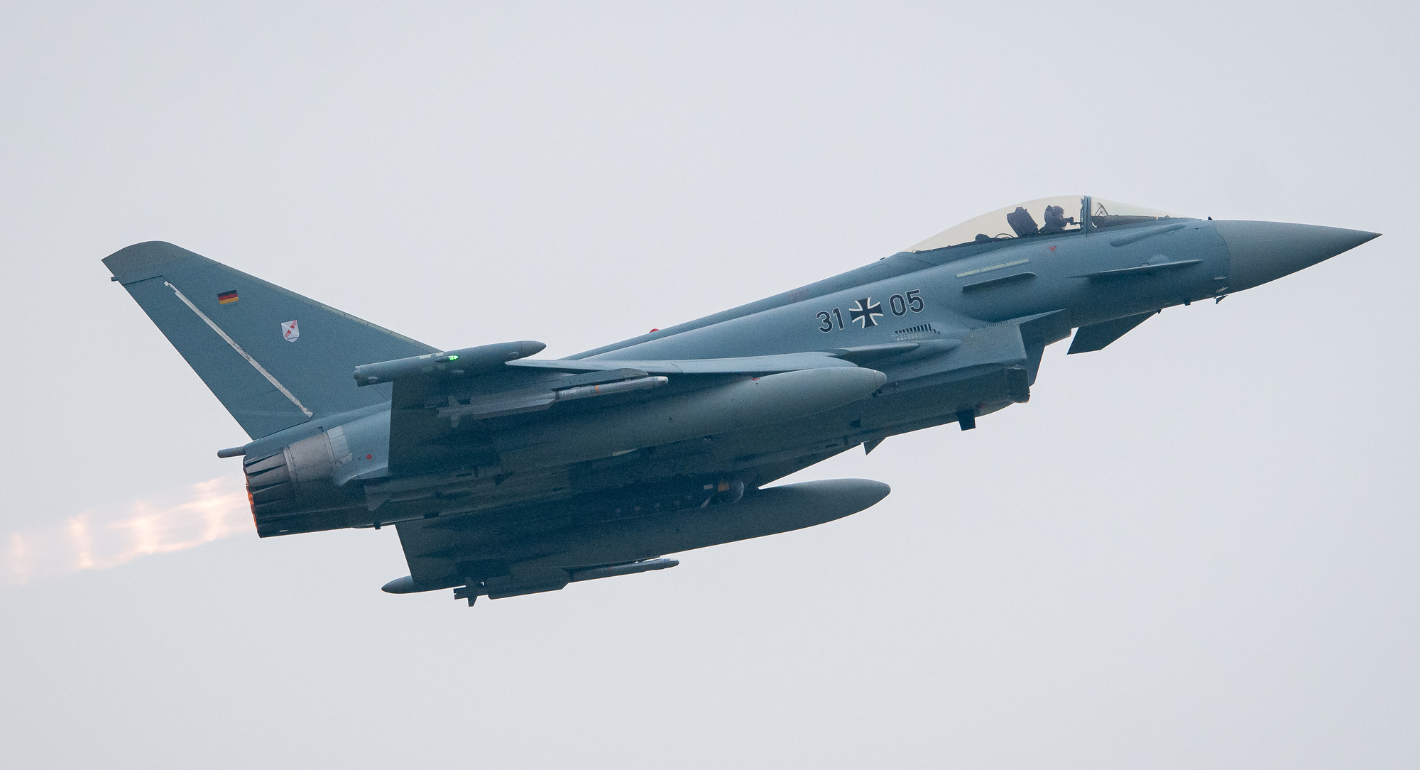
France and Germany’s failure to agree on the Future Combat Air System (FCAS) raises questions about European defense. Amid industrial rivalries and competing strategic cultures, what does the future of European military industrial projects look like?
Rym Momtaz, ed.