

Commentary
European Commission President Ursula von der Leyen is about to give her annual address on the state of the EU. Here’s what she won’t—but should—say.
Rym Momtaz
{
  "authors": [
    "Misha Glenny"
  ],
  "type": "commentary",
  "blog": "Strategic Europe",
  "centerAffiliationAll": "",
  "centers": [
    "Carnegie Endowment for International Peace",
    "Carnegie Europe"
  ],
  "collections": [
    "Iranian Proliferation"
  ],
  "englishNewsletterAll": "",
  "nonEnglishNewsletterAll": "",
  "primaryCenter": "Carnegie Europe",
  "programAffiliation": "",
  "programs": [],
  "projects": [],
  "regions": [
    "Middle East",
    "Iran",
    "Europe"
  ],
  "topics": [
    "Nuclear Policy",
    "EU",
    "Security",
    "Foreign Policy"
  ]
}
Source: Getty
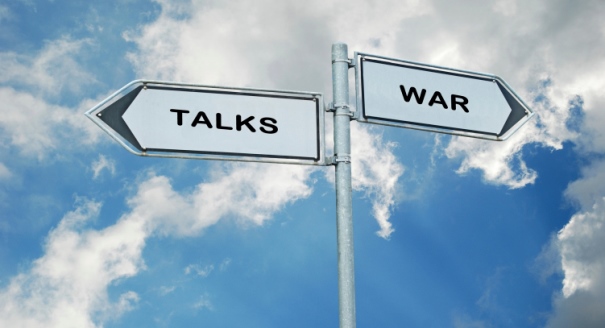
The six countries leading diplomatic efforts with Iran are at odds over many strategic issues. But Tehran’s nuclear program is one area of global policy that unites them all.
Is there a more elegant name for the P5+1? Apart from being ugly, the term for the group of five permanent UN Security Council members plus Germany is also anodyne and meaningless. I’ll come back to this later.
Meanwhile, the substance. The ongoing talks in Geneva between the P5+1 and Iran on the latter’s nuclear program highlight two entertaining subplots, as the prospect of game-changing diplomatic breakthroughs often does. Indeed, the Geneva negotiations show revealing parallels with the Bosnian peace talks of two decades ago.
The first subplot is that earlier is often better.
In the Balkans, the Vance-Owen peace plan sought to end the war in Bosnia almost two and a half years before the Dayton Agreement was finally signed in 1995. In terms of both practical territorial control and political influence, the earlier plan was a much better deal for the Bosniak-dominated government in Sarajevo than the agreement eventually reached in Dayton.
In the current Iran talks, there is a similar precedent in the form of the deal brokered in 2010 by Luiz Inácio Lula da Silva, then president of Brazil, with Turkey and Iran. Under that plan, all Iranian nuclear enrichment processes would have taken place not in Iran but in Turkey. The United States did not respond favorably to that outside intervention in one of its core diplomatic problems. The Americans reacted by telling the Brazilians and the Turks to get back to the nursery where they belonged.
The second subplot is that major global shifts make the contours of real positions and alliances much clearer than in times of diplomatic torpor and failure.
In the Balkans in the 1990s, it was instructive to observe the two parties that held out longest against the Vance-Owen peace plan. The most intransigent party were the Bosnian Serbs under their leader Radovan Karadžić, who is now on trial at the International Criminal Tribunal for the former Yugoslavia in The Hague. Slobodan Milošević, the Serbian dictator, exerted enormous pressure on Karadžić to accept the peace deal. His ultimate refusal to do so led to an irrevocable split between the two Serbs, which Karadžić would live to regret.
The other party that held out against the peace plan was the United States, in particular its then secretary of state, Warren Christopher. He complained that the territorial division proposed in the plan was unfair to the Bosniaks—although it was fairer than the split offered two years later by U.S. diplomat Richard Holbrooke.
That was a striking and rather ugly alliance: the Americans and the Bosnian Serbs holding out against a deal backed by all European powers, Croatia, Serbia, the Bosnian Croats, and even the Bosnian government itself. The United States ultimately relented, but by then the moment to force Karadžić’s hand had passed. The war would continue, and by far the worst atrocities, notably the Srebrenica massacre of 1995, were still to come.
Today’s diplomatic efforts in Geneva have exposed a powerful alliance of critical voices on Middle East policy. That alliance consists of the Gulf states, Saudi Arabia, Israel, and a bipartisan grouping of U.S. members of congress. Let’s call them “Team Nyet.” (I know there’s no Russian connection here, but one of my favorite monikers is that of former Soviet foreign minister Andrei Gromyko: Mr. Nyet.)
No member of Team Nyet is willing to spell out in detail an alternative to the Geneva interim agreement, which freezes part of Iran’s nuclear program in exchange for decreased economic sanctions. Instead, those on Team Nyet restrict themselves to sound bites like “historic mistake” or to throwing their toys out of the UN pram. The reason for that stance is that any alternative plan would almost certainly commit the United States and its allies to a logic of armed intervention in Iran.
But even though Team Nyet is a small demographic, it is mightily powerful. U.S. President Barack Obama now faces the fight of his life to get congressional approval for the process launched in Geneva.
That brings me back to the P5+1—or the E3+3, as the Europeans confusingly like to call it. For the sake of argument, let’s call them “Team Da!”
Team Da! represents not just the United States but also the entire European Union, thanks to the remarkable diplomatic ability of Catherine Ashton, the EU’s foreign policy chief. It also includes—wait for it—Russia and China.
The deal reached by Team Da! does not amount to another Munich Agreement (a very unstable historical example, but one that is always rolled out when people don’t like something). This team is at odds over many long-term strategic issues. Its members are riddled with suspicions about one another’s intentions and policies. But Iran’s nuclear program is the one area of global policy that unites them all. No member of Team Da! can afford a conflagration in the Middle East. With the region disintegrating into chaos and bloodshed, it is absolutely critical that the great power dogs wag their tails in unison.
Obama may have a fight on his hands to see this process through. But if he wins, he will not only secure his legacy as a great president, he will also start the difficult process of cleaning up his immediate predecessor’s mess.
Misha Glenny
Journalist and Broadcaster
Misha Glenny is a journalist and broadcaster whose books include The Balkans: Nationalism, War and the Great Powers: 1804-2012, McMafia: A Journey through the Global Criminal Underworld, and DarkMarket: How Hackers Became the New Mafia.
Carnegie does not take institutional positions on public policy issues; the views represented herein are those of the author(s) and do not necessarily reflect the views of Carnegie, its staff, or its trustees.

European Commission President Ursula von der Leyen is about to give her annual address on the state of the EU. Here’s what she won’t—but should—say.

Rym Momtaz

The aftermath of the Ceuta crisis shows Europe has drawn the wrong lessons. Rather than doubling down on failed migration policies, the EU needs to address the underlying roots of such episodes.

Richard Youngs

An overwhelming victory by a far-right-wing party in a small state in eastern Germany will have major repercussions for Chancellor Friedrich Merz’s coalition.

Judy Dempsey

Canadian Prime Minister Mark Carney has twice inspired praise for standing up to U.S. President Donald Trump: at the 2026 World Economic Forum in Davos and on Canada-U.S. trade negotiations. Is Carney showing a third way better than the EU has in dealing with the Trump administration?
Rym Momtaz, ed.

The EU’s responses to two recent incidents expose the gulf between European perceptions and capabilities. Unless the union can bridge that gap, it will never become a real geostrategic power.
Rym Momtaz