

Commentary
Judy Dempsey
{
  "authors": [
    "Judy Dempsey"
  ],
  "type": "commentary",
  "blog": "Strategic Europe",
  "centerAffiliationAll": "",
  "centers": [
    "Carnegie Endowment for International Peace",
    "Carnegie Europe"
  ],
  "collections": [],
  "englishNewsletterAll": "",
  "nonEnglishNewsletterAll": "",
  "primaryCenter": "Carnegie Europe",
  "programAffiliation": "",
  "programs": [],
  "projects": [],
  "regions": [
    "Eastern Europe",
    "Western Europe",
    "Europe"
  ],
  "topics": [
    "EU",
    "Security"
  ]
}
Source: Getty
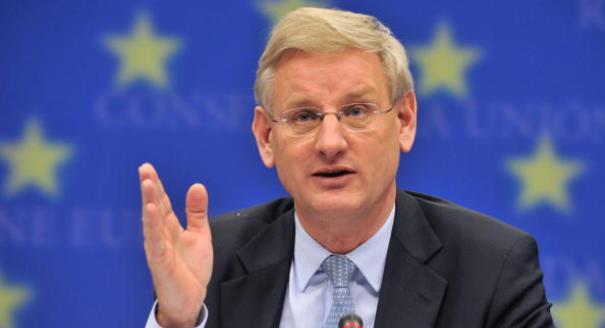
Sweden’s Carl Bildt believes European leaders have a mandate to push forward with EU foreign policy. Will December’s defense summit give the EU the strategic oomph it needs?
When Javier Solana, the EU’s former foreign policy chief, published the bloc’s first ever strategy document in 2003, it was considered a modest success.
Called “A Secure Europe in a Better World,” it was an attempt to end the bitter divisions among European countries over the U.S.-led invasion of Iraq. But there were huge gaps in the document: little mention of transatlantic relations, and nothing about NATO or hard power.
Ten years later—and a month before a long-overdue EU defense summit—Sweden’s foreign minister, Carl Bildt, spelled out his views on Europe’s strategic possibilities in an exclusive interview with Carnegie Europe.
Bildt, who as prime minister from 1991 to 1994 brought Sweden into the EU, is well placed to deal with these issues. He has spent years thinking about how the EU can and should act strategically. But he believes drawing up a document is no longer such an important thing. “We need the debate more than we need the document,” he says.
Maybe he’s right. Most EU leaders don’t want to be locked into an EU security or strategy document—assuming they could even agree on the need for one.
On the other hand, such a document would provide a compass. It could be distributed. It could be debated. It could be updated. Isn’t that what Europe needs if it wants to pursue strategic ambitions?
If only it were as easy as that.
EU countries differ widely in their strategic outlook and interests. A report by the European Council on Foreign Relations on member states’ security strategies is a revealing and depressing analysis, because it shows just how little governments see strategy as a European, rather than a national, goal.
Bildt, who has mellowed since his years as EU and UN envoy for the Balkans during the 1990s, is highly aware of the deep cultural differences among European countries.
“European political culture is the sum of the national political cultures,” he said. “The strategic cultures in the member states are profoundly different, but they have to be respected,” he adds, rather diplomatically.
That’s all very well. But if Europe wants to be a global player, surely it should not opt for the lowest common denominator for its strategic outlook. Bildt’s answer is that “we should be more aware of what we can do together. That is why a debate is needed.”
So who is going to start this debate? It is hard to think of one European leader who is going to stick his or her neck out to say why the EU needs a global strategy and what that should amount to. And does Catherine Ashton, the EU’s foreign policy chief, see the need to take on this ambitious task before she bows out of office next year? She has enough on her plate at the moment, nurturing the Kosovo-Serbia rapprochement and keeping her eye on the political turmoil in Egypt and, of course, the Iran nuclear talks.
Yet when European leaders take a stand, they can make a difference.
Four years ago, Poland and Sweden pushed for a new EU initiative for the bloc’s Eastern neighborhood. They managed to persuade the other EU member states that a secure, prosperous, and ultimately democratic neighborhood was in Europe’s interests. It is now up to the Eastern Partnership countries to choose whether they want to enjoy a closer economic, trade, and political relationship with the EU or remain hostage to Russia. Decision time is in three weeks, at the Eastern Partnership summit in Vilnius.
Bildt has no doubt that the EU’s policy toward its Eastern neighborhood has “reshaped the political debate. If you go to Moscow, [the Russians] see it as a major force,” he says. Indeed, if the Kremlin didn’t see the EU as a serious competitor, it would not be using trade embargoes and threats of higher energy prices to intimidate Lithuania and Ukraine, Moldova and Georgia.
The EU is also coming together over Russia. “Go back a couple of years and you will see that the EU had fundamental divisions over Russian policy. There [are] far [fewer] these days,” Bildt says. Much of that is due to German Chancellor Angela Merkel, who has realigned Berlin’s once very pro-Russia policy.
However, the EU has singularly failed when it comes to bigger issues like the Arab Spring and Syria. When the Arab world erupted in 2011, the EU could not agree on supporting the region through lifting trade barriers.
Will the EU’s defense summit in December give Europe the strategic push it needs? With Euroskeptic and populist parties gaining ground in several European countries, it is hard to see Europe moving very quickly. For many of its citizens, the EU is perceived as remote, bureaucratic, and largely unaccountable—flaws that could put a brake on developing an ambitious foreign policy.
Bildt is not that pessimistic. “You can combine a more skeptical approach in some areas [with] a more assertive common foreign and security policy,” he argues. What is more, he believes that European leaders have a mandate from their publics to push forward with EU foreign policy. December will prove or disprove that.

Nonresident Senior Fellow, Carnegie Europe
Judy Dempsey is a nonresident senior fellow at Carnegie Europe
Recent Work
Judy Dempsey
Judy Dempsey
Carnegie does not take institutional positions on public policy issues; the views represented herein are those of the author(s) and do not necessarily reflect the views of Carnegie, its staff, or its trustees.
There is an elephant in the room when it comes to the EU’s upcoming security strategy: Donald Trump. Unless European leaders acknowledge the depth of the transatlantic crisis, true autonomy will remain out of reach.

Stefan Lehne
Defense tech innovations will be at the heart of Europe’s new security strategy. But so far, Brussels has been making moves without a broader plan, undermining readiness and credibility.

Raluca Csernatoni
When the U.S.-Iran memorandum of understanding was announced, the UK, France, Germany, and Italy declared their readiness to help demine the Strait of Hormuz and lift nuclear sanctions on Tehran. But does Europe need new tools to recover a diplomatic role?

Rym Momtaz, ed.
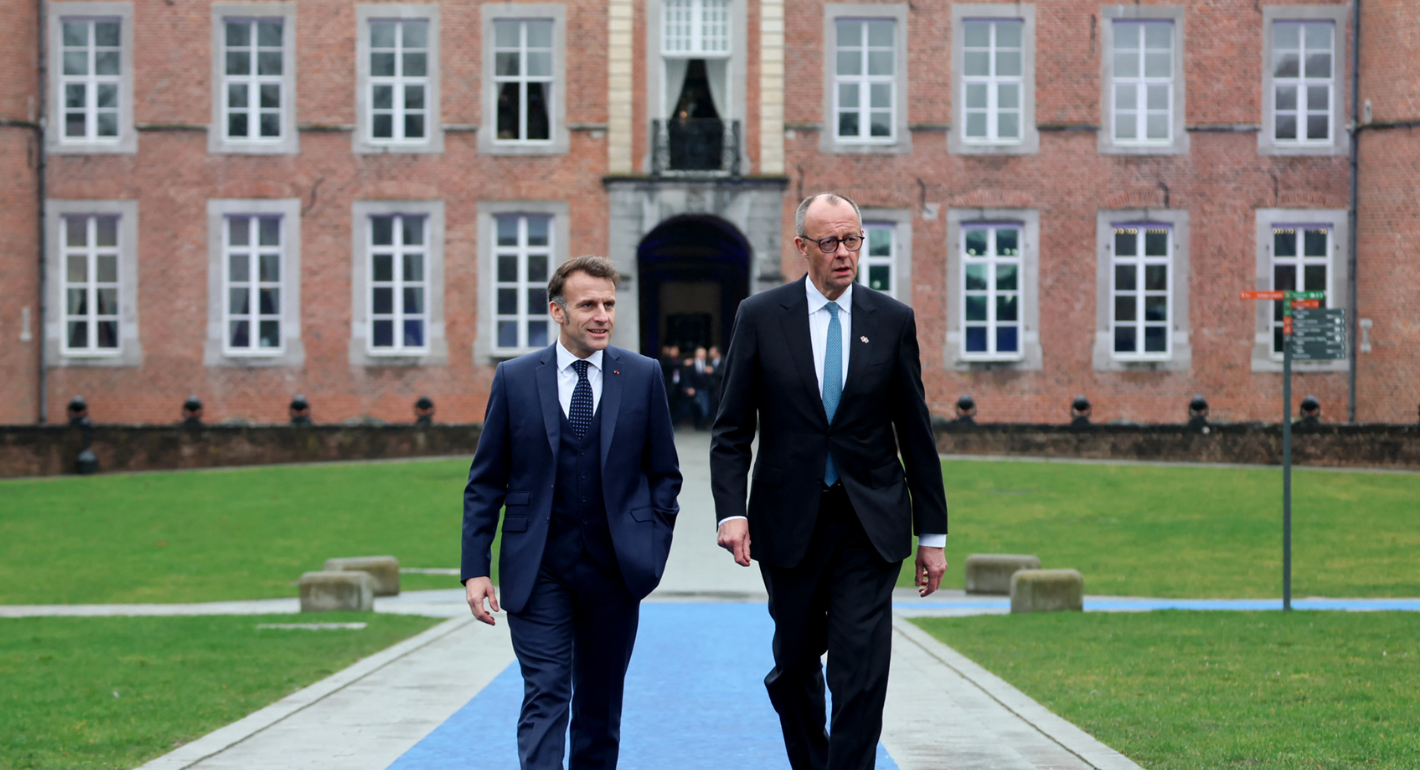
The Franco-German relationship is on the rocks again. But unlike previous moments of tension, the epochal changes on the world stage require that both step up investment in their bilateral ties.
Rym Momtaz
The EU is putting together a new security strategy to meet today’s myriad challenges. But for any proposal to be effective, the union needs to grapple with its identity and ambitions.

Pierre Vimont