

Commentary
As European leadership prepares for the sixteenth EU-India Summit, both sides must reckon with trade-offs in order to secure a mutually beneficial Free Trade Agreement.
Dinakar Peri
{
  "authors": [
    "Roderick Parkes"
  ],
  "type": "commentary",
  "blog": "Strategic Europe",
  "centerAffiliationAll": "",
  "centers": [
    "Carnegie Endowment for International Peace",
    "Carnegie Europe"
  ],
  "collections": [
    "Europe’s Eastern Neighborhood"
  ],
  "englishNewsletterAll": "",
  "nonEnglishNewsletterAll": "",
  "primaryCenter": "Carnegie Europe",
  "programAffiliation": "",
  "programs": [],
  "projects": [
    "European External Strategy Project"
  ],
  "regions": [
    "Russia",
    "Western Europe",
    "United Kingdom",
    "France",
    "Germany",
    "Europe"
  ],
  "topics": [
    "Foreign Policy",
    "EU"
  ]
}
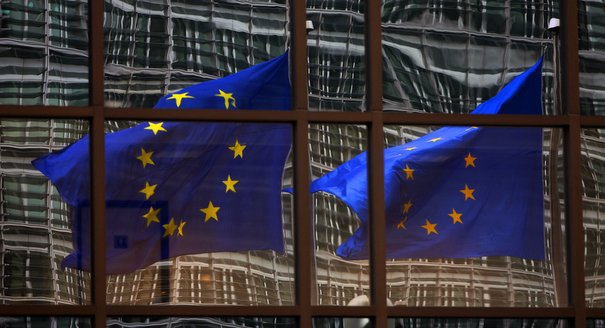
For Eastern Europeans in particular, the EU’s raison d’être is nothing if not geopolitical. That is something the union’s next foreign policy chief needs to understand.
When the EU failed to appoint a new foreign affairs chief on July 16, the war of words between the EU’s Eastern and Southern member states sharpened. Easterners paint the South—foremost Italy—as venal and spineless for promoting a candidate (Italian Foreign Minister Federica Mogherini) with a conciliatory attitude toward Moscow. Southerners portray the East—primarily Lithuania and Poland—as full of unreconstructed Cold Warriors intent on bringing geopolitics into the EU.
Well, Southerners can speak for themselves, but Easterners certainly don’t fit that description—not least because they fear that European geopolitics is ending, not beginning. When the next high representative is finally selected on August 30, he or she should know that geopolitics is more important than ever.
One of the mantras to have emerged from Brussels in the course of the Ukraine crisis is that the EU doesn’t do geopolitics. European officials are nervous about giving the impression that they somehow have territorial ambitions in the continent’s East. But for Easterners, that message is strange, to say the least. As far as they are concerned, the EU’s purpose is nothing if not geopolitical. It’s just that the EU does a different kind of geopolitics.
If politics is the art of creating and exercising choice, then the EU is geopolitical in the true sense of the word: it offers its members a choice over their geography. Until 1989, disparities of national size, resources, and demography in Europe were still dealt with by an imperial, winner-takes-all approach and through zero-sum mutual balancing. After the fall of the Berlin Wall, the EU propagated its own approach—a system of mutual transformation that Easterners have grasped with both hands.
For them, the EU’s new foreign policy supremo has to be aware that this is what the EU is about. The bloc’s neighbors, Ukraine, Georgia, and Moldova, are currently unable to build their resources, economy, and demography without exciting tensions with the countries around them. The EU, with its single market, European Parliament, and Schengen border-free travel area, represents a political method for transforming such points of conflict.
Moreover, it is this offer of geopolitical choice that sets the EU apart from Russia. Without choice, Moscow can justifiably accuse the EU of unilaterally redrawing the map of Europe. That is basically what the EU is doing when it allows its neighbors to access the single market or the Schengen zone without giving them a chance to make the rules, or when the union offers states to its East a technocratic facsimile of peace and prosperity rather than a genuine shot at transformation.
A similar principle applies to the EU’s relations with Russia. Despite impressions, Eastern Europeans are not resistant to a normalization of relations to Moscow; no one is more invested in the post-1989 order than they are. It’s just that this normalization has to be achieved politically. That means no backroom chats between Italian and Russian foreign ministers, and no initiatives like the South Stream gas pipeline that marginalize certain countries without diversifying the EU’s choices.
There is also a more fundamental concern here. Any high representative who does not properly appreciate the EU’s geopolitical purpose does not understand how the EU works. And a foreign policy chief who cannot navigate the union’s tricky internal workings will hardly be able to leverage its political weight in the world. After all, the EU’s main purpose over the decades has been to transform relations between its three large members, Germany, France, and the UK.
Other countries, tired of perpetual tension among these three, have traditionally given importance to the union’s assuasive endeavors. When national leaders talk about establishing “fairness” in the EU, they are really talking about France and Germany patching up their differences on economic affairs. “Efficiency” is about German-British compromise on treaty reform and institutions. And “effectiveness” is about France and the UK pooling their global resources to sustain and promote the EU in the world.
As a series of dismal summits has shown, these bilateral relationships have all but broken down over the last year. The result is the return of history: it is increasingly common to hear that Germany’s domination of France is “inevitable” or that the UK cannot leave the EU because Britain “cannot change its geography.” In this context, Easterners are worried at the way the Italians have exploited tensions among the Big Three to score some quick political points.
The prime role of the EU’s high representative in the coming years will probably be to overcome the union’s internal geopolitical tensions to ensure it has some kind of effect in the world. Whoever takes up the post should really know that.
Roderick Parkes heads the EU Program at the Polish Institute of International Affairs.
Carnegie does not take institutional positions on public policy issues; the views represented herein are those of the author(s) and do not necessarily reflect the views of Carnegie, its staff, or its trustees.
As European leadership prepares for the sixteenth EU-India Summit, both sides must reckon with trade-offs in order to secure a mutually beneficial Free Trade Agreement.

Dinakar Peri
The hyper-personalized new version of global sphere-of-influence politics that Donald Trump wants will fail, as it did for Russia. In the meantime, Europe must still deal with a disruptive former ally determined to break the rules.
Thomas de Waal
2026 has started in crisis, as the actions of unpredictable leaders shape an increasingly volatile global environment. To shift from crisis response to strategic foresight, what under-the-radar issues should the EU prepare for in the coming year?
Thomas de Waal
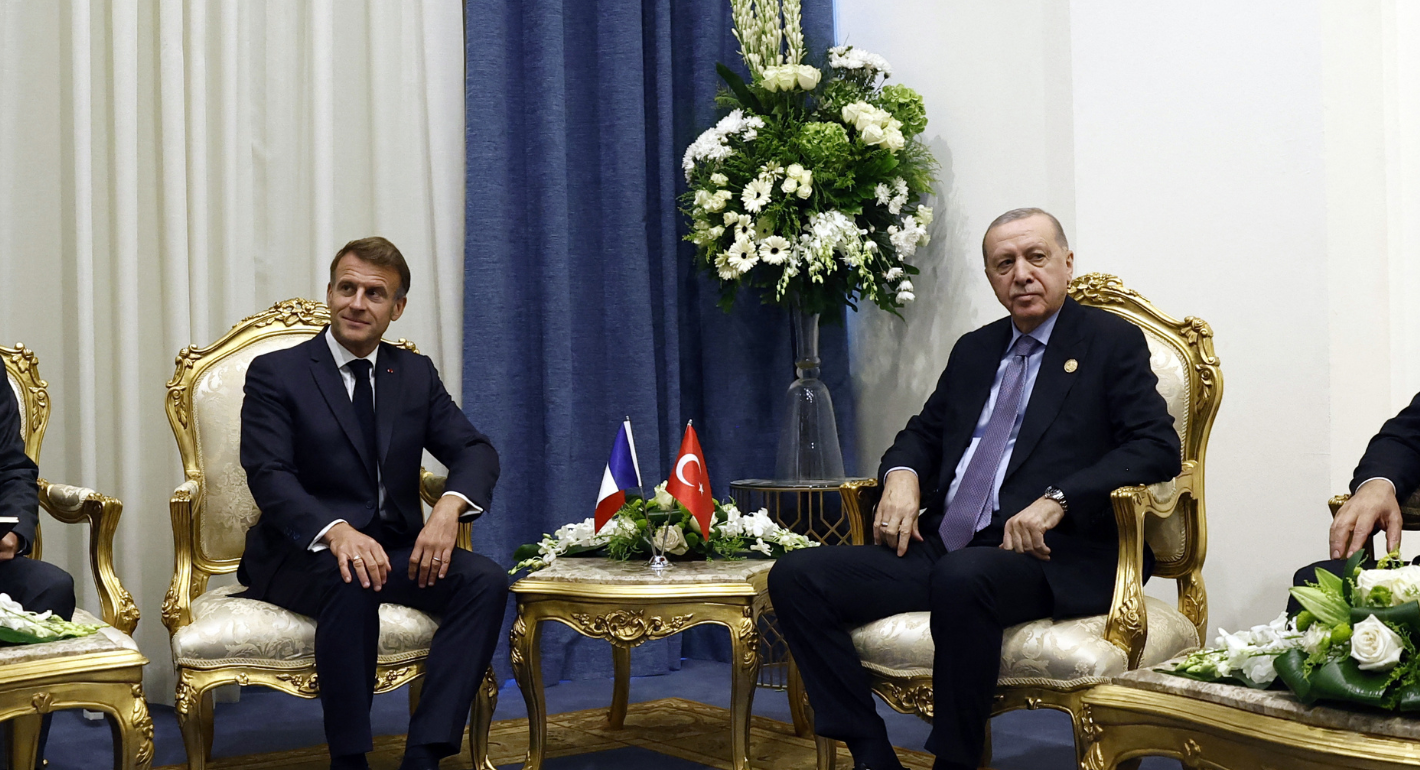
A renewal of relations between France and Turkey is vital to strengthen European strategic autonomy. To make this détente a reality, Paris and Ankara should move beyond personal friction and jointly engage with questions of Black Sea security.
Romain Le Quiniou
Europe is designing a new model of collective security that no longer relies on the United States. For this effort to succeed, solidarity between member states that have different threat perceptions is vital.

Erik Jones