

Commentary
Nathalie Tocci, Jan Techau
{
  "authors": [
    "Jan Techau"
  ],
  "type": "commentary",
  "blog": "Strategic Europe",
  "centerAffiliationAll": "",
  "centers": [
    "Carnegie Endowment for International Peace",
    "Carnegie Europe"
  ],
  "collections": [],
  "englishNewsletterAll": "",
  "nonEnglishNewsletterAll": "",
  "primaryCenter": "Carnegie Europe",
  "programAffiliation": "",
  "programs": [],
  "projects": [],
  "regions": [
    "Eastern Europe",
    "Western Europe",
    "Europe"
  ],
  "topics": [
    "Foreign Policy",
    "EU"
  ]
}
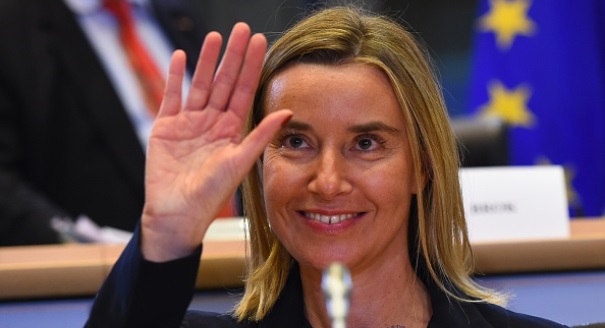
Source: Getty
The EU machinery suffers from a culture of nonexecutive nonchalance. That may well be the biggest stumbling block for the union’s incoming foreign policy supremo.
The hearing for Federica Mogherini, the EU’s foreign policy chief designate, in the European Parliament on October 6 was a deeply ambiguous event for all foreign policy observers. Not that ambiguity is a scarce commodity in Brussels; foreign policy itself is a fundamentally dual-faced phenomenon in a town where institutions are strong on trade and development but have almost zero executive power in classic diplomacy and crisis management.
The drama of EU foreign policy stems from the two conflicting standards by which the policy can be measured. The first is the specific logic of the internal mechanics of the Brussels bubble—what is possible. The second is the necessity created by the outside world—what is needed. The gap between the two is not unique to Brussels, of course, but Brussels is uniquely unable to bridge it intelligently and productively.
Held against the first standard, Mogherini delivered a very convincing performance. She was relaxed and focused, clearly at home in this policy field. She sounded natural and completely unrobotic in her replies, even throwing a few sprinkles of charm into the mix here and there.
She improvised freely by occasionally adding a fundamental thought or a nugget of wisdom to her replies to technical questions. She had a broad register in the three languages she used (Italian, English, and French), which enabled her to cloak the unavoidable platitudes in a sound that was her own.Mogherini paid tribute to the European Parliament (EP), perhaps even once or twice too often. She cracked a grateful joke about “German flexibility” when the notoriously grumpy committee chairman Elmar Brok enforced the rules on speaking time (which made even Brok smile, a sure sign she is in trouble now). And she sounded thoughtful without delivering too much in terms of tangible policy substance.
The EU’s high representative designate also had a few clever answers, such as when she replied to a question on the EU’s strategy for Asia by saying that the EU’s task was to convince Asians that Europe was strategically important for them, not vice versa. She said the best way to stop Russian President Vladimir Putin was to support the Ukrainians. She found the right mix between EP-compatible high-mindedness and more sober realism on tricky issues such as Iran.
Between the lines, Mogherini even delivered a few not-so-hidden broadsides against Catherine Ashton, the woman she is going to succeed as EU foreign affairs chief and vice president of the European Commission. Mogherini explained that she would pay more attention to the internal workings of the European External Action Service, the institution she will head. She also announced that she intends to undertake a big strategic foreign policy review (an idea Ashton hated) and that she would actually attend meetings of the college of European commissioners (something Ashton didn’t).
Mogherini came across as the right kind of fresh spirit after too many “foreign policy dinosaurs,” as one of her Twitter followers put it. The members of the European Parliament clearly liked her and treated her very gently, so much so that it bordered on the embarrassing.
imho #Mogherini is fit 4 the job, she's a new species compared to older EU foreign policy dinosaurs #EPhearings2014
— Georgi Gotev (@GeorgiGotev) October 6, 2014In other words, Mogherini delivered a nearly flawless performance. Despite her frequent coquetry on her lack of experience, she embodied the quintessential insider. There is no doubt that she will get into fights with the European Commission—and perhaps also with Donald Tusk, the incoming president of the European Council, which brings together EU heads of state and government.
But nor is there any chance that Mogherini will be rejected as an intruder into the EU system. She is now part of the tribe, and as a consequence, the battles will be just that tiny bit less brutal, which can make a big difference. The Brussels immune system has recognized her as one of the good ones. The warm applause she received after her concluding statement said: “Welcome to the bubble!”
However, while Mogherini’s enthronement may have been a great success for Brussels insiders, the whole affair also oozed with inadequacy. The problem was not so much with Mogherini herself—even though it became clear that she is a relative lightweight, not in terms of brainpower and communication skills but in terms of stature and gravitas. In old-fashioned foreign policy, seniority and battle scars matter, neither of which Mogherini has in ample supply.
The hearing’s real shortcoming was that it failed against the second standard of what is needed vis-à-vis the outside world. The question-and-answer session was miles away from even resembling a sufficient answer to the dramatic foreign policy situation on Europe’s borders. Within the confines of the system, Mogherini looked brilliant, but nobody knows whether that will actually matter when the real world keeps hitting Europe in the way it has done over the past year or so.
What became blatantly obvious once more during the hearing was that none of the really big foreign policy decisions are actually made by the Brussels-based institutions—least of all by the European Parliament. Power in foreign policy resides in the EU member states. This has a dramatic effect on the nature of the debate. The absence of any executive decisionmaking power on foreign policy in Brussels breeds a unique culture of detachment in which the right questions are often asked but the answers matter so very little.
Of course, one shouldn’t expect bubble people to question the internal mechanics of the machine they are part of. But that the parliamentarians quizzing Mogherini asked her so few really tough policy questions was a shame. The lawmakers mentioned again and again the seriousness of the situation on Europe’s borders, but with a few notable exceptions, their concern did not sound convincing.
For many, Ashton failed as EU foreign policy chief because she neither pleased the bubble people on the inside nor produced enough big results on the outside to make a difference. Mogherini looks utterly determined to play by the rules among EU insiders. Perhaps her instincts as a politician tell her that this is a wise coping strategy in a political habitat as complicated as Brussels.
The problem is that the very system Mogherini is so eager to join, with its culture of nonexecutive nonchalance, will likely prevent her from making a difference where it is most needed: in the building of a more united and more powerful foreign policy among the EU’s 28 member states. The warm welcome she received from the European Parliament on October 6 could well be the deadly embrace that will bog her down. Let’s hope she will prove the skeptics wrong.
Director, Europe Team, Eurasia Group
Techau is director with Eurasia Group's Europe team, covering Germany and European security from Berlin. Previously, he was director of Carnegie Europe.
Recent Work

Nathalie Tocci, Jan Techau
Jan Techau
Carnegie does not take institutional positions on public policy issues; the views represented herein are those of the author(s) and do not necessarily reflect the views of Carnegie, its staff, or its trustees.

Are Germany’s economic, industrial, and political struggles becoming a liability for the EU’s ability to rise to the geopolitical moment?

Rym Momtaz, ed.

European Commission President Ursula von der Leyen is about to give her annual address on the state of the EU. Here’s what she won’t—but should—say.
Rym Momtaz

The aftermath of the Ceuta crisis shows Europe has drawn the wrong lessons. Rather than doubling down on failed migration policies, the EU needs to address the underlying roots of such episodes.

Richard Youngs

An overwhelming victory by a far-right-wing party in a small state in eastern Germany will have major repercussions for Chancellor Friedrich Merz’s coalition.

Judy Dempsey

Canadian Prime Minister Mark Carney has twice inspired praise for standing up to U.S. President Donald Trump: at the 2026 World Economic Forum in Davos and on Canada-U.S. trade negotiations. Is Carney showing a third way better than the EU has in dealing with the Trump administration?
Rym Momtaz, ed.