

Commentary
Judy Dempsey
{
  "authors": [
    "Judy Dempsey"
  ],
  "type": "commentary",
  "blog": "Strategic Europe",
  "centerAffiliationAll": "",
  "centers": [
    "Carnegie Endowment for International Peace",
    "Carnegie Europe"
  ],
  "collections": [],
  "englishNewsletterAll": "",
  "nonEnglishNewsletterAll": "",
  "primaryCenter": "Carnegie Europe",
  "programAffiliation": "",
  "programs": [],
  "projects": [],
  "regions": [],
  "topics": [
    "EU",
    "Economy",
    "Climate Change"
  ]
}
Source: Getty
Every week, a selection of leading experts answer a new question from Judy Dempsey on the foreign and security policy challenges shaping Europe’s role in the world.
Every week, a selection of leading experts answer a new question from Judy Dempsey on the foreign and security policy challenges shaping Europe’s role in the world.
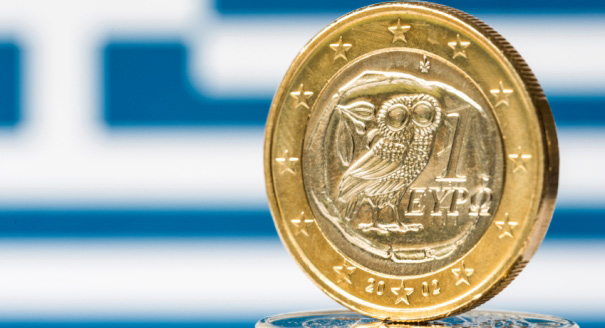
The snap Greek general election to be held on January 25 will be a test of whether Greece and the euro have a future together. So far, Greece has enjoyed the privileges of euro membership—including a massive bailout by its partners—but has never been keen to accept its responsibilities.
Greek leaders have refused to implement structural reforms.Tweet This
Greeks are still among the euro’s most enthusiastic supporters, even after four years of fiscal hardship imposed by the EU and International Monetary Fund austerity program. But the country’s political leaders have steadfastly refused to implement the structural reforms needed to modernize the country’s institutions and open up markets, the result of pressure from vested interest groups, both large and small.
Alexis Tsipras, leader of the hard-left Syriza party, which is leading in opinion polls, is as conflicted as his predecessors were: he wants Greece to stay in the euro if he comes to power, but on the country’s own terms—with a huge debt write-off—not on those of Brussels and Frankfurt. But the extremist faction in his party and some of his economic advisers may urge a “Grexit” and a return to the drachma rather than an embarrassing if inevitable climbdown.
The euro should not have been—and certainly, Greece should not have been in the euro. But today we have both the single currency and Greece’s membership in it. And the costs of breaking up the euro are potentially so high that all efforts must be made to save it. Similarly, a casual attitude to the possibility of Greece leaving the eurozone is mistaken. If the country does leave, there will almost certainly be a speculative attack on the debt of another vulnerable euro-area sovereign, with potentially uncontrollable knock-on consequences.
The only right way forward is to forgive #Greece's official debt.Tweet This
However painful, the only right way forward is to forgive Greece’s official debt. That can be done by asking Greece to repay it in, say, a hundred years. Some claim that forgiving Greek debt would be tantamount to the country’s exit from the euro. There is no economic reason for that. To the contrary, with the burden of debt repayment gone, Greek risk spreads on private credit should fall quickly, and Greece should be able to regain some ability to aid its most vulnerable citizens.
The argument that forgiving Greek official debt would lead to a political standoff with Germany, which would then cause a Greek exit, is also misplaced. The simple fact is that Greece cannot repay its debts, and forcing it to do so is not in Germany’s interest—if not today, Germany will have to bow to reality tomorrow. Pushing Greece out of the eurozone does not help Germany. For once, the only way to make a fresh start is by acknowledging that a mistake was made and by ensuring a clean break with the past.
As long as those who support European monetary union insist on inflexibility toward monetary adjustment, while those who demand currency flexibility, however temporary, and renegotiation of debt generally oppose monetary union, Greece is not compatible with the euro—and nor, for that matter, is any other country.
When Germany implemented policies to reduce domestic unemployment, primarily by pushing down wage growth, the simultaneous creation of the euro gave these policies enormous traction. It did so mainly by preventing the interest rate and currency adjustments that would have partly mitigated these policies’ adverse impact.
Redesigning failed institutions is the only way to save the #euro.Tweet This
Only soaring debt or surging unemployment could resolve the resulting deep imbalances within Europe. The EU first allowed the former and then was forced into the latter. If the euro is to survive, policymakers must permit partial monetary adjustment and either grant debt forgiveness to the most indebted countries or federalize the debt. Taking a step back and redesigning clearly nonfunctional institutions is the only way to save the euro.
It took the United States over seventy years to create a functioning currency union, with many false starts and stops. It is unreasonable to insist that Europe must get it right first time, with no hope of adjustment.
The answer is no. All efforts to keep Greece in the eurozone have clearly been failing. The domestic cost of those efforts for Greeks has become unbearable, with a massive drop in the country’s GDP, level of employment, and standard of living.
The #euro has turned out to be a German-made Procrustean bed.Tweet This
The rise of the far-right Golden Dawn, the left-wing Syriza, and other antisystem parties is only a symptom of the massive failure of Greece’s political and economic system and of the way the eurozone was constructed. The euro has turned out to be a German-made Procrustean bed into which Greece is being squeezed, in a one-size-fits-all approach.
As hard as Berlin may try, it cannot make Greeks into Germans. The conclusion now in Berlin seems to be that the effort to keep Greece in is no longer worth the cost, and that the consequences of a Greek exit are now less severe than they would have been a couple of years ago. Whether that will be the case remains to be seen, but it is time to let the Greeks make their own bed.

Nonresident Senior Fellow, Carnegie Europe
Judy Dempsey is a nonresident senior fellow at Carnegie Europe
Recent Work
Judy Dempsey
Judy Dempsey
Carnegie does not take institutional positions on public policy issues; the views represented herein are those of the author(s) and do not necessarily reflect the views of Carnegie, its staff, or its trustees.

In supporting Europe’s far-right, MAGA and Russia both want the same thing: a weaker EU. Europe must defend itself without abandoning the openness these forces exploit.

Armida van Rij

As we close out another season of Strategic Europe, it is worth taking stock of the deep shifts underway.

Rym Momtaz
The EU had to compromise to adopt a twenty-first sanctions package against Russia, exposing growing cracks in the union’s resolve. Is this latest, weaker round worth it to keep pressure on Moscow?
Rym Momtaz, ed.

Trump is distracted and Ukraine wants Europe to step up. The continent’s leaders must find their voice and assert it in talks with Russia.

Alissa de Carbonnel

Mounting economic strain and battlefield losses will not necessarily make the Kremlin less dangerous. They could instead push Moscow toward a more aggressive hybrid campaign designed to test NATO’s Eastern flank, exploit allied hesitation, and fracture European resolve.

Maksym Beznosiuk